The Post-Lewandowski Vacuum and Barcelona's Audacious Play
FC Barcelona has a gaping tactical void at the spearhead of their attack. With Robert Lewandowski confirming his departure to MLS side Chicago Fire, the Catalan club is suddenly without a recognized elite number nine. The search for a successor has led them directly to the England camp.
According to a report by Sky Sports, Barcelona has reached out to Harry Kane's representatives to explore a summer move. The timing of this approach is highly strategic. Kane is entering the final year of his contract at Bayern Munich, where extension talks have hit a roadblock over the desired duration of a new deal.
The German champions are desperate to retain their star forward. They want to protect their investment in a striker who recorded 70 goals in 60 appearances for club and country last season. Yet, Barcelona is monitoring the situation closely, ready to exploit any growing friction between the player and the Bayern board.
For now, Kane’s camp has cooled the conversation. The England captain is settled in Bavaria and refuses to let club matters disrupt his focus during the World Cup. But the Catalan club has reportedly agreed to revisit the situation once England's campaign in North America concludes.
Lewandowski's final season at Camp Nou highlighted a growing structural issue. Under Hansi Flick, Barcelona's vertical 4-2-3-1 relies on rapid transitions and high-intensity counter-pressing. While Lewandowski remained a threat in the box, his progressive pass reception rate dropped to a career-low 3.4 per 90 minutes.
The veteran striker was increasingly stationary, failing to link the midfield to the wide runners. Flick needs a forward who can play with his back to goal and act as a playmaker. Kane is the gold standard in this regard.
His ability to drop deep, receive under pressure, and spray passes to Lamine Yamal and Raphinha would transform Barcelona's offensive fluidity. It is no wonder Barcelona is ready to move.
The Stagnant Pivot and England's Group Stage Stutter
England topped Group L, but the performances in North America have been far from convincing. Thomas Tuchel's tactical setup has oscillated between defensive rigidity and offensive stagnation. The opening 4-2 victory over Croatia in Dallas showed defensive vulnerability, with John Stones caught flat-footed for both goals conceded.
Then came the tactical disaster against Ghana in Boston on June 23. Tuchel deployed a double-pivot of Declan Rice and Conor Gallagher, but neither showed any willingness to pass through the lines. This resulted in a dismal 54% pass completion rate into the final third as England's spacing broke down.
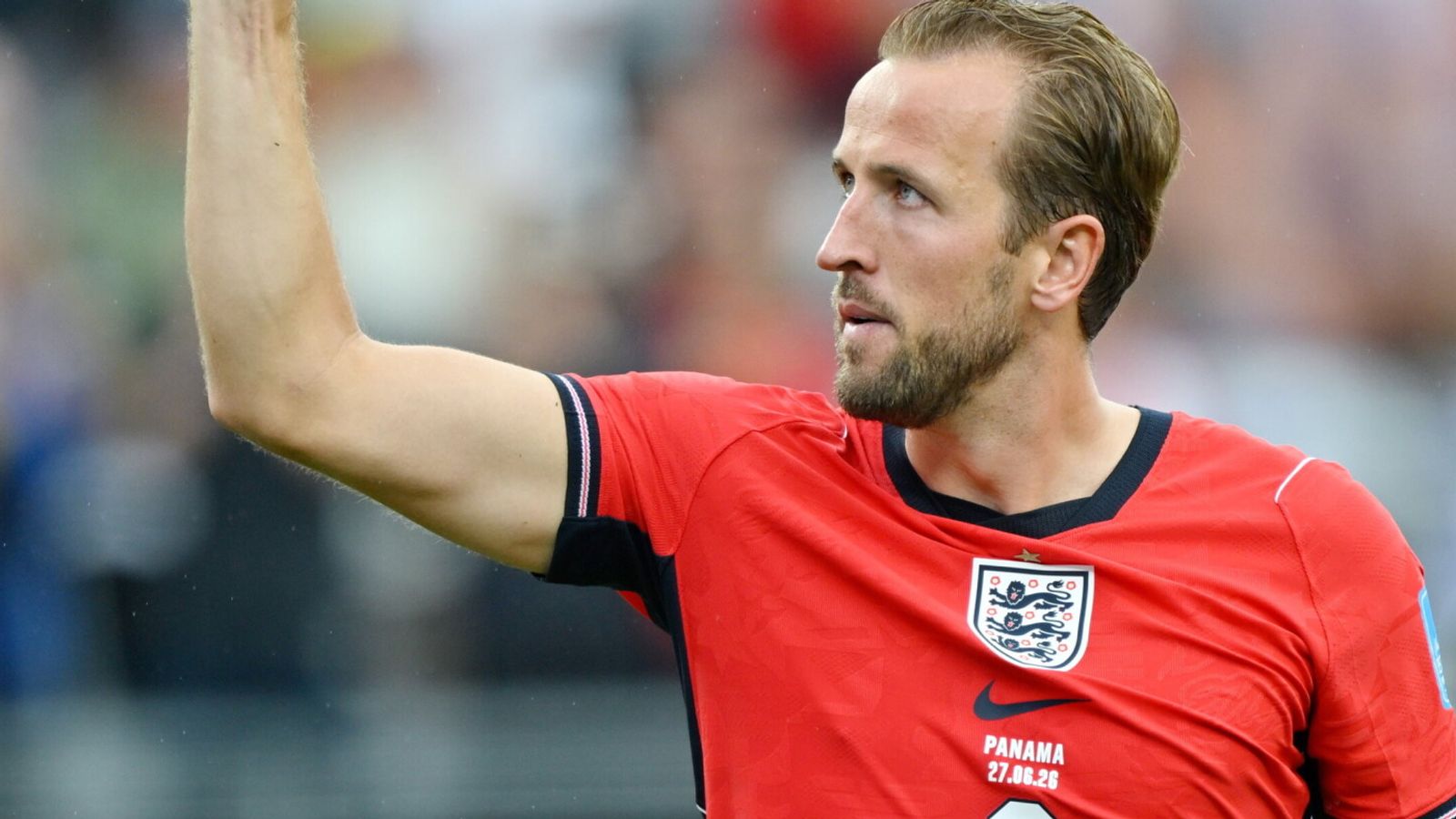
Kane was starved of service. The England captain managed only 14 touches in 90 minutes, with zero touches inside the opposition penalty area. When he did drop deep, Bukayo Saka and Phil Foden remained glued to the touchlines, leaving Ghana's center-backs untroubled.
The final group game against Panama in New Jersey on June 27 offered some tactical relief. Tuchel brought Kobbie Mainoo into the midfield pivot to replace Gallagher. Mainoo's vertical passing ability immediately changed England's possession dynamics, finishing the game with a 89% passing accuracy into the final third.
This adjustment allowed Kane to act as a tactical decoy. In the 22nd minute against Panama, his dropping run dragged the left center-back five yards out of position. This opened a passing lane for Jude Bellingham, who ran into the space to finish and secure the 3-0 victory.
Breaking DR Congo's Low Block
On Wednesday, July 1, 2026, England faces DR Congo in Atlanta. This is a classic tactical banana skin for Tuchel. DR Congo will not look to dominate possession; they will sit in a compact 4-5-1 mid-to-low block and wait for England to make a mistake in possession.
DR Congo’s defensive record in the group stage was impressive, conceding just two goals and averaging a solid 1.1 expected goals against (xGA) per match. Led by Marseille's Chancel Mbemba, their backline is physical, aggressive, and highly disciplined. They excel at compressing the vertical space between their midfield and defensive lines.
If Kane drops deep to receive, he must do so with speed. If he hesitates, DR Congo’s midfield trio will quickly surround him, cutting off his passing angles. In their match against Morocco, DR Congo used this exact pressing trigger to force turnovers in the middle third, launching rapid counter-attacks that exposed Morocco's high line.
England's center-backs cannot afford to play slowly. If John Stones and Marc Guéhi take multiple touches before passing, DR Congo will easily shift their defensive block to close down the wings. Ball circulation must be rapid, shifting from side to side to pull DR Congo's midfield out of position.
Tuchel must instruct his wing-backs to play higher up the pitch. Pushing Trent Alexander-Arnold and Luke Shaw into advanced wide positions will force DR Congo's wingers to drop back, effectively turning their 4-5-1 into a defensive 6-3-1. This will open up the central half-spaces for Bellingham and Foden to exploit.
The Contract Standoff and the Atlanta Prediction
The transfer market noise surrounding Kane is not just paper talk. It is driven by real contractual tension in Munich. As a 32-year-old forward entering his final contract year, Kane finds himself at a crossroads with Bayern Munich's hierarchy.
Bayern's long-standing policy of offering short-term extensions to players over 30 is clashing with Kane's demand for a longer deal. The forward wants a three-year contract to secure his final peak years in Europe. Bayern's reluctance to break their wage structure has created a clear opening for Barcelona.
Barcelona's sporting director has been monitoring this standoff for months. The Catalans cannot afford a bidding war, but they can offer Kane a prominent role in Hansi Flick's project and a longer contract. It is a tactical match made in heaven, but the financial mechanics will require significant flexibility from both sides.
For now, Kane remains focused on his immediate goal: leading England to World Cup glory. But the contract standoff in Munich and the Barcelona interest will continue to loom over every performance. A disappointing exit in Atlanta would only accelerate the transfer chatter.
Expect a frustrating first half for England in Atlanta. DR Congo's low block will limit England's space in the box, leading to sterile possession and a low first-half xG. The African side will look dangerous on the counter-attack, forcing Rice to commit tactical fouls to break up play.
The breakthrough will come in the second half. Tuchel will make a key tactical adjustment around the 60th minute, replacing a midfielder to introduce Cole Palmer's directness. This change will force DR Congo's defensive line to drop even deeper, finally opening up space in the midfield.
In the 68th minute, Kane will drop deep, drawing Mbemba out of the backline. He will play a quick one-touch pass to release Saka, who will cross for Bellingham to convert. A second goal will follow on the counter-attack in the 81st minute, securing England's place in the next round.
My prediction is a solid 2-0 victory for England. It won't be pretty, but Tuchel's side has the tactical patience and individual quality to break down DR Congo's resistance.
Read Next
- England's attack is broken, but they will still crawl past the DRC in Atlanta
- Harry Kane just broke the record but England still look stuck in second gear
- England's World Cup run relies way too much on the Kane and Bellingham show
- Tuchel needs Anderson focused as England face a tactical trap against DR Congo
- 🏆 World Cup 2026 — Full Coverage Hub
- 🏴 England World Cup 2026 — Three Lions Hub
- ⚽ La Liga 2025-26 — Title Race Hub