
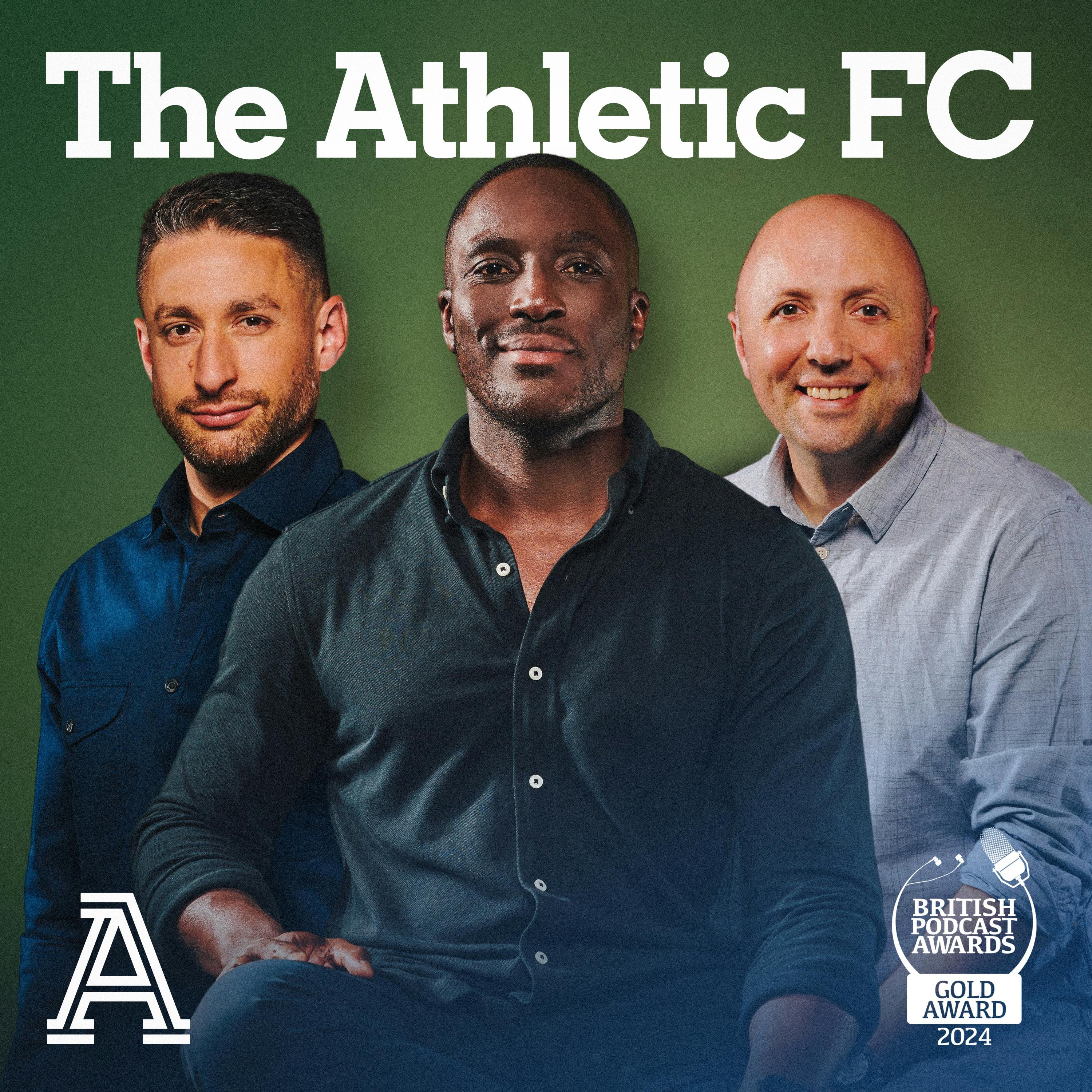
Is Mourinho's Real Madrid return working?
🎧 Listen to Original Episode →1. Executive Overview: Core Theses & Key Revelations
The latest edition of The Athletic FC Podcast, anchored by Emma Payton alongside senior football writers Liam Toomey, Thomas Hill, and Madrid correspondent Guillermo Rai, marks a pivotal moment in contemporary European football analysis. The panel's forensic autopsy of Real Madrid's 2-1 victory over Inter Milan at the Santiago Bernabéu reveals a club caught between commercial glamour and tactical incoherence. Despite securing three points in their opening UEFA Champions League fixture, Jose Mourinho's return to the Spanish capital has exposed severe architectural flaws within the squad structure—flaws that contrast sharply with the systemic harmony established by Hansi Flick at Barcelona and Enzo Maresca at Manchester City.
Central to this discussion is the catastrophic structural void in Real Madrid's central midfield. Having committed approximately €240 million in summer expenditure, Madrid's squad construction has prioritized frontline stardom over positional equilibrium. The narrative core of the podcast explores how Rodri's decision to join Barcelona over Real Madrid has fundamentally altered the balance of power in domestic and continental football. While Barcelona have built a dominant system—highlighted by four wins from four in La Liga with a 15-2 aggregate scoreline—Real Madrid remain entirely dependent on individual brilliance from Kylian Mbappé and heroics from goalkeeper Thibaut Courtois to mask defensive vulnerability.
Furthermore, the discussion illuminates three broad structural theses currently reshaping the European elite:
- The Misallocation of Capital at Real Madrid: The club's decision to stockpile seven elite forwards for three starting positions while failing to secure a direct successor to Toni Kroos or Casemiro has created an unstable tactical environment. Deploys such as Trent Alexander-Arnold in central midfield highlight a desperate search for order that has alienated an uncompromising Bernabéu crowd.
- The Rodri Axis and Barcelona's Tactical Supremacy: Rodri's arrival in Catalonia has provided Hansi Flick with the central regulator required to implement his aggressive pressing framework. Supplemented by the integration of Anthony Gordon, Barcelona have established a systemic coherence that threatens to secure an unprecedented La Liga three-peat, even as their aggressive high defensive line presents vulnerabilities against elite European transition teams.
- The Post-Guardiola Midfield Rebuild at Manchester City: Under Enzo Maresca, Manchester City have systematically replaced legacy figures Rodri and Bernardo Silva through a target investment exceeding €300 million. By pairing Enzo Fernandez with Elliot Anderson and teenage phenom Ia Bawardi, City have established a multi-layered midfield structure designed to control tempo and support Erling Haaland.
Beyond the Spanish and English titans, the conversation highlights Paris Saint-Germain's standing as Europe's premier force under Luis Enrique, positioned to achieve a historic third consecutive Champions League title, while Vincent Kompany's Bayern Munich and Harry Kane present a formidable threat in an era liberated from the Messi-Ronaldo duopoly.
2. Context & Background: The Landscape Leading to This Conversation
To understand the friction surrounding Jose Mourinho's return to Real Madrid, one must analyze the macroeconomic and tactical environment of the 2026-27 European football calendar. Mourinho's appointment was viewed across the industry as a high-stakes gamble by Florentino Pérez. Following a period where Mourinho's career trajectory appeared to be in steady decline across secondary European projects, Real Madrid turned inexorably back to their former manager to restore defensive discipline and big-game ruthlessness. However, Mourinho inherited a roster defined by profound positional asymmetry.
The departures of foundational midfield anchors over recent seasons left Real Madrid without a natural tempo controller. While the club successfully integrated Kylian Mbappé alongside Vinicius Jr and Jude Bellingham, the squad lacked structural balance. During the summer transfer window, Real Madrid directed upwards of €240 million toward defensive overhauls and marquee names, introducing three new starters into the back four. Yet, their failure to secure Rodri—who chose Hansi Flick's project at Barcelona instead—left the central zone exposed to high-grade opposition.
| Club | Manager | Key Summer Additions | Core Tactical Identity | Primary Structural Risk |
|---|---|---|---|---|
| Real Madrid | Jose Mourinho | Trent Alexander-Arnold, New Back 4 (€240m total) | Direct transition, reliance on elite individual forward moments | Severe central midfield disconnect; 7 forwards for 3 spots |
| Barcelona | Hansi Flick | Rodri, Anthony Gordon | Ultra-high pressing line, controlled possession, wing isolation | Extreme high defensive line vulnerable to fast transition passes |
| Manchester City | Enzo Maresca | Enzo Fernandez, Elliot Anderson, Ia Bawardi | Patient buildup, small-space compression, positional fluidity | Integration phase of completely overhauled midfield engine |
| Paris Saint-Germain | Luis Enrique | Retained core Champions League winning squad | Dominant positional play, elite game management, squad depth | Potential domestic complacency in early Ligue 1 campaign |
In contrast, Barcelona entered the campaign with clear tactical clarity. Under Hansi Flick, the Catalan club secured Rodri to act as the team's operational brain, while adding Newcastle's Anthony Gordon to provide vertical dynamism on the flank. This strategic harmony allowed Barcelona to launch their domestic campaign with extraordinary momentum, establishing a four-point gap over Real Madrid and laying the groundwork for a potential La Liga three-peat—a feat not accomplished by Barcelona since the era of Pep Guardiola.
Simultaneously, Manchester City underwent a fundamental mid-cycle midfield evolution under Enzo Maresca. Moving on from the era defined by Rodri and Bernardo Silva, City executed a restructuring program exceeding €300 million. By bringing in Chelsea's Enzo Fernandez alongside Elliot Anderson and 18-year-old international prodigy Ia Bawardi, Maresca constructed a central unit capable of dominating space while feeding Erling Haaland. It is against this backdrop of shifting tactical paradigms that The Athletic FC Podcast convened to evaluate whether Mourinho's project in Madrid can survive the demands of an increasingly unforgiving Bernabéu support.
3. Deep-Dive Thematic Breakdown
3.1 Mourinho's Real Madrid 2.0: Structural Dysfunctionalism and the Bernabéu Crucible
The atmosphere at the Santiago Bernabéu during Real Madrid's 2-1 victory over Inter Milan served as a immediate microcosm of the tension defining Jose Mourinho's second tenure. Reporting live from the stadium, Guillermo Rai captured a striking reality: despite holding a lead, the home crowd openly whistled the team. The unrest was directed not merely at the erratic tempo of the match, but specifically at Mourinho's experimental deployment of Trent Alexander-Arnold in central midfield. Introduced as a makeshift solution to Madrid's central creativity deficit, Alexander-Arnold struggled to manage spatial responsibilities, culminating in visible dissatisfaction from the stands before his eventual second-half substitution.
Tactically, Cristian Chivu's Inter Milan exposed Real Madrid's defensive vulnerability during the opening 25 minutes. Playing an expansive system, Inter repeatedly bypassed Madrid's high press, isolating central defenders and controlling midfield territory. Real Madrid's victory was ultimately built not upon structural mastery, but upon opportunistic capitalizations of opposition errors—specifically defensive blunders by Yann Bisseck and Inter goalkeeper Josep Martínez—and clinical finishes from Kylian Mbappé. The persistent reliance on Thibaut Courtois to deliver game-saving interventions underscores that Mourinho has yet to establish defensive stability.
Thomas Hill emphasized that the Bernabéu crowd's high expectations stem directly from the club's massive summer outlay. With over €240 million spent to renovate the squad, fans expect dominant, controlling football rather than reactive scrambling. Mourinho's post-match comments—describing the fixture as "crazy" and expressing fury at his forwards' failure to track back during Inter's late surge—indicate an escalating friction between his pragmatic demands and the inclination of Madrid's attacking superstars.
3.2 The Rodri Decision & Barcelona's Tactical Supremacy
Liam Toomey raised what may prove to be the central tactical question of the 2026-27 European season: how consequential will Rodri's decision to choose Barcelona over Real Madrid prove to be? For Real Madrid, missing out on Rodri meant losing the single player capable of providing central order, defensive screening, and positional discipline. For Barcelona, acquiring the Spanish international represented the final missing piece in Hansi Flick's tactical matrix.
Under Flick, Barcelona have exhibited a level of operational clarity that stands in sharp opposition to Real Madrid's chaos. Demonstrating this fluidity is the immediate impact of Anthony Gordon. The former Newcastle winger has integrated seamlessly into Flick's attacking mechanics, epitomized by his audacious backheel assist for Raphinha during Barcelona's blistering domestic run. Scoring 15 goals while conceding just twice across their opening four La Liga fixtures, Barcelona look well-positioned to complete a three-peat of domestic titles.
However, the panel identified a potential structural vulnerability within Barcelona's setup: Flick's uncompromising high defensive line. While this aggressive line suffocates domestic opposition who lack the technical composure to play through pressure, it remains susceptible against top-tier Champions League transition teams. Toomey noted that European rivals with rapid frontlines—evidenced by Chelsea's success against Barcelona at Stamford Bridge last season—can exploit the space behind Flick's defense if passes are played quickly around the pressing trap. Whether Rodri's presence can suppress these transition threats at source will dictate Barcelona's European ceiling.
3.3 The Vinicius-to-Arsenal Dilemma and Squad Architecture
A intriguing sub-theme explored by Toomey and Hill is the internal resource allocation at Real Madrid. The squad currently features seven elite forward options competing for effectively three starting positions. This stockpile—including Kylian Mbappé, Vinicius Jr, Jude Bellingham, Brahim Díaz, and young talents such as Endrick—has created a operational bottleneck that limits tactical flexibility and generates dressing room complexity.
This imbalance prompted Toomey to pose a provocative strategic query: would Real Madrid have been better off selling Vinicius Jr to Arsenal during the summer transfer window to fund the acquisition of Rodri? The rationale behind such a move is compelling from an architectural perspective:
- Positional Rebalancing: Sanctioning the sale of Vinicius would have relieved the positional overlap on the left wing between the Brazilian and Mbappé, while freeing capital to secure a world-class central midfielder.
- Financial Optimization: Reallocating funds from a redundant forward asset into the engine room would have addressed Real Madrid's core weakness without diminishing overall offensive potency.
- Tactical Equilibrium: Providing Mourinho with a dedicated defensive screen would have enabled a more stable 4-3-3 or 4-2-3-1 structure, preventing the midfield voids exploited by Inter Milan.
Instead, Real Madrid chose to retain their star forward line, leaving Vinicius to contend with crowd dissatisfaction despite his defensive efforts against Inter. As Hill highlighted, reducing players of high commercial value to late-game substitution roles is structurally unsustainable over a grueling multi-front campaign.
3.4 Manchester City's Post-Rodri Renaissance Under Maresca
The podcast shifted focus to the English Premier League, examining Manchester City's 2-0 Champions League away victory over Porto under manager Enzo Maresca. Following the high-profile departures of Rodri and Bernardo Silva, questions lingered regarding City's ability to maintain their era of dominance. However, Maresca's tactical recalibration has produced a dynamic midfield unit built on youth, mobility, and technical precision.
City's strategic rebuild centered on a targeted recruitment program exceeding €300 million. The acquisition of Enzo Fernandez from Chelsea provided Maresca with an elite deep-lying playmaker familiar with his positional concepts. Fernandez's pairing alongside Elliot Anderson and 18-year-old sensation Ia Bawardi has introduced a complementary blend of physical coverage and ball progression. Bawardi, following a standout World Cup campaign, demonstrated exceptional composure in Porto, driving through pressure and dictating possession tempo.
Toomey observed that while this new midfield engine may not immediately match the peak control offered by Rodri and Bernardo Silva, it effectively future-proofs Manchester City's tactical identity. Maresca's methodology relies on keeping spatial distance compact during buildup, allowing Fernandez freedom to operate in the final third while Anderson and Bawardi secure defensive transitions. With Erling Haaland benefiting from this continuous supply line, City remain potent contenders across all competitions.
3.5 PSG's Hegemony & Harry Kane's Post-Messi/Ronaldo Ballon d'Or Case
In evaluating the broader European hierarchy, the panel reached a firm consensus regarding Paris Saint-Germain. Under Luis Enrique, the defending Champions League champions remain the team to beat across the continent. Toomey asserted that PSG operate with a level of tactical maturity and squad depth that sets them apart from Premier League contenders. Their ability to manage domestic minutes in Ligue 1 ensures their core squad reaches peak physical condition during the European knockout stages in spring.
Concurrently, the discussion touched upon Bayern Munich's resurgence under Vincent Kompany and the individual trajectory of Harry Kane. Free from the shadow of the Messi-Ronaldo rivalry that dominated European football for two decades, the race for the Ballon d'Or has opened significantly. Kane's extraordinary goalscoring metrics for Bayern Munich position him as a leading candidate for the honor.
"Harry Kane would be a worthy winner of the Ballon d'Or this year. It would be massive for his legacy. It's more open now that the Messi-Ronaldo era is over." — Liam Toomey, The Athletic FC Podcast
The panel noted that Bayern Munich, alongside Arsenal, represent the most credible challengers to PSG's pursuit of a record-equaling third consecutive European title. Arsenal's elite defensive infrastructure under Mikel Arteta provides a foundation for knockout football, though doubts remain over whether their frontline possesses the absolute peak efficiency required to dismantle Luis Enrique's side.
3.6 Romantic Realism in Lombardy: Fabregas and the Como Phenomenon
Finally, the panel highlighted one of the most compelling narratives in European football: Como's qualification for the UEFA Champions League under head coach Cesc Fabregas. Operating out of their iconic stadium overlooking Lake Como, the Italian club has combined ambitious ownership with intelligent squad building, integrating former Premier League players such as Trevoh Chalobah and Robert Sanchez alongside young talent like Nico Paz.
Hill and Toomey noted that Fabregas has implemented a brand of progressive, attractive football that defies traditional expectations for newly emerging European clubs. Como's presence in the Champions League represents a refreshing departure from hyper-corporate super-clubs, offering a blend of tactical innovation and romantic appeal that enriches the tournament's overall ecosystem.
4. Speaker Perspectives & Analytical Contrast
A key strength of The Athletic FC Podcast episode lies in the distinct analytical lenses brought by each contributor. The interaction between Emma Payton's structured moderation, Guillermo Rai's atmospheric ground-level reporting, Thomas Hill's institutional perspective, and Liam Toomey's macro-tactical analysis creates a comprehensive multi-layered breakdown.
| Speaker | Primary Analytical Focus | Core Diagnosis of Real Madrid | Perspective on European Hierarchy |
|---|---|---|---|
| Guillermo Rai Madrid Correspondent |
Atmospheric ground reality, dressing room reaction, Mourinho touchline dynamics | Highlights extreme lack of control, fan whistling, and Mourinho's fury at forward pressing work rate | Views Madrid as reliant on Courtois/Mbappé individual rescue acts |
| Thomas Hill Senior Football Writer |
Institutional pressure, fan culture, squad valuation vs output | Emphasizes Bernabéu demanding nature; questions sustainability of 7 forwards for 3 positions | Sees Barcelona as La Liga favorites; notes City's smart future-proofing |
| Liam Toomey Tactical & Strategic Analyst |
Positional equilibrium, transfer strategy optimization, macro European power rankings | Identifies missing central regulator (Rodri); questions failure to reallocate Vinicius capital | Rates PSG as undisputed European leaders; backs Kane for Ballon d'Or |
| Emma Payton Podcast Anchor |
Narrative framing, structural continuity, cross-league comparative synthesis | Frames Madrid under Mourinho as a high-wire soap opera requiring urgent resolution | Highlights narrative excitement of narrative arcs like Fabregas at Como |
The points of friction between the analysts reflect broader debates within contemporary football journalism. While Thomas Hill advocates for patience regarding Mourinho's new defensive signings, noting that building cohesion among three new starters takes time, Liam Toomey maintains a more critical stance, arguing that no amount of time will resolve a systemic absence of central defensive midfield profiles. Similarly, while Hill acknowledges the excitement generated by hoarding elite attacking talent, Toomey highlights the structural inefficiency that threatens Madrid's trophy ambitions.
5. Strategic & Industry Implications
The insights articulated throughout the podcast episode carry profound implications for football executive suites, transfer market strategists, and tactical theorists across the global game.
1. The Demise of the Unbalanced Super-Team Model: Real Madrid's current struggles demonstrate the diminishing returns of assembling superstar attack lines without underlying positional equilibrium. In an era defined by sophisticated high-pressing systems and rapid transitions, elite teams cannot afford to carry passive defensive players. Distributing financial resources toward seven frontline stars while ignoring the central midfield anchor creates a fragile ecosystem that relies entirely on low-probability individual moments.
2. The Central Regulator as Premier Transfer Currency: Rodri's transformative impact at Barcelona underscores the paramount value of deep-lying midfield regulators in modern tactics. As pressing systems become more intense, players capable of resisting pressure, directing possession tempo, and screening defensive zones have become the most critical assets in elite football. Clubs that fail to prioritize this position risk structural irrelevance in European competition.
3. The Transition-Proofing of Elite Midfields: Manchester City's swift recruitment of Enzo Fernandez, Elliot Anderson, and Ia Bawardi illustrates a proactive corporate strategy for managing squad turnover. Rather than allowing mid-cycle decay following the exits of Rodri and Bernardo Silva, City invested heavily in complementary profiles designed to maintain control while adapting to Maresca's tactical principles. This model of aggressive, future-focused squad renovation serves as a blueprint for top-tier clubs.
6. Looking Ahead: Unresolved Questions & Next Milestones
As the 2026-27 season unfolds, several strategic questions raised during The Athletic FC Podcast will dictate the European football landscape. Football analysts and club executives will monitor specific performance metrics and calendar milestones to evaluate whether these early-season trajectories hold firm.
Key Metrics & Milestones to Monitor:
- Real Madrid's Winter Transfer Window Decisions: Will Florentino Pérez and Jose Mourinho intervene in January to sign a natural defensive midfielder, or will they attempt to force Trent Alexander-Arnold or Eduardo Camavinga into a permanent central holding role?
- Barcelona's Defensive High Line vs European Transition Elite: Can Hansi Flick's aggressive defensive line withstand tests against fast transition teams in the Champions League knockout phase, or will he be forced to drop his line by ten yards in big games as Toomey suggests?
- Integration of Manchester City's Midfield Engine: How rapidly can Enzo Maresca synthesize the skillsets of Fernandez, Anderson, and Bawardi to achieve the level of control previously provided by Rodri and Bernardo Silva?
- PSG's Pursuit of the Three-Peat: Can Luis Enrique maintain physical freshness and squad motivation across the Ligue 1 campaign to execute another dominant Champions League knockout run?
- Harry Kane's Ballon d'Or Campaign: Will Kane's individual scoring metrics at Bayern Munich translate into European silverware, securing his legacy as the premier focal point of the post-Messi-Ronaldo era?
The coming months will provide definitive answers. Should Real Madrid fail to establish central order, Mourinho's second term in the Spanish capital could devolve into the very turbulence that characterized his previous departures. Conversely, if Barcelona and Manchester City continue to optimize their structural systems, the balance of European power may shift decisively away from Madrid for the foreseeable future.
💬 Key Quotes & Speaker Breakdown
Real Madrid transfer strategy
"Watching last night, I wondered how consequential we're going to remember Rodri's decision to choose Barcelona over Real Madrid, because that is what they're missing: that order in the middle of the pitch."
"I think it's that debate as well, isn't it? Would they have been better selling Vinicius to Arsenal in the summer, signing Rodri?"
Jose Mourinho at Real Madrid
"It feels like maybe that's partly why Real Madrid were drawn inexorably back to Mourinho at a time when it felt like he was honestly in his decline phase of his career. This is an incredible chance for him to reestablish himself in the elite tier of management."
Ballon d'Or
"Harry Kane would be a worthy winner of the Ballon d'Or this year. It would be massive for his legacy. It's more open now that the Messi-Ronaldo era is over."
Champions League favorites
"PSG are the best team in Europe until we see proof otherwise. I don't think they are worried about any Premier League opposition."
Real Madrid fan culture
"Being whistled at 2-0, which is what happened, I doubt there's many clubs around the world where that would happen. Madrid fans are famously demanding."
La Liga title race
"Barcelona kind of streaked ahead of Madrid when it comes to the actual makeup of the team. If Barcelona were to do a three-peat of La Liga titles, that wouldn't go down well in the Spanish capital."
Manchester City midfield transition
"I don't know if City can be better than Rodri and Bernardo Silva because those players were just so integral to them for so many years. But for this next year of Premier League football, they've done the right thing in bringing these players in."
Barcelona tactical analysis
"I just think Barcelona do get exposed against the very best teams by having such a predictable defensive strategy. When you know it's coming, you can just play those passes first time around the corner."
Nicholas Jackson / Aston Villa
"Emery is the perfect coach for Nicholas Jackson. He presses brilliantly. He is an erratic finisher, but I think he's going to be really, really good for Villa."