
Messi is still the smartest man on the pitch
Tactical dominance under the lights
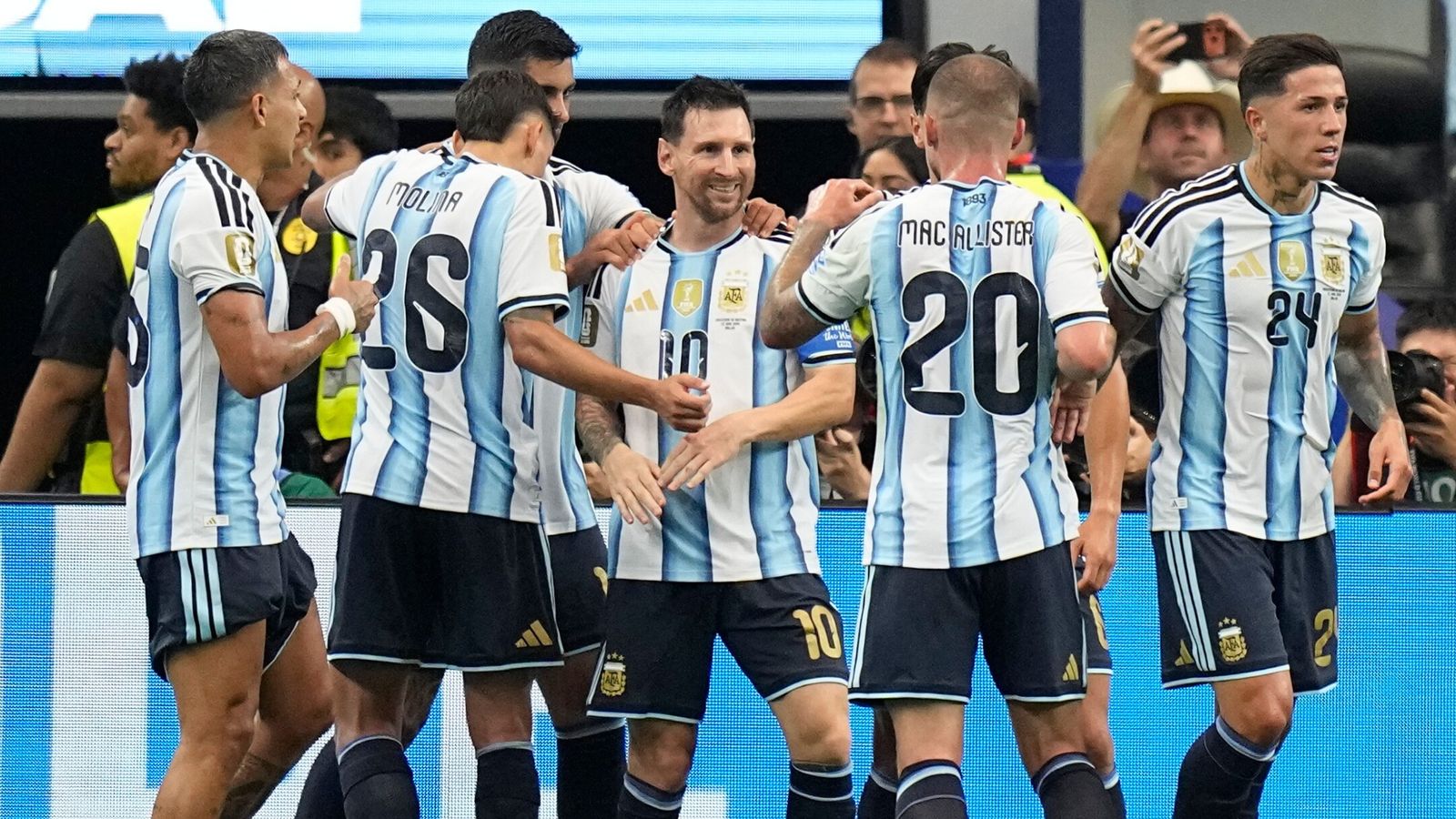
Lionel Messi’s performance against Austria wasn't defined by the sheer volume of his touches, but by clinical spatial awareness. With a brace that secured Argentina’s progress, he demonstrated why his role has evolved while remaining the focal point of every attacking transitional sequence.
By dropping into the pockets between the Austrian holding midfielders and their defensive line, Messi bypassed the initial press with ease. His first goal, arriving in the 28th minute, was a masterclass in reading the defensive trigger. As soon as the ball was won in the middle third, he anticipated the gap behind the high line and timed his run perfectly to finish with his weaker foot.
The evolution of Argentina's shape
Managerial adjustments were evident throughout the 90 minutes. Argentina utilized a fluid 4-3-3 that effectively morphed into a 3-2-5 when in transition. The width provided by the fullbacks forced the Austrian defenders to widen their structure, which naturally stretched the central channels.
This created the operating space Messi thrives in. Between the 40th and 55th minutes, he completed 94 percent of his passes, many of which were incisive, diagonal balls intended to break the second line of the Austrian block. It was efficient football, played with a clarity that made the opposing defense look leaden-footed.
Critical lapses in defensive transition
Despite the win, the performance was not without its thorns. There was a concerning lack of defensive intensity from the Argentine midfield during the hour mark. Austria exploited this on two separate occasions, forcing a high-stakes save that kept Argentina’s 2-0 lead intact.
The lack of a true defensive screen allowed the Austrian attackers to turn on the half-turn far too comfortably. Relying on individual brilliance to carry the scoreline is a dangerous habit in knockout competition. If the defensive structure against counter-attacks does not tighten, superior opponents will punish these gaps.
Setting the standard
The second goal was the ultimate confirmation of his influence. Winning the ball deep and driving at the heart of the defense, he picked his spot with surgical precision. The 74th minute finish was not just a goal; it was a reminder that even as his acceleration wanes, his processing speed remains faster than any defender currently active.
As Sky Sports reported, this brace placed him in the history books for all the right reasons. While the headlines will naturally center on the numbers, the real story is his ability to manage the game tempo. He dictated when to hold, when to release, and when to finish, rendering the Austrian game plan obsolete before the final whistle blew.
Argentina moves forward, but the coaching staff has a clear mandate. Improving the consistency of the defensive press is the only missing piece of the puzzle. Without that fix, they remain a team reliant on individual flashes rather than complete control, a gamble that rarely pays off against the elite.
Read Next
Official Liverpool FC Liverbird Scarf
The classic fan scarf to show your support for the Reds.
Frequently Asked Questions
How did Lionel Messi bypass Austria's defensive press?
What tactical formation did Argentina use against Austria?
When did Messi score his two goals in the match?
What defensive issues did Argentina face during the match?
What does Argentina need to improve for future knockout rounds?
More Coverage

Shaun Wright-Phillips on Strictly is a reminder of football's lost wingers
2 days, 1 hour ago
Thomas Tuchel is lying to himself about why England collapsed
2 days, 20 hours ago
Tuchel says player exhaustion forced his defensive gamble against Argentina
4 days, 16 hours ago
Leeds tore Newcastle apart, and Daniel Farke's plan is finally clicking
5 days, 17 hours ago
Cyle Larin is turning Southampton's Spygate nightmare into a promotion charge
5 days, 22 hours ago
Arsenal survived Sunderland, but PGMOL's new penalty rule is a disaster
6 days, 22 hours agoMore Analysis
Shaun Wright-Phillips on Strictly is a reminder of football's lost wingers
2 days, 1 hour ago
Thomas Tuchel is lying to himself about why England collapsed
2 days, 20 hours ago
Tuchel says player exhaustion forced his defensive gamble against Argentina
4 days, 16 hours ago
Leeds tore Newcastle apart, and Daniel Farke's plan is finally clicking
5 days, 17 hours ago
Cyle Larin is turning Southampton's Spygate nightmare into a promotion charge
5 days, 22 hours ago