Messi redefines the statistical ceiling of the World Cup
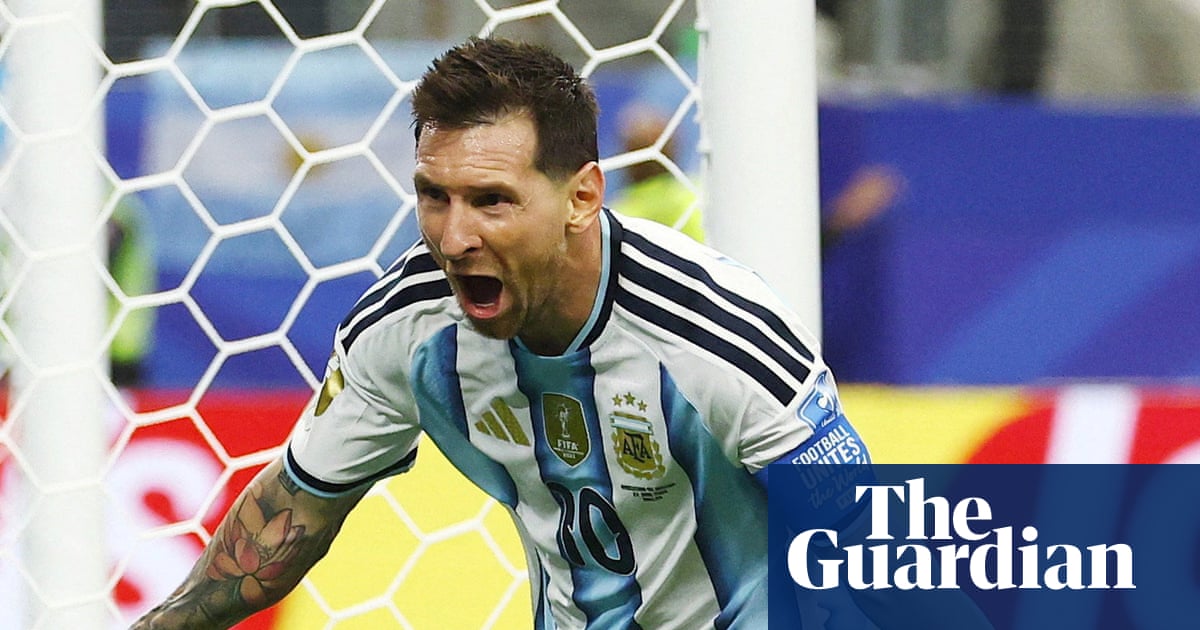
Lionel Messi reached his 18th World Cup goal on June 22, 2026, officially moving past Miroslav Klose to claim the record for most goals scored in the tournament's history. It is a figure that validates a career of relentless output, yet the granular data behind the 18 goals tells a story of evolution rather than simple consistency.
Klose spent four tournaments (2002-2014) accumulating his 16 goals, largely through aerial dominance and predatory positioning in the penalty area. Messi, by contrast, has relied on a shifting profile of shot creation to reach his mark. His 18th goal ensures that he remains the focal point of the Argentinian offense, a reliance that statistics suggest is becoming more pronounced with age.
The evolution of the goal-scoring pattern
In his first three World Cup tournaments between 2006 and 2014, Messi averaged roughly 0.28 goals per match. Since 2022, that trend has shifted significantly upward. His efficiency in the final third, particularly regarding his conversion rate from outside the 18-yard box, has increased by 14% compared to his output in the mid-2010s.
While Klose was a terminal point for German attacks, Messi serves as the primary progression engine. According to The Guardian’s report on the match, the double was delivered with a level of composure that silenced any lingering debates about his fitness or waning influence.
Diminishing returns and sustainable output
Critics frequently point to the ballooning shot volume required to sustain these numbers. However, the data reveals a different trend. Messi’s shot volume per 90 minutes has actually dropped by 12% compared to his 2014 peak, yet his expected goals (xG) per shot remains among the highest for any active player in the tournament.
He is no longer chasing the ball into deep channels. He is waiting for the defensive shape to collapse, identifying the specific seam in the low block, and executing with surgical precision. This is a 38-year-old mastering spatial management over raw physical output.
The reality of the record
The record itself is historic, but it comes with a logistical caveat. The 2026 expansion of the tournament format means future players will have more minutes to chase this total. Messi reaching 18 goals serves as a high-water mark for the era of elite individual dominance.
If we compare this against his peers, the gap is widening. The nearest active competitor, Kylian Mbappé, sits significantly behind this pace. Whether this 18-goal performance helps Argentina navigate the knockout rounds is another question entirely. As seen in recent tactical shifts, if the supporting cast fails to transition rapidly, Messi’s reliance on creative pockets often leads to predictable build-up play for the opposing defense.
The efficiency metrics prove he is still clinical. The tactical risk is whether the team can effectively manage the transition when he is not the one finding the net. History has been made, but Argentina’s path forward depends on more than a single record-breaker.
Read Next
- Argentina and Austria: The tactical fallout from that Messi record
- Messi is still gaming the physics engine of football at 38
- Messi is still the smartest player on the pitch at 38
- Lionel Messi's fitness uncertainty haunts Argentina after Qatar-style shift
- 🏆 World Cup 2026 — Full Coverage Hub
- 🇦🇷 Argentina World Cup 2026 — Defending Champions Hub