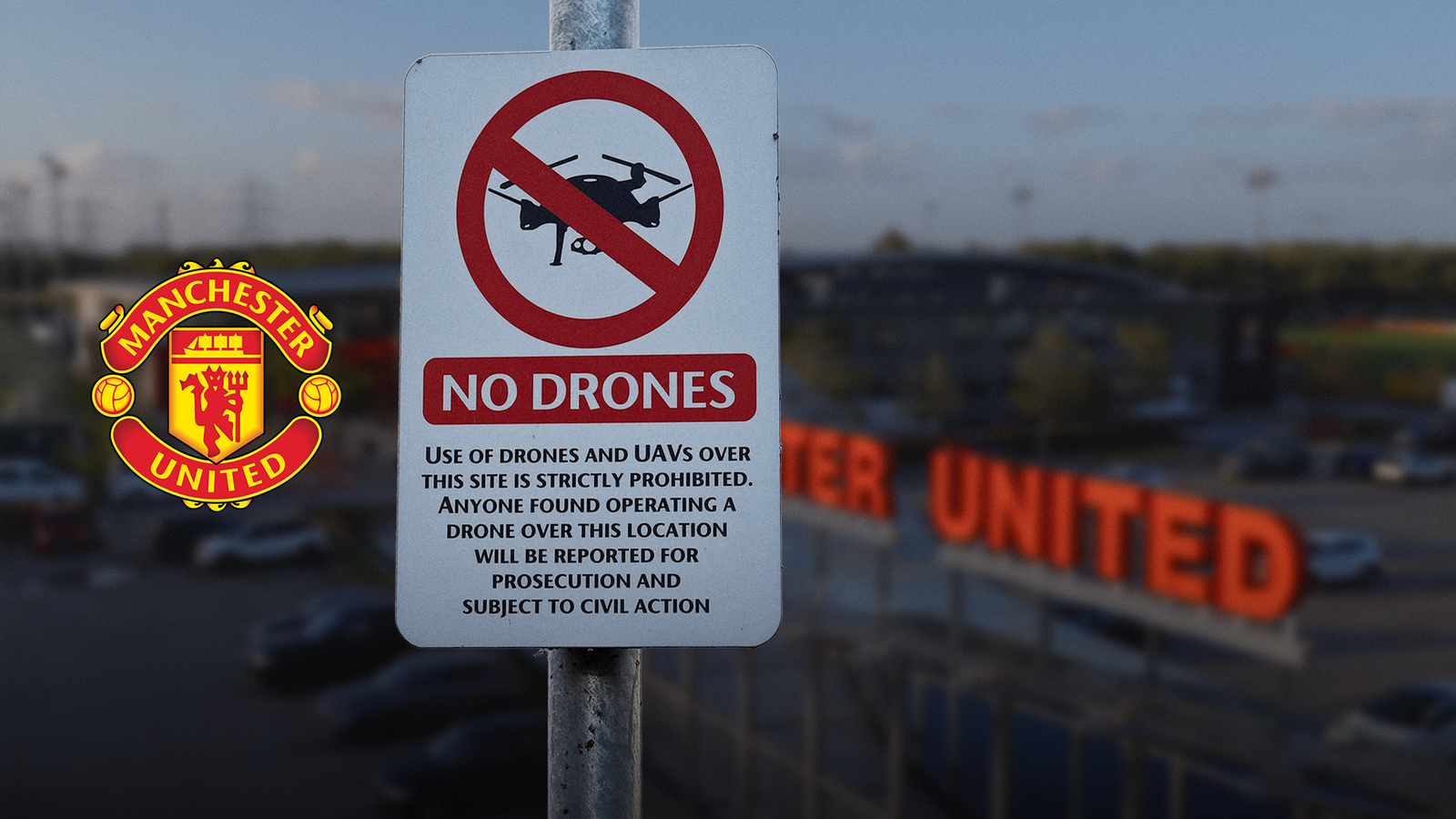
An unauthorized drone over Carrington blew the lid off Mauricio Pochettino's first training session at Manchester United. In an era where Premier League medical departments guard fitness data behind high fences, the footage stripped away United's conditioning privacy. It handed immediate tactical intelligence to Liverpool head coach Andoni Iraola ahead of Sunday's clash at Anfield.
Iraola confirmed on Friday that he was sent the video on Thursday. That gave Liverpool's performance staff a seventy-two-hour window to study United's squad health and training numbers. The leak cuts straight to the heart of sports science: tracking who is fit, who is carrying a knock, and who is ready to play.
United travel to Merseyside under a new manager and facing heavy pressure. But the broader story is about how easily external cameras can disrupt a medical department's return-to-play protocols.
The Carrington Footage and Fitness Exposure
The footage lasted for 12 minutes, captured from multiple angles and heights directly above United's training pitches. It was later uploaded online for anyone to see.
For high-performance fitness staff, twelve minutes of unedited footage provides critical intelligence. You monitor acceleration phases, see who drops out of intense running drills, and evaluate player workloads after long journeys.
Ten outfield players were seen working directly with Pochettino during the session. That number immediately raised questions about United's active squad depth. Iraola pointed out that ten outfield players working with the manager does not guarantee starting spots on Sunday, but it reveals their core group.
The drone operator apologized and removed the video after it went viral. Yet United's internal reaction felt surprisingly passive. Sources told the BBC Sport reporting team that United were adamant no security breach took place and that the club had no plans to pursue legal action.
That stance is questionable. In a competition where a single muscular injury alters an entire season, failing to challenge airspace incursions leaves club medical departments exposed.
Closed Doors, Broadcast Windows, and Medical Privacy
Iraola was vocal about the incident during his Friday media briefing. The Liverpool boss made it clear that aerial training surveillance should be outlawed.
"The important part of this is that it shouldn't be legal. It happened to United but it could happen to me."
Training grounds operate under lock and key for good reason. Medical confidentiality and tactical shape are closely tied in elite football. When cameras peek over fences, conditioning plans unravel.
Iraola highlighted the routine media access granted to television broadcasters at Liverpool's own complex to show how quickly availability leaks occur. Just twenty-four hours earlier, rights holders filmed Liverpool's players during a pre-match session.
"Yesterday, when Sky Sports had access to our training and the cameras recorded 15-20 minutes, you know who trained and who didn't."
That admission shows how delicate medical secrecy is. When broadcasters film a brief window of 15-20 minutes, fitness reporters immediately compile an availability checklist.
They spot which defenders are limited to light jogging. They note who stayed inside for treatment. If a regulated television crew can decipher squad fitness in minutes, an overhead drone unmasks everything.
Iraola dismissed the idea that this is merely about gamesmanship. For him, it is an ethical standard that protects squads from invasive surveillance.
"It's not the matter of the advantage. It's the fact that someone can do this," Iraola stated. "There's a reason we train behind closed doors because there are some things that you have to respect. I don't think it's nice for any club."
Pochettino's Conditioning Demands and Strategic Imbalance
Pochettino's arrival at Old Trafford introduces a massive physical reset for a squad that has struggled for energy. The former United States manager demands high pressing, rapid transitions, and intense running volumes.
His assistants flew to England early to work with the players before Pochettino landed on Wednesday. That split schedule left United's staff very little time to evaluate individual fitness profiles or manage muscular fatigue.
Pushing players into an aggressive running system mid-season without a conditioning baseline carries serious soft-tissue risks. When workloads spike suddenly in late November, muscle strains follow quickly.
For Liverpool, preparing for an unknown tactical setup creates real difficulty. Iraola admitted that Pochettino's tenure with the United States national team offers few clues for Sunday.
"We've faced each other and obviously he has a lot of Premier League games behind him that we can look at," Iraola explained. "We can look at games from the US but it's true that they have this small advantage that we don't have references to prepare, because they can go different ways that we honestly don't know right now."
Liverpool know United's personnel individually, but not how Pochettino will organize them physically.
"They have this advantage that we don't exactly know - or at least we don't have the references like we do against other opposition," Iraola said. "Especially the beginning of the game will be important. We have to adapt to certain things. But we know the players very well."
Anfield Pressure and Vulnerabilities
The league table paints a sharp contrast. Liverpool sit fourth, while United sit 14 places back in eighteenth position.
Yet Liverpool's home form has been surprisingly shaky this season. Iraola's side have suffered painful defeats against Arsenal and Manchester City at Anfield.
Historically, this fixture has tested Liverpool. The Reds have failed to beat United at Anfield in each of the past three seasons, turning what was once a stronghold into a nervy test.
Iraola acknowledged the magnitude of Sunday's match while confronting his team's poor home record, as detailed in the BBC match preview.
"You don't find bigger games than this," Iraola told reporters. "I feel lucky to be here and privileged to be a part of these games."
"We have to acknowledge the importance of the game. There are a lot of ingredients. They have a new manager, new challenges for us. This is important for us in a lot of different ways."
Iraola was refreshingly direct about the disparity between their strong away performances and their home troubles.
"We want to improve our form at home. We have been very good away but not good at home and the first chance we have is United on Sunday."
Protecting Medical Data in Modern Football
Training ground security is no longer just about guarding set pieces. For modern backroom staffs, preventing aerial surveillance is about protecting confidential player health records and rehabilitation programs.
If an injured starter is doing modified sprints away from the squad, a drone reveals that lack of match fitness instantly. Opponents can plan their pressing triggers and exploit players who are not ready for ninety minutes of Premier League intensity.
Sunday at Anfield will test whether Pochettino's physical demands can stabilize United's season. Yet the Carrington incident proves that the struggle to keep squad fitness data private is slipping out of club control.