The Tactical Shift Under Sébastien Pocognoli
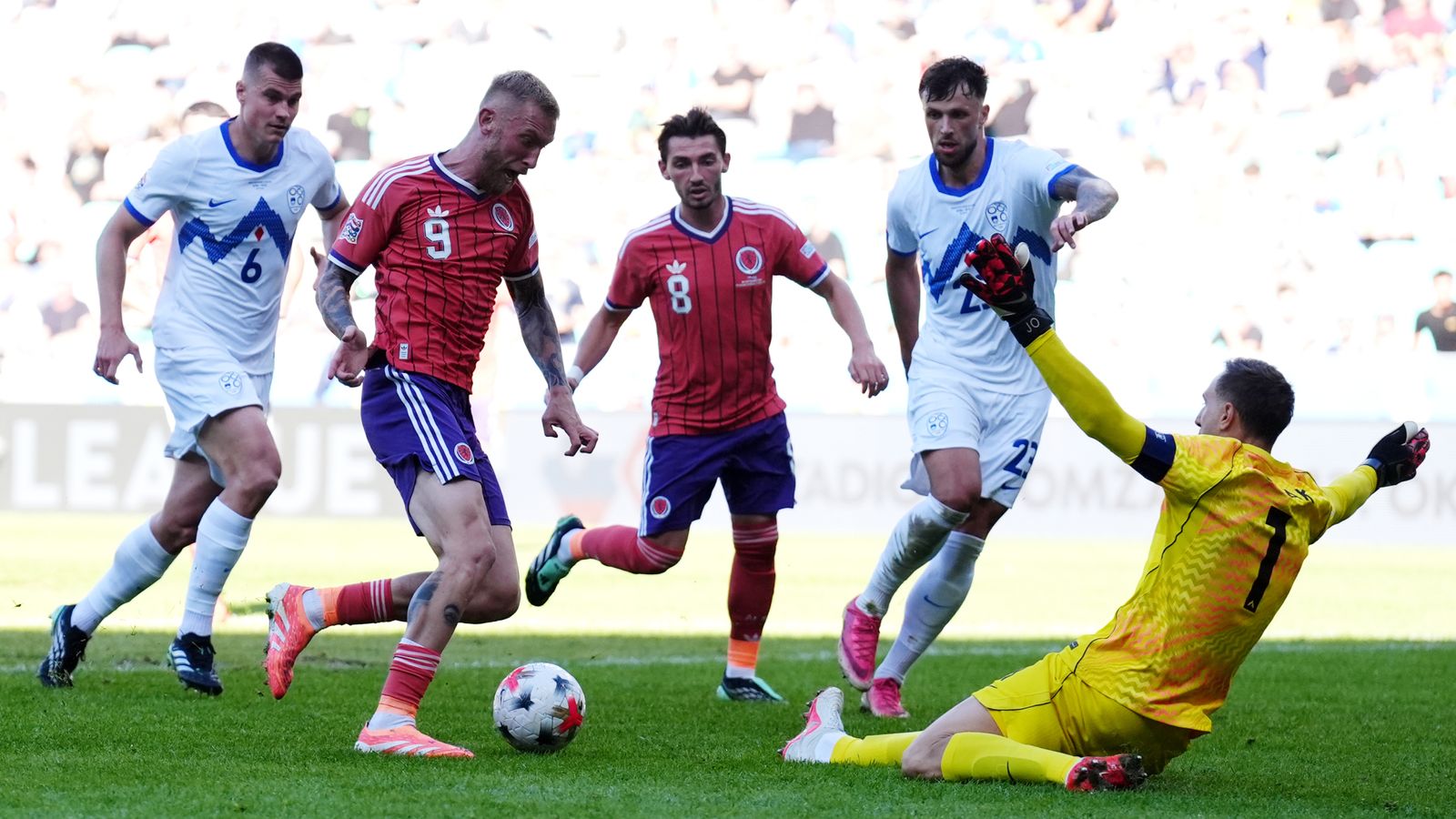
Sébastien Pocognoli's debut as Scotland manager on Saturday ended in a goalless draw away against Slovenia. The 0-0 result looked flat on the scoreboard, but the second-half adjustments revealed a clear tactical direction.
During the opening 45 minutes in Ljubljana, Scotland struggled to break through Slovenia's rigid 4-4-2 mid-block. The central defenders repeatedly recycled possession across the backline without penetrating the central channels.
That structural stagnation changed at half-time when Pocognoli altered his interior midfield positioning. By pushing his central midfielders ten yards higher into the half-spaces, Scotland pinned Slovenia's full-backs and created space on the flanks.
This approach marks a direct departure from the static build-up patterns that defined Scotland's group-stage exit at the World Cup earlier this summer. Pocognoli wants rapid vertical ball progression rather than passive possession statistics.
To reinforce this tactical identity, Pocognoli moved Monday's pre-match training session to Hampden Park instead of using their usual base next door. As reported by The Guardian, the Belgian manager wanted his younger players to feel the atmosphere of the national stadium before kickoff.
Pocognoli noted that while Hampden's structure looks clean, the historical weight inside the venue is undeniable. Tuesday night represents his first home test, offering an immediate opportunity to establish momentum ahead of next year's Euro qualifiers.
Why Billy Gilmour Holds the Key to Hampden
Billy Gilmour missed Scotland's entire World Cup campaign in North America because of a knee injury. His absence left Scotland without a primary orchestrator who can receive under pressure and control match rhythm.
His return in the second half against Slovenia immediately changed how Scotland moved through the third. Gilmour operated as a single pivot, constantly demanding the ball from his central defenders under heavy pressing.
Pocognoli highlighted Gilmour's rare technical vision when describing his impact on the team's structure.
"If you have a player who plays one touch without even looking where he puts the ball it means that he understands the game plan," Pocognoli said. "We don’t have a lot of players like this."
At Napoli, Antonio Conte requires Gilmour to focus heavily on off-the-ball defensive shape and positional discipline. For Scotland, Pocognoli gives him the creative freedom he enjoyed during his breakout season at Brighton.
Gilmour's strength lies in his body orientation prior to receiving. He checks his shoulder twice before taking a touch, allowing him to turn away from markers and play forward instantly.
However, playing with high vertical risk carries obvious downside. Against Slovenia, Gilmour misplaced three simple passes inside his own half during dangerous phase-one build-up moments.
Those unforced errors gave Slovenia immediate transition opportunities that superior teams would exploit. Pocognoli acknowledges those mistakes but insists that Gilmour must take risk to maximize his creative capabilities.
With Champions League football now underway, Gilmour's club minutes at Napoli have increased significantly over the past month. That match sharpness ensures he has the conditioning required to orchestrate play at international intensity.
Switzerland's Travel Disruptions and Midfield Battle
Switzerland head into Tuesday's match under unexpected physical and logistical strain. Their flight to Glasgow suffered severe weight complications, forcing an emergency return landing in Zurich to refuel.
The team endured a two-hour flight delay before finally landing in Scotland late on Monday. The travel chaos directly impacted head coach Murat Yakin, who suffered ear pressure issues during the flight.
Yakin was unable to conduct Monday's press conference at Hampden Park and required rest before training. Assistant manager Davide Calla filled in for media duties while Yakin attempted to recover for Tuesday evening.
Calla emphasized that Switzerland are preparing for a much tougher physical battle than their previous meeting at Euro 2024. That tournament clash ended in a tense 1-1 draw where midfield control swung back and forth.
Calla pointed directly to Scotland's second-half performance against Slovenia as proof of their dangerous technical growth.
"In the second half against Slovenia they showed the quality they have," Calla noted. "It was clear Scotland were better in the second half."
As detailed ahead of Tuesday's Nations League clash, Switzerland's usual 3-4-2-1 structure relies on wing-backs pressing high to lock opponents in their own half. When opposition midfielders break that initial press with one-touch passing, Switzerland's center-backs are forced out into wide space.
If Swiss legs are heavy following their flight disruption, Scotland's central combinations will find gaps between Switzerland's midfield pivot and back three. Controlling that central zone will decide the outcome at Hampden.
Squad Depth, Physical Warnings, and Match Prediction
Despite the positive signs in build-up play, Pocognoli delivered a clear warning regarding long-term squad selection. Players who fail to secure consistent starting minutes for their clubs will struggle to retain international spots.
Key squad members including Ben Gannon-Doak, Ryan Christie, and Aaron Hickey have all experienced limited domestic action this autumn. While Pocognoli accepts this situation during early season fixtures, his patience will expire before Euro 2028 qualifiers begin next year.
Pocognoli remains confident that Gannon-Doak will earn regular starts as Bournemouth navigate their Europa League campaign. However, he expressed genuine concern regarding physical endurance over full 90-minute stretches.
Pocognoli framed the physical dilemma clearly during his pre-match press conference.
"What concerns me is when March comes," Pocognoli admitted. "If the players aren’t playing a lot then we will struggle with the physical aspects of the game."
As Pocognoli's post-match assessment suggests, international football demands maximum physical output. If Scotland tire after 70 minutes, Switzerland's depth could turn the match into an uncomfortable defensive retreat.
However, Switzerland's travel fatigue and head coach uncertainty tip the scales in Scotland's favor early on. Scotland will likely press high from kickoff, using Hampden's energy to disrupt Switzerland's build-up play.
Gilmour will dictate the match from deep, exposing Switzerland's wide center-backs with quick diagonal passes into space. Scotland will concede chances on counter-attacks due to Gilmour's risky pass selection, but their attacking volume will prove decisive.
Expect Scotland to take the lead mid-way through the first half before sealing a hard-fought 2-1 victory to give Pocognoli his first win as manager.
Read Next
- Thomas Tuchel thinks conceding 9 goals in 3 games is totally fine
- Manor Solomon can talk all he wants, but Ireland blew Israel away
- Why Thomas Tuchel's England will sweep Croatia and Czechia to reach the quarters
- Tuchel's depleted England face Spain test in FIFA's new autumn window
- 🇨🇭 Switzerland World Cup 2026 — La Nati Hub