The Boston Post-Mortem and Group Stage Fallacy
Germany's exit in the round of 32 was not a sudden accident. It was the predictable end of Julian Nagelsmann's over-engineered tactical model. The penalty shootout defeat in Boston exposed a team that had lost its identity, passing sideways until the clock ran out.
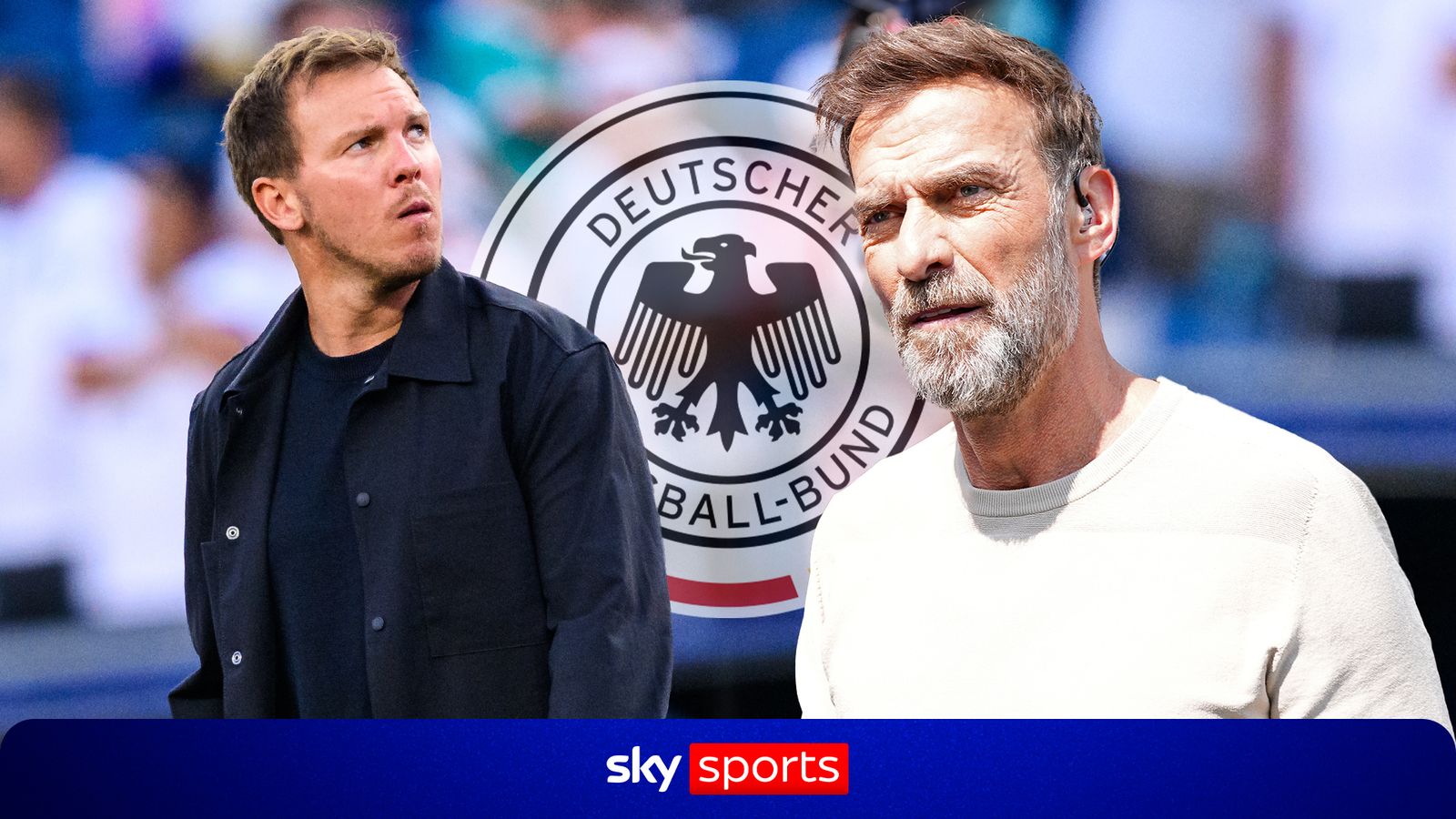
Nagelsmann chose to step down after the failure. His resignation has cleared the path for the German FA (DFB) to pursue the one manager who can shake this squad out of its possession-based torpor. Jurgen Klopp is ready to talk, and German football is about to undergo a violent stylistic shift.
The Illusion of the Curacao Blowout
Look closely at the data from Group E. The opening 7-1 victory over Curacao was a statistical aberration that masked deep structural flaws. Germany looked dominant, but they were playing against a World Cup debutant that offered zero defensive resistance in transition.
The warnings arrived immediately in the second match. Germany ground out a 2-1 win over Ivory Coast, but their rest defense was consistently exposed. By the time they faced Ecuador, the tactical plan collapsed entirely.
Ecuador did not win by outplaying Germany in possession. They won by sitting in a compact mid-block and waiting for Nagelsmann's structural rotations to leave the center backs isolated. The 2-1 defeat in that final group game showed how easily Germany could be hurt by simple direct play.
The Sterile Possession of Boston
The Paraguay match in Boston was the final, agonizing proof of this regression. Paraguay sat in a deep 5-4-1 block, refusing to press Germany's center backs. German possession reached 72 percent, but it was sterile, slow, and predictable.
Nagelsmann's side completed 682 passes, but only 14 of those entered the opposition penalty area. They lacked the vertical velocity to disrupt a settled defensive line.
The match ended 1-1 after extra time, and the subsequent shootout was merely a formal execution of a team that had already run out of ideas. As Sky Sports noted in their post-tournament analysis, this is a nation that has forgotten how to win at the highest level.
The New York Summit and the Red Bull Escape
Now, the DFB is moving with uncharacteristic speed. DFB president Bernd Neuendorf confirmed that the federation will meet Klopp in New York next week to finalize terms. This is a massive departure from the DFB's traditional hiring practices.
The federation has never paid a release fee to secure a head coach. Yet, they are prepared to do exactly that to extract Klopp from his role as global head of football at Red Bull. Klopp's contract runs until 2029, but it contains a specific exit clause designed precisely for the German national team job.
Klopp himself has confirmed his readiness. Two years after leaving Liverpool in 2024, he has declared himself ready to return to the touchline. The New York summit will outline how he plans to manage the transition.
"Now isn't the perfect timing. But it's better than it's ever been. I'm more than refuelled now, I'm ready." — Jurgen Klopp
The Gegenpressing Blueprint: Tactical Shifts and Physical Compromises
So, what does a Klopp-led Germany look like on the pitch? The first change will be the immediate dismantling of Nagelsmann's complex positional rotations. Klopp demands simplicity, verticality, and intensity.
Simplifying the Positional Rotations
Under Nagelsmann, midfielders were asked to rotate into wide areas to create overloads, often leaving the center of the pitch vacant during defensive transitions. Klopp will pivot to a more rigid defensive structure. He will likely deploy a 4-3-3 or a hybrid 4-2-3-1 that prioritizes central compactness and immediate counterpressing triggers.
The German squad is well-suited for this transition, but there are significant hurdles. Players like Florian Wirtz and Jamal Musiala thrive when given freedom between the lines, but they must adapt to Klopp's demanding physical requirements. Counterpressing is not a suggestion; it is a defensive system that requires absolute synchronization.
The Physical Demands and Corporate Bitter Taste
There is also a negative side to this appointment that German fans must confront. Klopp's system demands an elite physical profile that this current squad has struggled to maintain over a long tournament. In the defeat against Ecuador and the draw in Boston, Germany looked physically spent by the 70th minute.
If Klopp attempts to implement a high-intensity press without adjusting for the international calendar, he risks burning out a squad already fatigued by domestic schedules. International managers do not have six weeks of pre-season to build the aerobic capacity his system requires. He will have to compromise on his trademark intensity, or risk further tournament disaster.
Furthermore, the DFB's willingness to pay a buyout fee to Red Bull sets a dangerous precedent. It links the national team directly to the commercial network of an energy drink conglomerate. For a football culture that prides itself on the 50+1 ownership rule and independence from corporate control, this deal will leave a bitter taste in the mouths of traditionalists.
The Rebuild and the Confident Prediction
The transition must start with the defensive line. Germany's center backs have been left exposed for too long, protected only by a midfield that prioritizes possession over defensive coverage. Klopp will need to find his German version of Wataru Endo or Fabinho—a screening midfielder willing to do the dirty work while others attack.
We can expect to see much faster vertical transitions. When Germany wins the ball, the first pass will be forward, targeting the space behind the opponent's full-backs. The slow, sideways recycling of possession that characterized the disastrous night against Paraguay will be banned.
This is the antidote to the tactical disease that has infected German football since 2018. The obsession with copying Pep Guardiola's positional play has produced a generation of technical midfielders who lack killer instinct. Klopp represents a return to the traditional German virtues of power, speed, and relentless pressure.
This will not be a smooth transition. Klopp will face early setbacks as the players adjust to the physical demands of his counterpressing system during short international breaks. But the sheer talent in this squad is too high for them to remain in the international wilderness.
By the time the next European Championship arrives, Klopp will have forged a unit that is hated to play against. They will not dominate possession, but they will humiliate teams on the counter-attack.
My prediction is clear. Jurgen Klopp will secure Germany's passage to the next tournament, weed out the slow, possession-obsessed veterans, and guide the nation back to the semi-finals of international football within two years. The heavy-metal football era is about to begin, and it will be brutal for anyone standing in their way.
Read Next
- Why Tuchel's right-back gamble could blow up in England's face against Mexico
- Thomas Tuchel is driving England fans insane with his right-back obsession
- England's right-back crisis has turned Thomas Tuchel into a mad scientist
- Why Jurgen Klopp is the only man who can fix Germany's broken midfield
- 🏆 World Cup 2026 — Full Coverage Hub
- 🇩🇪 Germany World Cup 2026 — Die Mannschaft Hub