The Post-Mortem of a Systemic Failure
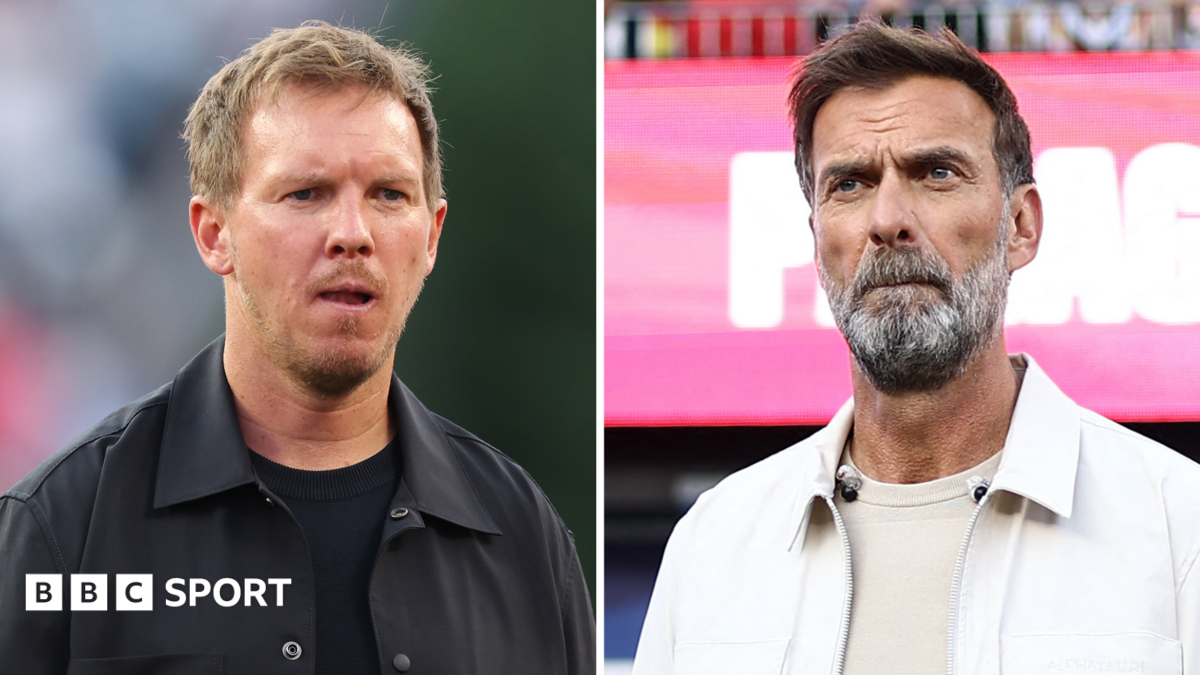
The post-mortem of Germany's World Cup exit will not be quiet. The DFB did not wait for the tournament dust to settle before initiating a radical overhaul of the national team setup. Just four days after a shocking defeat to Paraguay, Julian Nagelsmann was gone.
The DFB paid a heavy price for this failure. Nagelsmann's departure resulted in a £6m contract termination. Now, the German FA has turned its sights to the ultimate prize in German coaching: Jurgen Klopp.
The former Liverpool manager has already confirmed he is in talks to take the role. It is a transition that is both necessary and overdue.
Germany's campaign in South America was a masterclass in modern possession rot. The team lacked direction, energy, and tactical flexibility. Under Nagelsmann, the national side had become an exercise in theoretical geometry rather than dynamic football.
They passed for the sake of passing. The DFB, which had backed Nagelsmann with a lucrative extension, was forced to accept reality.
According to reports from the Daily Mail, Klopp became the immediate target once the resignation was finalized. Negotiations are moving fast. The heavy-metal era is arriving.
The Tactical Rigidities that Ruined Nagelsmann
To understand why Germany fell to Paraguay, one must analyze Nagelsmann's obsession with structural symmetry. Germany dominated possession in that match, registering seventy-two percent of the ball, but they did nothing with it. The midfield circulation was painfully slow.
Pascal Gross and Robert Andrich remained entirely flat, failing to draw out the Paraguayan mid-block. Paraguay simply sat in a compact 4-4-2, allowing Germany to pass sideways until a turnover occurred. This was tactical suicide.
Paraguay exploited this structural vulnerability on the counter-attack. The match-winner came in the 73rd minute after a simple clearance bypassed Germany's counter-press entirely. Jonathan Tah was left isolated against a sprinting forward, exposed by the lack of defensive cover.
Nagelsmann's box midfield was supposed to provide stability, but it lacked lateral mobility. Germany's possession was slow and predictable. It was a tactical system designed for club football, requiring weeks of training that a national team simply does not have.
In the second half of that match, Germany accumulated a miserable 0.42 expected goals (xG).
The DFB's preparation was also deeply flawed. They built a squad filled with playmakers but devoid of natural width. When Paraguay choked the central channels, Germany had no response.
Nagelsmann refused to adapt, sticking to his preferred shape even as the clock ticked away. The players looked confused by the constant rotation requests from the touchline. This arrogance cost Germany their place in the tournament.
The subsequent exit was humiliating but entirely deserved.
How Klopp's Verticality Restores Balance
If Nagelsmann was about control, Klopp is about chaos under control. His immediate task will be to strip away the over-complications. Germany's squad is packed with technical talent, but it lacks the physical intensity required to dominate international tournaments.
Klopp's signature approach relies on counter-pressing as a playmaker. Instead of waiting for a slow build-up, Germany will look to win the ball high up the pitch and strike in transition. This shift will demand a completely different physical profile from the midfield.
This is where the Liverpool connection becomes vital. Florian Wirtz, who has established himself as a central figure for Liverpool, will be the focal point of Klopp's tactical framework. Klopp has previously praised the playmaker's ability to operate in tight spaces and transition rapidly.
In Klopp's system, Wirtz will not be restricted to a wide-drifting role. He will operate as a high-pressing number ten, tasked with leading the first line of engagement. This relationship could define the next decade of German football.
Klopp knows how to get the most out of Wirtz's vertical passing range.
Wirtz's role at Liverpool has prepared him perfectly for this role. Under Klopp's prospective system, he will have the license to drive forward rather than recycle possession.
The connection between Wirtz and Jamal Musiala must be unlocked. Under Nagelsmann, they often occupied the same zones, stepping on each other's toes.
Klopp will likely separate their responsibilities, using one as a vertical threat and the other as a drifting creator. It is a mouth-watering prospect for German fans.
Rebuilding the German Spine
Germany's defensive record over the last two years has been poor. The team conceded in almost every major fixture leading up to the tournament. Antonio Rudiger and Tah have struggled to form a cohesive partnership, often dropping too deep when pressured.
Klopp must introduce a higher defensive line to compress the space in midfield. This requires center-backs who are comfortable defending fifty yards of open space behind them. It is a high-risk strategy, but it is the only way to make the counter-press effective.
The midfield selection will also need a complete refresh. The Gross-Andrich partnership lacks the athletic dynamism to cover the ground Klopp's system requires. We are likely to see younger, more mobile profiles introduced to the squad.
Players who can cover ground quickly and execute tactical fouls in transition will be prioritized. The era of passive possession in Munich and Stuttgart must end. Klopp will demand defensive work rate from every single attacking player, including the wingers.
There is also the problem of the center-forward. Niclas Fullkrug has been a useful option, but he does not fit the physical profile of a Klopp forward.
Klopp requires a striker who can lead the press, drop deep to link play, and create space for runners. Without a natural Roberto Firmino clone in the German ranks, Klopp will have to get creative. He may look to deploy a false nine or convert a winger to lead the line.
This will be his toughest coaching challenge.
The Verdict: A Masterstroke in the Making
This appointment is not without risk. National team managers do not get daily training sessions to implement complex pressing triggers. Klopp's heavy-metal football requires elite physical conditioning, which is hard to monitor during international breaks.
However, Klopp is a master motivator. He excels at creating a club-like atmosphere within a national squad, which is exactly what this fractured team needs. The tactical simplicity of his system might actually benefit a group of players tired of Nagelsmann's overthinking.
The DFB's decision to act quickly shows they understand the gravity of the situation. They could not afford to drift under a caretaker manager. By targeting Klopp immediately, they have sent a clear message to the players and the fans.
The negotiations are already progressing, and Klopp's willingness to take the job suggests an agreement is close. This is the reset German football desperately needed after years of tournament underachievement.
My prediction is clear. Klopp will streamline Germany's possession play and restore their defensive bite within his first six months. By the time the next European Championship qualifiers begin, Germany will be playing the most vertical, aggressive football on the continent.
They will comfortably top their group and enter the next tournament as genuine favorites. The era of sterile possession is dead; the heavy metal era has begun.
Read Next
- FIFA moving the England-Mexico kick-off is a tactical disaster
- Tuchel's rigid tactics will melt under the Estadio Azteca midday sun
- England's defensive depth is falling apart before the Mexico clash
- Thomas Tuchel's altitude gamble could break England at the Azteca
- 🏆 World Cup 2026 — Full Coverage Hub
- 🇩🇪 Germany World Cup 2026 — Die Mannschaft Hub