
Germany's penalty myth died in Boston at the hands of a 6'6" giant
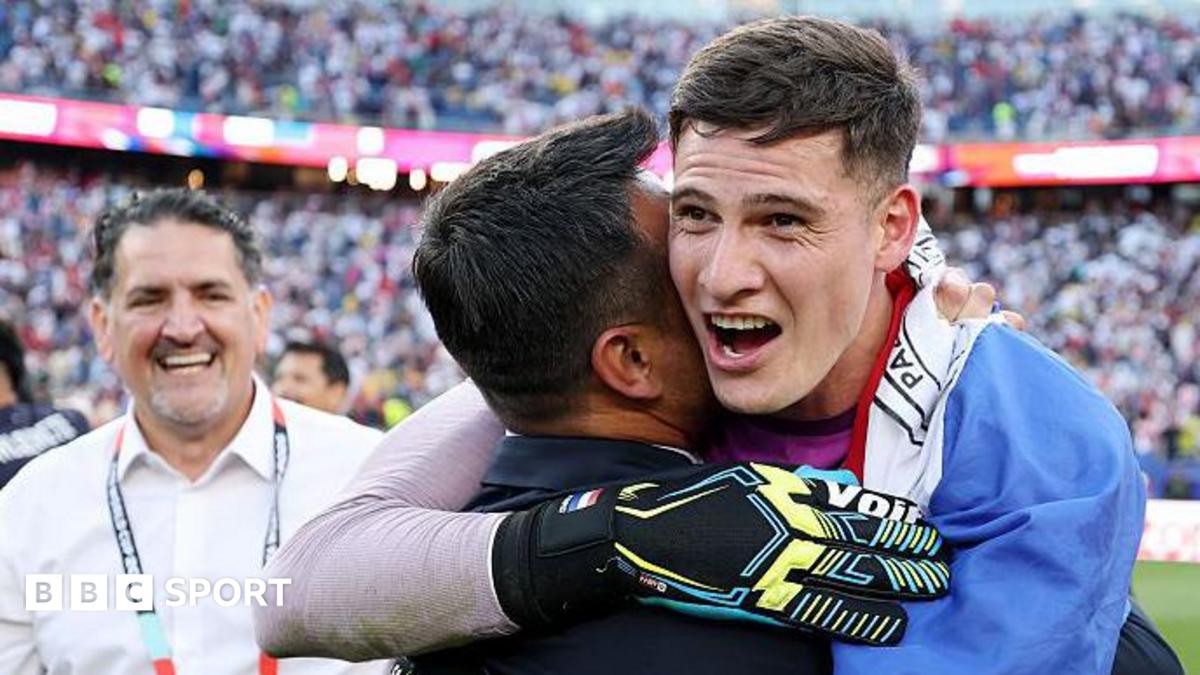
The Death of the German Shootout Myth
Before yesterday's kickoff at Boston Stadium, Germany's record in World Cup penalty shootouts was a flawless monument to German efficiency. Four shootouts, four victories, and a collective psychological stranglehold that had stood since Harald Schumacher denied France in Seville forty-four years ago. Yet on June 29, 2026, that historical certainty did not just falter; it evaporated.
Paraguay's stunning victory in the Round of 32 represents a tectonic shift in World Cup history. The South Americans entered the knockout stage as clear underdogs, relying on a defensive setup that many analysts dismissed as too passive. But what followed was a masterclass in tactical discipline and mental fortitude that ended in a 4-3 shootout triumph for Paraguay after a grueling 1-1 draw.
At the center of this upset stood Orlando Gill, the Paraguay goalkeeper whose remarkable rise was documented by BBC Sport. The towering goalkeeper became the first man to ever defeat Germany in a World Cup shootout, denying two German spot-kicks. His performance was not merely a collection of reactive saves, but a calculated exhibition of physical presence and spatial dominance.
Alfaro’s Low Block vs. Nagelsmann’s Possession Machine
Julian Nagelsmann deployed Germany in a fluid 4-2-3-1 system designed to dominate the central areas of the pitch. Jamal Musiala and Florian Wirtz operated in the half-spaces, constantly looking to exploit the gaps between Paraguay's midfield and defensive lines. The tactical blueprint was clear: pin Paraguay back, rotate the attacking midfielders, and create overloads in the final third.
Gustavo Alfaro, however, countered with a highly structured defensive system that neutralized Germany's creative hub. Paraguay aligned in a nominal 5-4-1 formation, which frequently compressed into a 6-3-1 as the German full-backs pushed deep into the corners. The defensive line stayed incredibly compact, leaving less than ten yards of space between themselves and the central midfielders.
By restricting this space, Paraguay forced Germany to circulate the ball horizontally rather than vertically. Robert Andrich and Joshua Kimmich found themselves with plenty of time on the ball, but very few passing lanes forward. The German center-backs spent long stretches passing between themselves, unable to find the line-breaking passes that Nagelsmann demands.
In possession, Robert Andrich frequently dropped between Rüdiger and Tah to form a temporary back three, attempting to shield Germany against sudden turnovers. This mechanism was meant to liberate Kimmich to push into the final third as an extra playmaker. However, the lateral circulation was so slow that Paraguay's mid-block shifted effortlessly, rendering the structural adjustment useless.
Paraguay's pressing triggers were highly specific and executed with intense discipline. They did not press Germany's defenders in their own half, choosing instead to drop off and conserve energy. The press only clicked into gear when the ball was played into a German midfielder facing his own goal, forcing quick turnovers.
This defensive passivity was not without risk, and there were moments when Paraguay looked dangerously close to breaking under pressure. In the 18th minute, a quick combination between Musiala and Wirtz unlocked the left channel, only for Gill to smother the resulting low cross. But Alfaro's side remained unfazed, refusing to stretch their lines to chase the ball.
The tactical rigidity of Paraguay's setup was designed to frustrate Germany's fluid attackers. Musiala, in particular, began to drop deeper to collect the ball, which played directly into Paraguay's hands. By pulling Musiala away from the penalty box, Paraguay eliminated Germany's most dangerous creative threat in the zone of truth.
The Exchange of Blows in Boston
Despite Germany's territorial dominance, it was Paraguay who broke the deadlock in the 42nd minute through Julio Enciso. The move began with a rare German transition failure, where a loose pass from Kimmich was intercepted by Mathias Villasanti. Villasanti immediately released Enciso, who timed his run perfectly to beat the German offside trap.
Paraguay's transition strategy bypassed Germany's counter-press entirely by going direct to the wings. Rather than trying to combine through the middle, Villasanti and Bobadilla immediately swept long diagonals toward the channels. This lateral expansion stretched the German defensive line, forcing Rüdiger to cover massive spaces on his own.
Enciso's opening goal was a tactical indictment of Germany's rest defense. Nagelsmann had committed both full-backs forward, leaving Antonio Rüdiger and Jonathan Tah isolated against Paraguay's counter-attack. Enciso met a looping cross with a powerful header that flew past Manuel Neuer, highlighting the defensive vulnerability that has plagued Germany throughout the tournament.
Nagelsmann reacted at halftime, instructing his team to play with more vertical speed and width. The German full-backs were told to make overlapping runs, forcing Paraguay's wing-backs to defend wider and creating gaps in the channel. The tactical adjustment paid immediate dividends in the 54th minute.
Germany's equalizer was a product of this increased width and directness. Musiala received the ball on the left flank and delivered a teasing, inswinging cross into the heart of the Paraguay box. Kai Havertz, exploiting a rare moment of hesitation in the Paraguay defense, rose highest to guide his header past the diving Gill.
The goal should have been the platform for a German onslaught, but Paraguay refused to panic. Alfaro responded by bringing on fresh legs in midfield, replacing the exhausted Damian Bobadilla with Richard Sanchez. This substitution restored Paraguay's defensive solidity, blocking the central passing lanes that Germany had briefly opened.
As the match progressed into the final half-hour of normal time, the play degenerated into a battle of attrition. Germany dominated the ball, finishing the match with 71% possession, but they lacked the incisive movement to break through. Paraguay's low block was simply too stubborn, and their central defenders matched every German delivery with physical resistance.
The 1.99m Wall and the Story of Gill
The standout player of this defensive resilience was undoubtedly Gill. Standing at 1.99m tall, the goalkeeper was an imposing physical presence who dominated his penalty area. He claimed cross after cross, relieving the pressure on his tired defenders and breaking Germany's offensive momentum.
Gill's performance is even more remarkable when placed in the context of his personal journey. Just 18 months ago, Gill was in complete football obscurity, playing for Sportivo San Lorenzo in the Paraguayan second tier. His family was facing severe financial hardship, compounded by the premature birth of his son, Lauti.
To support his family and pay for medical expenses, Gill resorted to selling his training kit. His wife's social media post detailing their struggles went viral, a poignant reminder of the realities faced by players outside the elite leagues. His transition from selling his kit to standing as Paraguay's World Cup savior is one of the most compelling narratives of modern football.
After joining Argentine club San Lorenzo de Almagro, Gill slowly rebuilt his career, earning his international debut in September 2025. His selection for the World Cup squad was viewed by some as a gamble, but yesterday he proved his doubters wrong. His physical stature and mental resilience proved to be the decisive factors in Paraguay's historic victory.
Gill's shot-stopping ability was on full display in the 78th minute when he denied Wirtz from close range. The German playmaker had found a yard of space inside the box and unleashed a powerful drive toward the top corner. Gill reacted instantly, using his massive wingspan to tip the ball over the crossbar and keep Paraguay level.
For Havertz's penalty, Gill stood motionless in the center of his goal line, refusing to bite on the striker's staggered approach. As Havertz committed to the left corner, Gill used his explosive lateral power to cover the ground, parrying the ball with a strong palm. It was a duel of nerves that the goalkeeper won before the ball had even left the spot.
Yet, Gill's dominance was not just about his saves; it was about his control of the box. He repeatedly came out to punch away dangerous German corners, neutralizing Germany's aerial threat. His physical presence seemed to shrink the goal for the German attackers, who grew increasingly frustrated as the game wore on.
Extra-Time Tension and Shootout Drama
Extra time followed the same pattern of German possession and Paraguayan resistance. Germany continued to pass the ball around the perimeter of Paraguay's defensive block, but their fatigue was evident. The German attacking movements lacked the sharpness and creativity required to break down Alfaro's organized defense.
The game's most controversial moment arrived in the 104th minute of extra time. Germany thought they had found the winner when Jonathan Tah headed home a free-kick from Wirtz. However, after a lengthy VAR review, the goal was disallowed for a foul on Gill, who had been impeded as he tried to claim the ball.
The decision was met with furious protests from the German bench, but it was tactically correct. Tah had used his arm to block Gill's jump, preventing the goalkeeper from reaching the cross. The disallowed goal seemed to sap the remaining energy from Germany, who looked resigned to penalties.
The atmosphere inside Boston Stadium shifted dramatically as the shootout approached, with the neutral crowd rallying behind the South American underdogs. Every Paraguayan clearance in extra time was greeted with a roar that seemed to fuel Alfaro's exhausted squad. Conversely, the German players faced a wall of noise that magnified the immense pressure on their shoulders.
When the referee blew the final whistle after 120 minutes, the psychological battle shifted. Germany's historical shootout invincibility loomed large, but Paraguay had Gill. The shootout began with Manuel Neuer saving Paraguay's second penalty, giving Germany an early advantage.
But Gill was not to be denied, showing the same focus that carried him through the toughest months of his career. He restored parity by diving low to his right to save a penalty from Kai Havertz, who had tried to stutter his run-up. Gill then made a brilliant save to deny Nick Woltemade, guessing correctly and diving to his left to parry the ball away.
The decisive moment came when Jonathan Tah stepped up to take Germany's sixth penalty. Under intense pressure, the German defender blasted his shot high over the crossbar. José Canale then stepped up for Paraguay, calmly converting his penalty to seal the shootout victory and send Paraguay through.
Nagelsmann’s Structural Blind Spot
Germany's elimination is a massive blow, and the post-mortem will focus on Nagelsmann's tactical choices. While Germany controlled the tempo, they lacked a focal point in attack to pin Paraguay's center-backs. Havertz's tendency to drop deep left the penalty box vacant, making it easy for Paraguay's defenders to shift and cover.
The lack of tactical variety in Germany's play was also a major issue. Nagelsmann's insistence on central combination play made them predictable and easy to defend. When Paraguay closed the central passing lanes, Germany had no Plan B, refusing to utilize width or direct play to stretch the defense.
Furthermore, Germany's transition defense remains a major concern under Nagelsmann. The high defensive line leaves them vulnerable to counter-attacks, as demonstrated by Paraguay's opening goal. If Germany is to challenge for future honors, Nagelsmann must find a better balance between possession and defensive solidity.
For Paraguay, the victory is a validation of Alfaro's defensive pragmatism. While some may criticize their defensive style, it is highly effective against possession-dominant teams. They will face a tough test in the Round of 16, but with Gill in goal, they will believe they can beat anyone.
The tournament now moves on, but the story of Gill will endure. From selling his kit in obscurity to defeating the German football machine, his journey illustrates the unpredictable nature of the game. For one historic night in Boston, Paraguay's giant stood tallest, and Germany's shootout myth was finally broken.
Read Next
- Germany are about to face a nightmare knockout test against Paraguay
- Germany and Paraguay just gave us the most stressful shootout of the summer
- Nagelsmann's midfield experiment is going to ruin Germany's World Cup
- Top 10: Top Moments
- 🇩🇪 Germany World Cup 2026 — Die Mannschaft Hub
- 🇵🇾 Paraguay World Cup 2026 — La Albirroja Hub
- 🇺🇸 WC 2026 Group D — USA, Paraguay, Australia
GTRACING Gaming Chair, Racing Office Chair with Footrest
The ultimate throne for long Premier League marathons or gaming sessions.
Frequently Asked Questions
Who was Paraguay's goalkeeper against Germany?
When did Paraguay defeat Germany in the 2026 World Cup?
What defensive formation did Paraguay use against Germany?
What was Germany's World Cup penalty shootout record before 2026?
How did Germany's Julian Nagelsmann set up his team tactically?
More Coverage
Liverpool's £90m Van Dijk replacement comes with a massive tactical catch
19 hours ago
Jürgen Klopp got the chaos he expected in a wild debut against the Dutch
4 days, 8 hours ago
Why Xabi Alonso and Roberto De Zerbi are already facing a tactical wall
4 days, 11 hours ago
Disney treated the Women's Champions League like CBBC and paid the price
4 days, 15 hours ago
Anthony Gordon is telling the truth about England's fatal flaw
4 days, 23 hours ago
Arsenal will get Julian Alvarez in January and Barcelona are handing it to them
5 days, 3 hours agoMore Analysis
Liverpool's £90m Van Dijk replacement comes with a massive tactical catch
19 hours ago
Jürgen Klopp got the chaos he expected in a wild debut against the Dutch
4 days, 8 hours ago
Why Xabi Alonso and Roberto De Zerbi are already facing a tactical wall
4 days, 11 hours ago
Disney treated the Women's Champions League like CBBC and paid the price
4 days, 15 hours ago
Anthony Gordon is telling the truth about England's fatal flaw
4 days, 23 hours ago