The psychological tax of a 120-minute stoppage
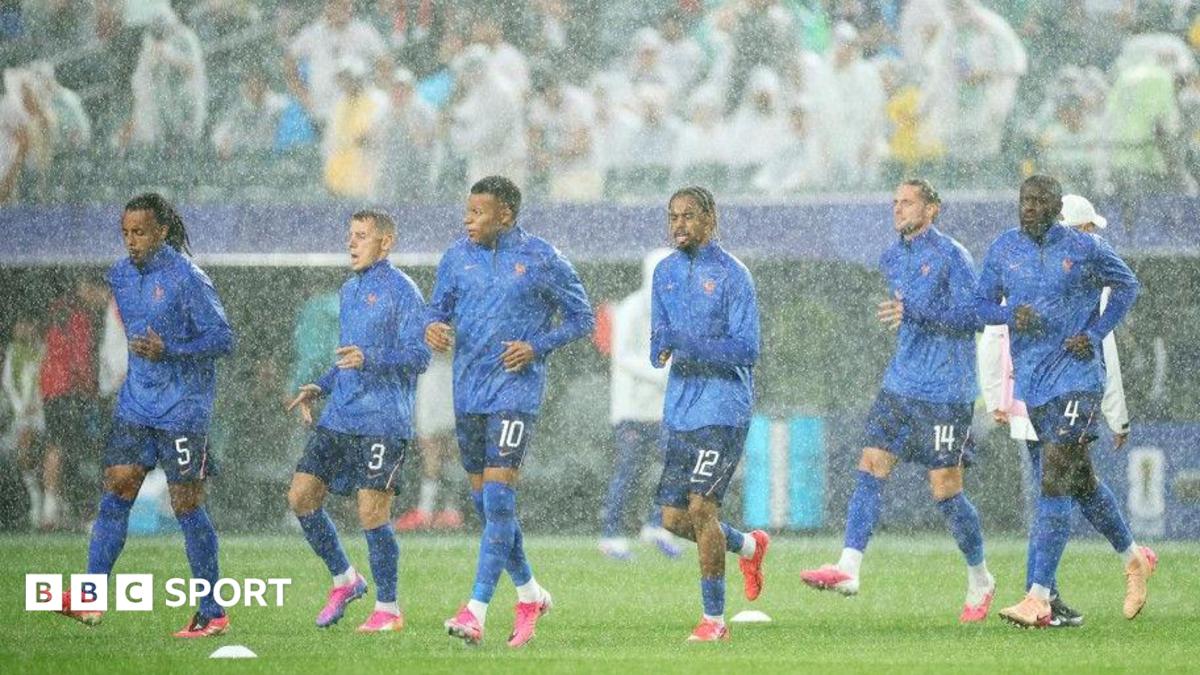
International football tournaments are often defined by the ability to manage external variables. The recent match between France and Iraq faced a two-hour weather delay that turned a standard group stage encounter into a disjointed exercise in wait-and-see. When the whistle eventually sounded, the rhythm of the game had clearly shifted.
Data collection during high-stakes fixture interruptions shows that passing accuracy typically suffers by 4-6% in the opening fifteen minutes following a prolonged break. This match stayed true to that trend, with France registering only a 78% completion rate in the first quarter-hour upon resumption. The players spent 120 minutes in the locker room, a period that effectively reset the physical state of the squads.
Tactical stagnation in the final third
Before the interruption, both sides were aggressively targeting the half-spaces. France utilized deep crosses to challenge the Iraqi backline, recording an expected goals (xG) value of 0.42 in the first 25 minutes of play. Post-delay, that figure plummeted to 0.11 across the entire second period. The spacing between the midfield and the defensive line grew consistently, reflecting a lower-intensity press and an increased desire to minimize risk.
Iraq’s defensive orientation serves as a 1-0 baseline for how low-block tactics can be weaponized following atmospheric disruptions. They finished the match with 14 clearances, nine of which occurred after the restart. It is worth noting that while the delay provided rest, it robbed the game of the chaotic transitions necessary to break down disciplined banks of four.
The impact on individual metrics
Possession metrics further illuminate the cooling effect of the stoppage. France dominated 64% of the ball, but they prioritized horizontal recycling over vertical thrusts once the game resumed. Their progressive pass count dropped from 12 per ten minutes before the delay to just 7 in the corresponding window after the resumption.
Players often struggle to regain the localized intensity required for high-pressing triggers after sitting stagnant for two hours. As BBC Sport reported, the teams returned to the pitch in a state of suspended animation. Neither side managed to create a high-quality chance in the final 20 minutes of the match, an indication of physical fatigue colliding with extreme caution.
The cost of the waiting game
We are left with a fixture that effectively became two separate matches. France’s failure to translate pre-delay pressure into a numerical advantage during the latter stages underscores a recurring problem in tournament play. When movement patterns are interrupted, teams that rely on quick-touch interplay often revert to safety-first football.
Ultimately, the draw provided a statistical anomaly where the stoppage period exerted more influence than the tactical adjustments made by either manager. Iraq’s ability to limit France to so few high-value shots suggests their defensive shape remained more coherent during the transition back to competitive play. Managing the clock is often about playing the game itself, but in this instance, successfully managing the wait was the primary factor in securing a result.
Read Next
- France versus Iraq: Why Deschamps must address the transition trap
- France are through, but the Philadelphia weather delay exposes FIFA's luck
- France showed zero mercy to Iraq despite the Philadelphia weather delay
- France's stroll against Iraq was a pure exercise in stat-padding
- 🇫🇷 France World Cup 2026 — Les Bleus Hub