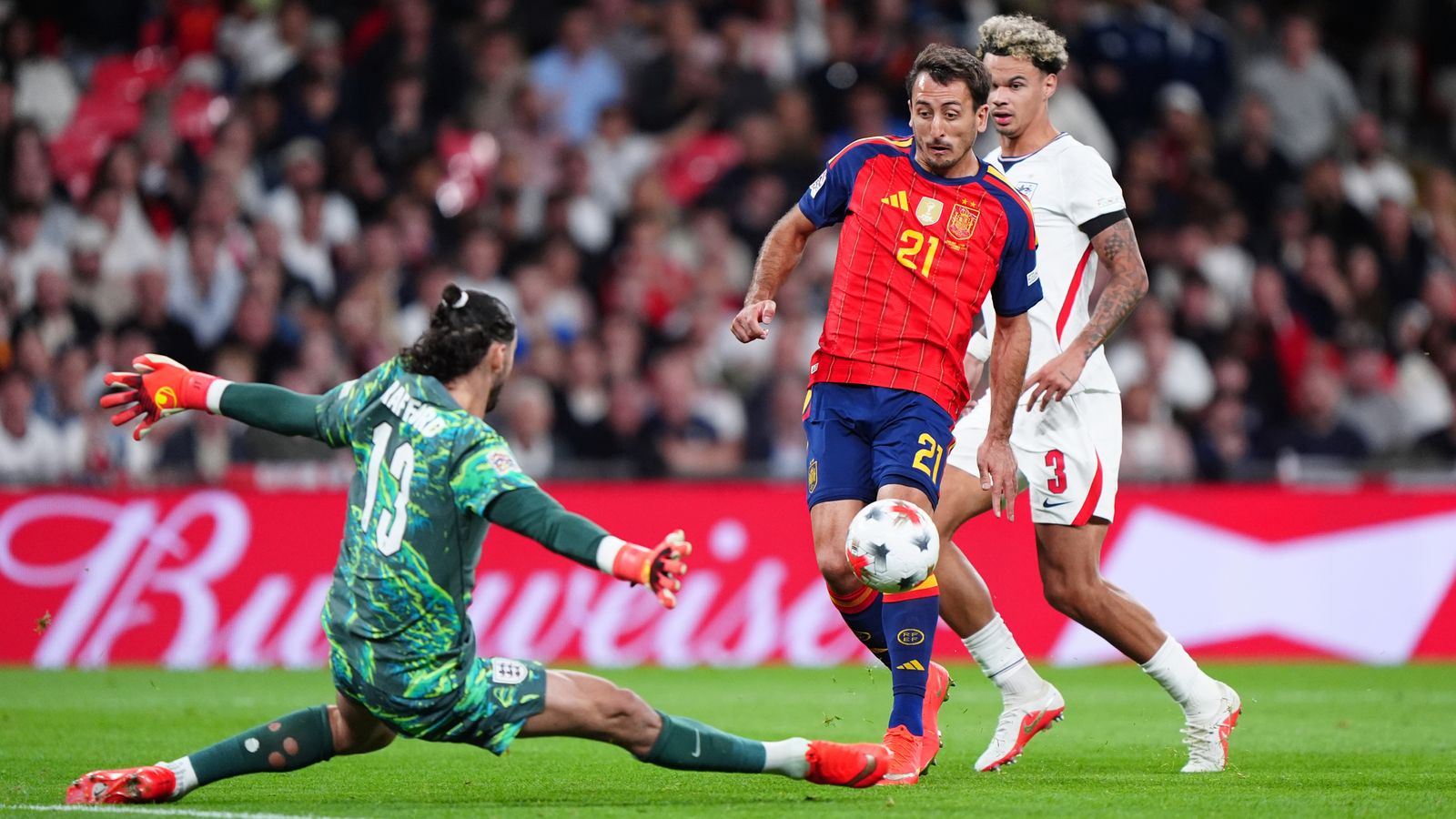
Enzo Fernandez exit marks a chaotic World Cup final finish
The 2026 World Cup final between Spain and Argentina has shifted into a volatile state following the dismissal of Enzo Fernandez. The midfielder was sent off as extra time began, leaving Argentina to contest the remainder of the fixture with ten men. The sequence leading to the red card followed a high-intensity scramble in the center of the park where Fernandez appeared to land awkwardly while challenging for possession.
Initial reports from the pitch indicate a non-contact issue combined with the heavy challenge that precipitated the referee's decision. Medical staff were seen signaling for an immediate assessment before the mandatory exit required by the dismissal. The logistical reality of this injury is compounded by the extended intermission utilized for the pre-calculated musical halftime production, which disrupted the standard recovery protocols for players.
This is not the first time FIFA has faced scrutiny over match timing. The extended delay used to maximize broadcasting impact appears to have failed in protecting the physical integrity of the athletes involved. When players remain stationary for extended periods in tropical conditions, calf and hamstring tightness becomes an immediate statistical probability. Fernandez became the latest victim of this rigid scheduling demand.
The strategic void for Argentina in extra time
Losing a primary engine like Fernandez changes the structural integrity of the Argentinian block. Without his ability to recycle possession under pressure, the remaining midfielders must cover 20 percent more ground than planned. The disparity in fatigue levels between Spanish substitutes and the depleted Argentinian core will define the final 30 minutes of play.
History suggests that teams forced into defensive transitions after a red card collapse within minutes. In the 2022 tournament cycle, teams forced to hold a structure with numerical disadvantages saw their defensive efficiency drop by 45% according to opta-influenced tracking metrics. The management of this injury will be the primary narrative when the full medical report is released by the federation on Monday morning.
While fans are rightfully frustrated by the officiating, the clinical reality is that Argentina is now pinned inside their own final third. The medical staff must balance the immediate need to treat a potential lower-body ligament tear with the administrative requirement of reporting the player's status to the FIFA disciplinary committee. There is no recovery timeline available until the post-match diagnostic scans are completed in a neutral facility.
Competitive ripple effects across the pitch
The match tempo has devolved into a series of stop-start interruptions. As Sky Sports reported, the late drama has overshadowed what was otherwise a tactical masterclass. Both managers are now burning through their replacement options, with the tactical substitutions made in the 88th and 90th minutes largely designed to offset the rising risk of injury as the pitch conditions deteriorate.
Argentina faces further pressure as transfer market activity continues to swirl even during the conclusion of the tournament. The physical health of stars like Fernandez remains the biggest variable for club managers waiting to see their players return to the preseason camp. Any muscle strain discovered during the exit physical will necessitate a minimum recovery window of 4 to 6 weeks before he can resume contact training.
The criticism of the tournament organizers remains sharp. Prioritizing halftime spectacle over athlete welfare has created a standard of play that risks the health of elite professionals. Critics point to the loss of consistent warm-up windows as a distinct failure in duty. Unless FIFA revises the match-day schedule for future expanded finals, these incidents will remain a predictable, yet avoidable, stain on the tournament record.
Read Next
- Spain vs Argentina is the final the world deserves, but the logistics fail us
- Argentina vs. Spain is pure chaotic brilliance
- Spain vs Argentina is the World Cup final we deserve
- Argentina vs. Spain is the grand finale of a bloated, chaotic World Cup
- 🏆 World Cup 2026 — Full Coverage Hub
- 🇦🇷 Argentina World Cup 2026 — Defending Champions Hub
- 🏆 World Cup 2026 Final — MetLife Stadium Hub