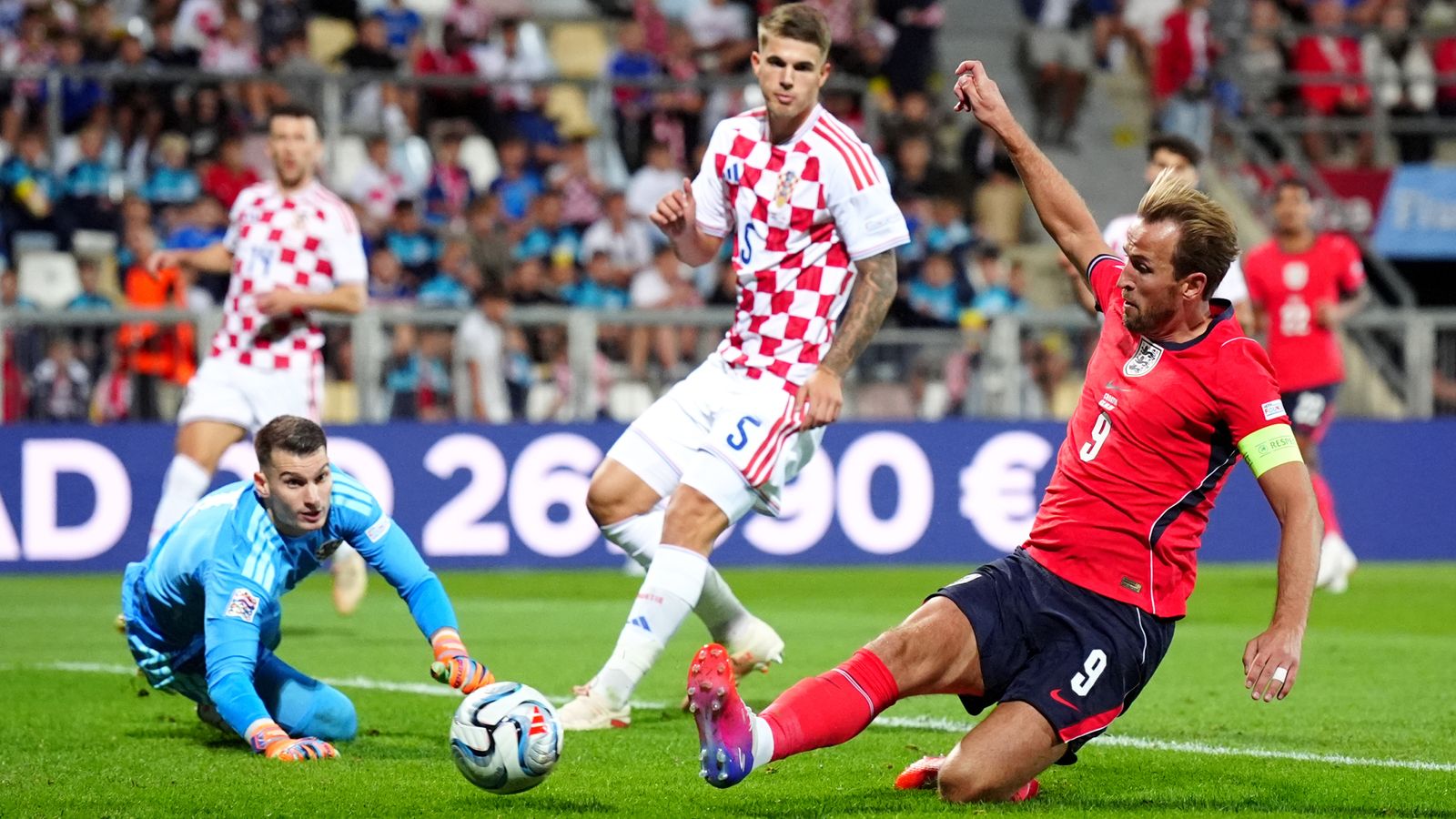
Measuring the efficiency of England’s progression
England enters the semi-final stage having navigated a tournament path defined by high defensive rigidity rather than explosive attacking output. Statistically, Gareth Southgate’s side has conceded just two goals in five matches, a defensive record that stands as the bedrock of their current confidence.
While the aesthetic quality of their play often draws criticism, the efficiency is undeniable. They have moved through the knockout rounds with a 68% average possession rate, forcing opponents to operate in low-block systems for extended periods.
The creative bottleneck in the final third
Despite heavy ball retention, the expected goals (xG) metrics paint a more troubling picture. England has generated only 0.94 xG per game throughout the tournament, suggesting an over-reliance on individual moments rather than structured chance creation.
The reliance on the wings has become a predictable feature of their tactical setup. With 54% of attacks directed down the flanks, the absence of an interior playmaker who can break lines from the half-spaces remains a glaring deficiency.
A critique of the selection discourse
Broadcasting pundits are currently debating the starting XI, often placing sentimental favorites above current form. However, the data suggests that tactical balance is missing, as the team often leaves themselves vulnerable to vertical transitions once the ball is lost in central corridors.
The side has been caught in possession within their own defensive third 14 times this tournament, a higher frequency than the other remaining semi-finalists. This tendency to over-play in deep areas has nearly cost them in recent fixtures, according to BBC expert analysis regarding current squad limitations.
Why the semi-final will test the current formation
The upcoming match represents a significant jump in the quality of the opposing press. England has yet to face a side that commits more than 18 high-intensity pressures per minute in the attacking third, a stat they will likely struggle against in the next round.
If the midfield trio cannot adapt their positioning to mitigate this pressure, the progression from defense to attack will stall significantly. The team's ability to transition from these deep positions with only 3.2 seconds on average to move past the halfway line will dictate their success.
Ultimately, England is winning through systemic discipline rather than creative dominance. They have maintained a 91% pass completion rate in their own half, prioritizing safety over vertical risk, which serves them well against bottom-half-of-table teams but remains a gamble against elite opposition.
Read Next
- England vs Argentina: The tactical cage trap is failing at the wrong time
- England vs Argentina: The tactical cage trap
- Ståle Solbakken's narrow margin: Analyzing Norway's exit from the World Cup
- The internet is losing its collective mind over the World Cup semifinals
- 🏆 World Cup 2026 — Full Coverage Hub
- 🏴 England World Cup 2026 — Three Lions Hub
- ⚡ UCL Semi-Finals 2026 — Full Coverage Hub