Tactical stagnation haunts Three Lions
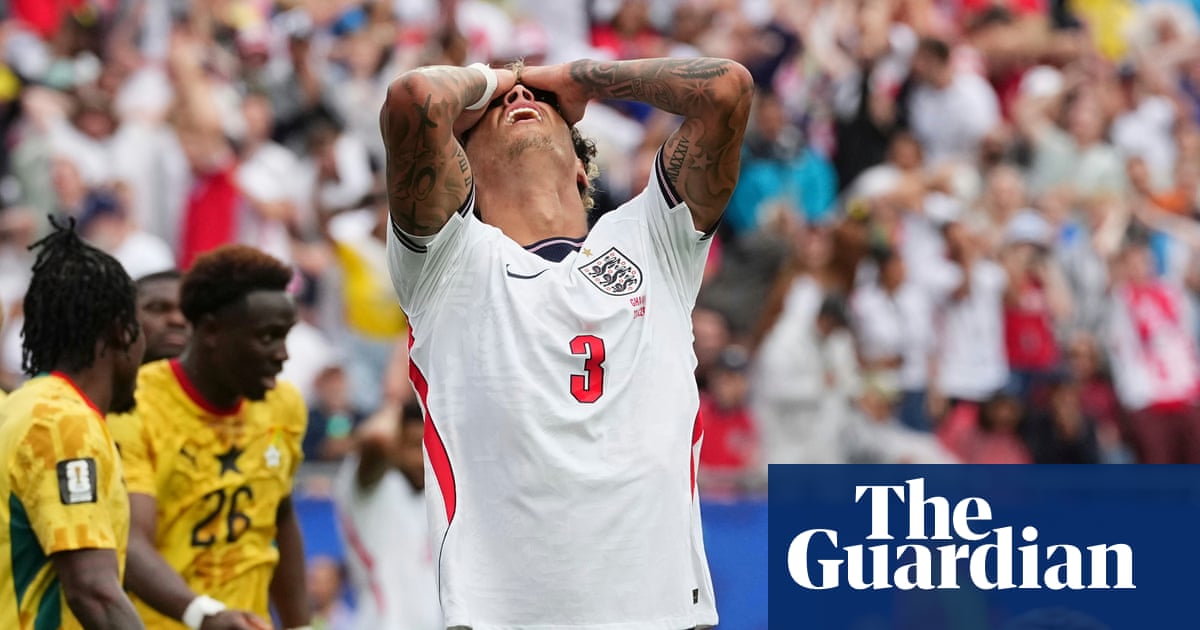
England’s flat 0-0 draw against Ghana wasn’t just a disappointment; it was a symptom of a squad failing to hit the reset button. Alex Howell’s assessment for BBC Sport highlights a team devoid of movement in the final third. The creative bankruptcy on display in Boston mirrors the frustrations seen under previous regimes, where possession without purpose becomes the national anthem of this tournament cycle.
England’s midfield engine room faces questions
Declan Rice remains the focal point of England’s tactical setup following the 0-0 draw against Ghana in Boston. The midfielder played the duration of the Group L fixture, but concerns regarding his physical output have surfaced in the wake of a grueling 90 minutes. While he has publicly maintained a positive outlook on the result, the interference of fatigue in his game management has left the coaching staff considering protective measures.
The medical staff are monitoring his recovery markers with increased scrutiny. Sources close to the team confirm that while no structural damage was identified, the inflammatory response in his lower quadriceps is forcing a modified training load. This is a recurring issue for a player tasked with covering immense distances in every domestic and international outing.
The cost of high-intensity play
Rice’s reliance on high-volume defensive actions puts him at elevated risk for minor soft-tissue flares. Historical data suggests that forcing a player of his profile to play through these stiffness issues often leads to underperformance rather than a full breakdown. Thomas Tuchel knows this script well, having navigated high-mileage workloads for similar defensive pivots throughout his time at Chelsea and Bayern Munich.
The strategic concern is immediate. If Rice is forced to play at 80% capacity, the distance between the two center-backs increases, leaving the team vulnerable to rapid counter-attacks. Ghana exposed this repeatedly in the second half, finding space in the transition lanes that Rice normally occupies. The lack of a like-for-like physical replacement creates a bottleneck in the squad design.
Strategic implications for tournament progression
As Jacob Steinberg notes for The Guardian, the failure to break down disciplined opponents is compounded by the lack of pace in moving the ball from the middle third. When Rice is physically restricted, England’s ability to circulate possession into dangerous areas drops significantly. The coaching staff is weighing whether to rotate him out of the starting XI for the next group fixture to ensure he is fully available for the knockout rounds.
Failure to manage this injury effectively would be a failure of tactical foresight. If the team remains stagnant in the build-up phase, the reliance on individual moments of brilliance becomes the only path to victory. This is a high-risk gamble that has failed England in previous tournaments, most notably during the 2022 World Cup and the 2024 European Championship group stages.
Competitor benchmarks and industry pressure
Other heavy hitters in this tournament are dealing with similar fatigue management protocols. The expectation for high-intensity pressing requires a squad rotation that currently exceeds the comfort level of the English staff. Rivals who manage physical peaks through early-stage rotation often find themselves fresher in the final 20 minutes of knockout matches, a reality that the current management setup must address.
The industry standard for muscle recovery has shifted toward total minutes management rather than just injury prevention. Clubs are already providing longitudinal data to national teams to prevent mid-tournament regression. If the medical staff ignores these patterns, the risk of a secondary, more significant injury rises exponentially. The current situation demands a measured approach, prioritizing the long-term integrity of the central pivot over the short-term need to force a result against lower-ranked opposition.
The pressure is now on Tuchel to justify his selection process. If the tactical rot persists, the physical state of key players like Rice will be cited as a symptom rather than the cause of failure. The medical timeline remains fluid, but the underlying friction between playing volume and performance capacity is a defining narrative of their current campaign.
Read Next