The decline is no longer a slow burn
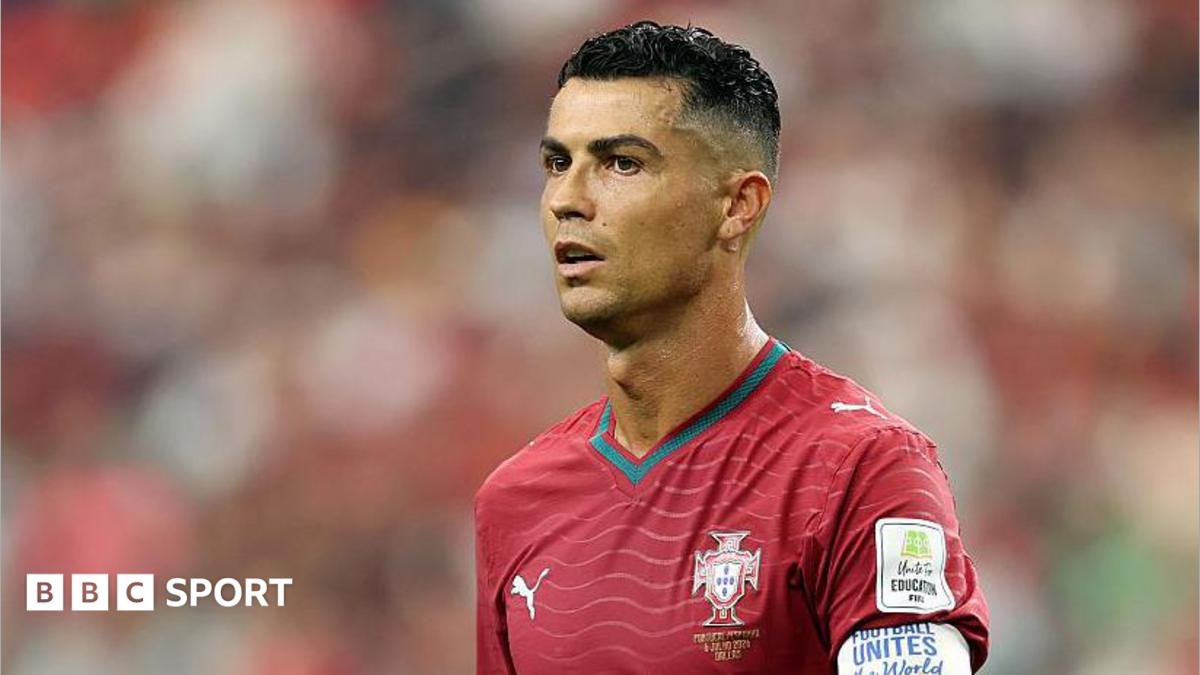
Watching Portugal’s opening match at the 2026 World Cup felt like observing a museum exhibit rather than a title contender. Cristiano Ronaldo led the line with his usual physicality, but the connective tissue between him and the creative midfield evaporated the moment the ball entered the final third. The movement was static, forcing Bruno Fernandes to bypass his striker entirely to look for late runners.
Data analytics departments across the continent prioritize xG chain involvement and progressive carrying distance for modern number nines. Ronaldo’s heat map in this opener stayed stubbornly inside the penalty box, clogging the passing lanes for interior midfielders who needed space to operate. As reported by the Mirror, recent feedback has suggested an uncomfortable reality for the veteran forward regarding his utility in this specific system.
Tactical rigidity against high blocks
The issue isn't just a lack of pace; it is the refusal to adapt to a high-pressing defensive structure. Whenever Portugal lost possession, the counter-press was disjointed because the front line failed to trigger the collective sprint. Elite teams at this level prioritize teams that shift as a cohesive unit. When your main attacking outlet remains stationary at the halfway line, your midfield is effectively playing with one hand behind its back.
We have reached a juncture where the emotional attachment to his history is actively hindering the potential of Portugal’s younger generation of creators. Rafael Leao and Bernardo Silva thrive on quick, vertical interchanges, yet they were forced to dump crosses into a congested box, accumulating an xG value of under 0.20 from open play during the first half. It is a mathematical redundancy. The team produces more high-quality chances when the attacking line is mobile and capable of rotating out to the flanks.
The prediction
Managerial courage is the scarcest resource in international football, yet Portugal must find it to survive the group stage. Whether it is moving to a fluid 4-3-3 with Gonçalo Ramos or shifting the focus to a false nine structure, the current reliance on long-service to a singular target has been scouted and nullified. My projection is that after a disjointed second match, the staff will be forced into a difficult personnel shift.
They will bench Ronaldo for the final group match to inject fresh legs into the attacking transition. They win that game comfortably by two goals. However, the internal tension generated by that benching will derail their momentum in the Round of 16. It is the classic international tragedy: a legendary talent refuses to acknowledge that his physical ceiling has been lowered by the passing of time, and the team construction suffers as a result.
Read Next
- Harry Kane is approaching the threshold of history
- Cristiano Ronaldo is officially a passenger for Portugal
- Why Jude Bellingham is the heartbeat of England’s 2026 campaign
- The bizarre connection between Roberto Martinez and Al Nassr's vacancy
- 🏆 World Cup 2026 — Full Coverage Hub
- 🇵🇹 Portugal World Cup 2026 — A Seleção Hub