Tactical breakdown of Belgium's stalemate in Group F
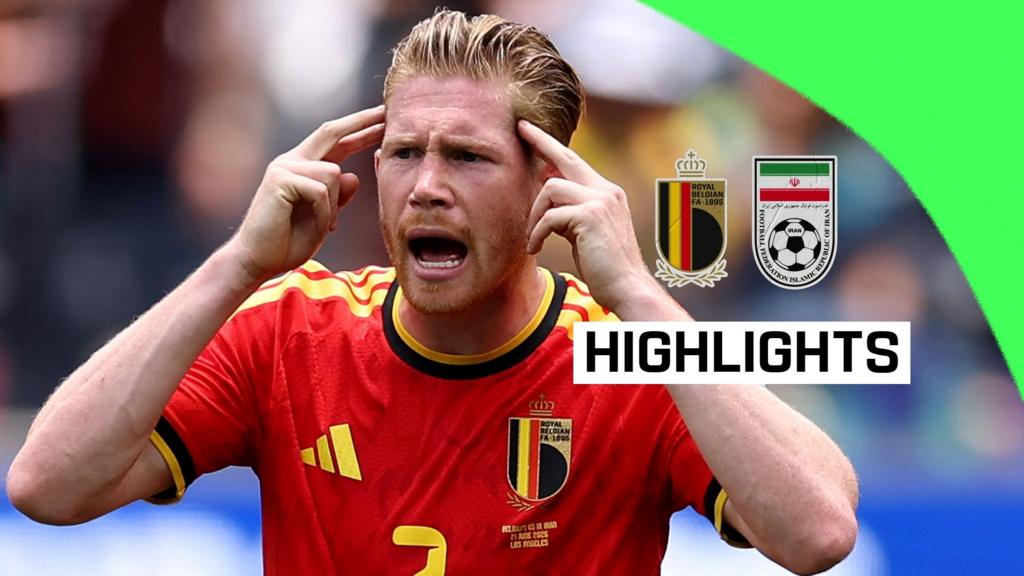
Belgium’s opening stretch of the World Cup has descended into a mess of discipline and missed opportunities. The 10-man squad struggled to break down a resilient Iranian defense, eventually settling for a frustrating draw that leaves their qualification path narrower than expected. The inability to capitalize on possession against a lower-ranked opponent raises serious questions about the squad's mental readiness for the intensity of a tournament environment.
The defensive configuration suffered repeatedly from self-inflicted pressure. A red card to a key starter forced a makeshift setup in the final thirty minutes, forcing the midfield to track back deeper than Domenico Tedesco would prefer. Every tactical sacrifice made after the dismissal seemed to benefit the opposition, who leaned heavily into a low block that choked the final third of the pitch.
The Beiranvand factor
Alireza Beiranvand deserves the credit for the result. The Iranian goalkeeper frustrated Belgium’s attacking line with a series of saves in the second half, most notably a reaction stop in the 78th minute that saved a point for his side. His positioning prevented what should have been a routine finish from the Belgian frontline, showcasing exactly why he remains a fixture of this squad.
As the BBC reported, the point keeps Iran’s round of 16 dreams alive, a massive turnaround from their typical international performance cycles. For Belgium, this is an alarming outcome. They are expected to dominate such fixtures, yet the technical application in the attacking third remained stagnant throughout the 90 minutes. The lack of clinical edge will likely be studied on video screens back at the hotel base for the next 48 hours.
Strategic implications and injury concerns
While the squad avoided fresh ligament damage, the physical toll of playing a man down for a significant duration will impact rotation for the third group match. Fatigue management is secondary to the disciplinary review occurring behind closed doors. Tedesco will need to address the aggressive temperament that led to the red card or risk further bans against more disciplined opposition.
This current run of form mirrors the historic struggle of many European giants to find an immediate rhythm in high-stakes group play. Similar to previous tournament cycles, the tendency for high-profile teams to play with a sense of entitlement against perceived underdogs has proven a reliable trap. The lack of intensity in the opening 20 minutes allowed Iran to settle in, essentially gifting them the confidence needed to hold for the draw.
Looking at the personnel data, the transition from defense to attack lacked the vertical speed seen in practice. Whether this was a conscious choice to conserve energy or a lack of match sharpness is the primary debate among traveling media. Either way, the margin for error has dropped to near zero. If they fail to secure three points in the final match, they will likely be booking flights out before the tournament hits its stride.
The reliance on individual brilliance rather than cohesive team movement remains the biggest technical flaw evident in these games. Without the suspended player for the upcoming fixture, the structure must change. The bench depth will finally face a true test, as the reality of a potential early exit begins to settle over the dressing room. Every training session now carries an added weight, and the coaching staff knows the leeway for tactical experiments expired the moment the final whistle blew in this match.
There is also the matter of conditioning. Players were seen struggling with the humidity during the later stages of the second half, an observation echoed in concerns regarding the England training camp where climate control and heat exhaustion have dominated the talk. Belgium is not unique in this environmental challenge, but they must adapt to the conditions faster if they intend to survive deep into the bracket. The performance was not just a failure of outcome; it was a failure of game state management in a high-pressure environment.
Looking ahead to the final group match
The coaching staff must pivot away from the frustrated aesthetic seen on the pitch. Relying on cross-field balls into congested boxes is not a long-term solution for a team that claims to be a tournament favorite. If they do not find a way to penetrate through the half-spaces or commit to more width, the next opponent will surely mirror Iran’s defensive blueprint.
Internal accountability is now the only path forward. The players are aware that the performance in this draw was below the expected standard, and the upcoming recovery sessions will likely be focused on tightening the defensive lines and finding more rhythm in transition. The squad has the individual talent to progress, but they lack the cohesion required to dismantle dedicated defenses currently playing for their own tournament lives.
The competition in the group is tighter than expected, meaning the final match serves as a de facto elimination game. The players involved must ensure that the mistakes seen in this last outing are corrected, starting with tactical discipline and finishing with accurate delivery in the final third. It is time for Belgium to show if they can handle the pressure of an active tournament schedule or if this was the first sign of a collapse.
Read Next
- Belgium is playing a dangerous game with Romelu Lukaku
- Belgium’s tactical inertia against Iran raises serious questions
- Belgium’s tactical rigidity against Iran reveals a deeper rot
- Jeremy Doku ruled out for Belgium as group stage pressure mounts
- 🏆 World Cup 2026 — Full Coverage Hub
- 🇧🇪 Belgium World Cup 2026 — Red Devils Hub
- 🇮🇷 Iran World Cup 2026 — Team Melli Hub