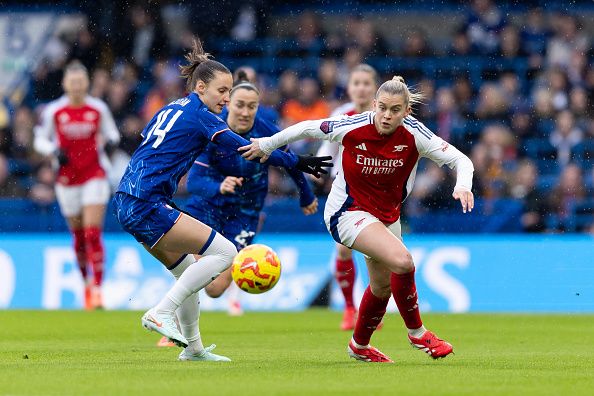
The Math Behind the Frustration
Renée Slegers does not have the luxury of patience anymore. After stepping in for Jonas Eidevall and navigating a chaotic transition period, the 37-year-old manager finally gets a clean slate. An uninterrupted pre-season without international tournament fatigue or early Champions League qualifiers leaves zero room for excuses going into the campaign.
Arsenal were, on underlying metrics, the dominant force in English football last season. According to The Guardian's report on Opta's expected points model, Slegers' team comfortably deserved the Women's Super League title. They suffered just one match defeat across the entire domestic campaign, showing elite defensive baseline control.
Yet Manchester City took the trophy. The bottleneck was not defensive collapse or tactical anarchy. It was Arsenal's self-inflicted habit of converting overwhelming territorial share into frustrating single-point outcomes against stubborn defensive blocks.
Arsenal recorded six draws in 2025-26, whereas City dropped points via a draw just once. Underneath those numbers lies a glaring structural flaw. Expected goal data showed Arsenal deserved victories in three of those drawn matches, while surviving a lucky escape against Chelsea where they deserved to lose.
In head-to-head fixtures, Arsenal and City shared one win each. That means the title was not lost in big six clashes. It was dropped on rainy afternoons against mid-table teams sitting in deep low blocks.
During those frustrating draws, Arsenal frequently posted possession figures above 65 percent. Yet their passes into the penalty area lacked vertical speed, leading to tedious sideways recycling around the box. When opponents clogged central channels, Slegers' team circulated the ball wide without creating high-percentage scoring chances.
Lifting the inaugural FIFA Champions Cup in 2025-26 provided silverware for the trophy cabinet, building on their 2025 European triumph. But international knockout trophies only papered over a domestic failure. A club attracting massive crowds at the Emirates cannot accept finishing second at home.
A High-Stakes Overhaul at London Colney
Technical director Jodie Taylor did not hesitate when the summer transfer window opened. Arsenal executed a drastic squad overhaul, sanctioning 11 players to depart while bringing seven new signings into the building to lower the roster's age profile.
Allowing iconic figures to walk away to direct title rivals is a massive risk. Beth Mead departed for Manchester City, while Katie McCabe signed for Chelsea. Losing two vocal leaders with decades of combined WSL experience leaves an obvious void in big-match temperament.
If Mead scores a decisive goal for City or delivers them another title, this overhaul will look less like a rebuild and more like an unforced error. Letting top talent reinforce direct competitors is a gamble that could easily bite Slegers back.
Yet Slegers needed to reshape a core that had grown predictable. Arsenal responded by recruiting proven European talent to elevate their ceiling. Spain full-back Ona Batlle arrives to revolutionize build-up play from wide areas, while Switzerland midfielder Géraldine Reuteler and German striker Selina Cerci add sharp off-ball movement.
The headline addition, however, is England midfielder Georgia Stanway from Bayern Munich. Speaking to The Guardian, the 27-year-old Euro winner described her playing style as "ruthless and robust." That physical edge is precisely what Arsenal lacked when midfield battles turned ugly.
Stanway gives Slegers an aggressive central engine who breaks opposition counters before they reach the defensive line. Her arrival allows the midfield to press higher without exposing the centre-backs. She brings bite to a midfield that previously lacked physical resistance in tight away fixtures.
Here is how the incoming recruits change Arsenal's tactical profile across the pitch:
- Georgia Stanway: Midfield steel and ball-winning aggression to stop counter-attacks early.
- Ona Batlle: Dynamic progression from full-back to create overloads in wide areas.
- Géraldine Reuteler: Tactical flexibility and energetic press resistance in central areas.
- Selina Cerci: Direct penalty-box movement to convert half-chances against low blocks.
With Batlle pushing high on the right flank, Arsenal can create overloads that pull opposition defenders out of position. This tactical flexibility allows Stanway to cover wide spaces on transitions, smothering counter-attacks before they start.
“It’s like you’re cooking the most beautiful recipe and then you add the final small ingredients that make the marginal difference, that elevate, and you create something that’s beautiful and that you can relish and enjoy.”
That observation from defender Lotte Wubben-Moy reflects the mood inside London Colney. Arsenal do not require a complete identity change. They need the sharp marginal upgrades that convert 1-1 draws into 2-1 victories before the final whistle.
Financial Muscle vs Operational Bottlenecks
Off the pitch, Arsenal's commercial trajectory continues to break domestic records. Financial filings for the year ending May 2025 showed total revenue rose by £6.5m to reach £21.5m. Matchday income neared £6m, driven by an average crowd of 29,833 across eight Emirates Stadium fixtures.
Those figures will climb higher when full accounts for last season's 11-game Emirates slate—which drew an average crowd over 34,000—are published. Broadcast revenue doubled past £2m, while commercial income surged from £649,000 to £1.77m. Arsenal accounted for over 40 percent of total WSL match attendances nationwide last year.
However, the financial ledger reveals an uncomfortable truth. Group income from the parent club increased to £11.85m, representing more than half of the team's total revenue. Arsenal lead the league in commercial metrics, but complete financial self-sustainability remains an illusion.
Relying on parent club subsidies to cover half the operational budget leaves Arsenal exposed to broader executive decisions. Until matchday and commercial revenues fully cover first-team costs, claims of independent growth deserve skepticism.
A structural bottleneck also exists in venue selection and matchday logistics. While all WSL home fixtures and European knockout ties take place at the Emirates Stadium, domestic cups and Champions League group games stay tied to Meadow Park. The Borehamwood ground is far too small for Arsenal's fan base, but fixture clashes with the men's team block a full-time move.
Switching between a 60,000-seat stadium and a modest non-league ground creates an awkward competitive cadence. Shifting from world-class grass to tighter pitch boundaries affects passing rhythm and tempo. It is an operational compromise Slegers must manage throughout the autumn schedule.
Injury Returns and the Title Verdict
Internal reinforcements are also returning from the medical room. Both Michelle Agyemang, 20, and Katie Reid, 19, are approaching full fitness after missing nearly a year with anterior cruciate ligament injuries. Their returns provide Slegers with genuine depth for the winter stretch.
Agyemang starred during Euro 2025, offering explosive channel running that unsettles stubborn back lines. Reid began last season in outstanding defensive form before her knee injury. Managing their integration requires caution, but their raw athleticism gives Arsenal distinct attacking options off the bench.
The expectation from executive leadership is direct and unambiguous. Technical director Jodie Taylor laid out the stakes clearly in The Guardian's WSL preview.
“We’re in a great place of course, but we would have liked to have won more trophies last season and that is our huge ambition coming into this year. I’ll flat out say it: we want to win the league and want to take that next step.”
In title races decided by thin margins, squad depth becomes the main differentiator. Slegers now has the bench profiles to alter matches tactically, but turning dominant possession stats into three points remains her ultimate test.
Arsenal possess the tactical options, squad depth, and financial backing to end their seven-year wait for a WSL title. Yet allowing Mead to join Manchester City creates a self-made hurdle. City are clinical in tight games, and Mead gives them proven endgame execution.
Slegers has constructed a dominant side capable of controlling territorial share and dictating match tempo. But until Arsenal prove they can puncture stubborn mid-table defenses without dropping silly points, doubts will linger. Expect Arsenal to push the title fight to the final day, but City's clinical edge gives them the advantage to retain the trophy.
Prediction: 2nd place. Arsenal will narrow the gap, but those stubborn draws against low blocks will cost them top spot once again.
Read Next
- Frank Lampard's £130m gamble faces immediate reality check against Hull
- Martin Odegaard looks like himself again as Arsenal cruise past Coventry
- Coventry's £130m summer makeover was exposed by Arsenal in 49 minutes
- Alexander Isak faces Newcastle cauldron as Premier League season kicks off
- ⭐ UCL 2026 — Champions League Quarter-Finals Hub