Welcome to the Never-Ending World Cup
We are currently in the sixth week of the 2026 World Cup, and if you feel like you have been staring at a TV screen since the dawn of civilization, you are not alone. The tournament started on June 11, and we are finally crawling toward the semi-finals on July 13, 2026. We have sat through a grueling marathon of 100 matches, and the sheer fatigue is starting to rot everyone's brains.
Even the players, who are supposed to be elite athletes, are looking like they need a dark room and a three-week nap. Take Spain's midfield anchor Rodri, for instance. The man has played enough minutes this season to qualify for a pension, yet he is apparently spending his free time watching every single match of this bloated tournament.
In a chat with Sid Lowe ahead of Spain's semi-final clash against France, Rodri admitted his addiction. He said:
I’m not that bad. [I’ve watched] some as a fan, teams we can’t face; others I analyse. But it’s not like I’m there with pen and paper. But, yeah, I probably am the worst
It is a miracle his eyes have not melted out of his skull after watching that much football.
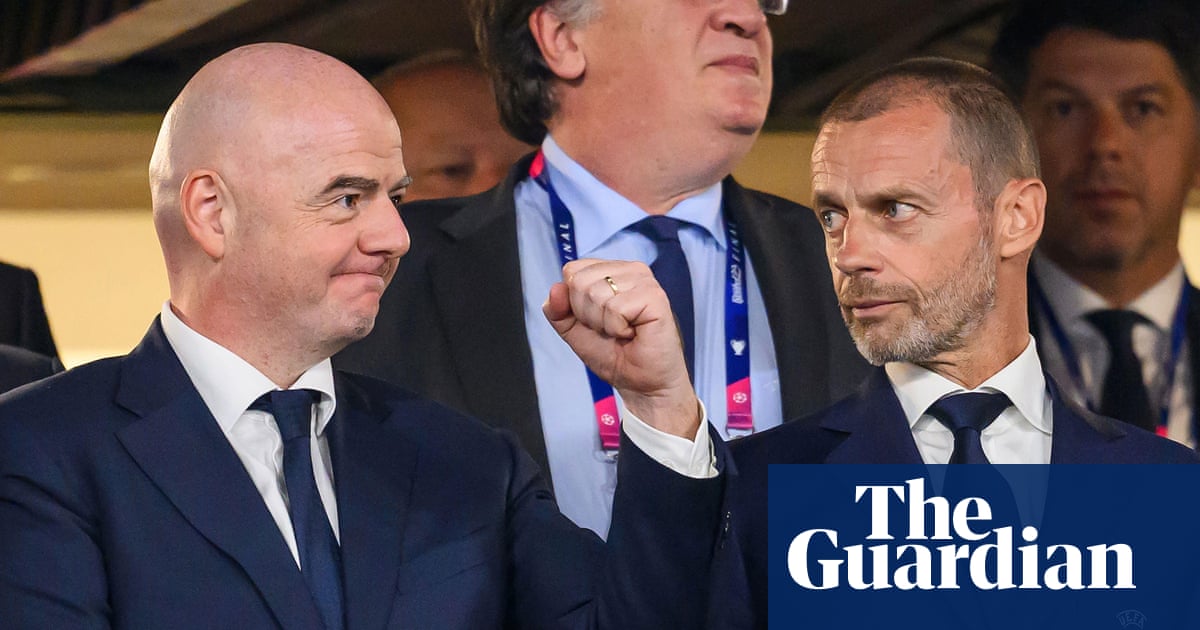
You would think that seeing world-class players running on fumes would make FIFA officials stop and think. You would think they might consider that human beings have physical limits. But Gianni Infantino does not operate in the real world; he lives in FIFA-land, where more is always more.
The FIFA president did not even let the players enjoy the first day of their brief two-day rest period before hinting that the 2030 tournament could be expanded to a 64-team affair. It is a level of greed that would make Gordon Gekko blush.
As The Guardian reported, Infantino has been busy using Swiss media as a testing ground for his latest scheme. In an interview with Bluewin, he explained his vision with the straightest of faces. He stated:
When organising a World Cup, it’s important to organise it for the whole world – not just Europe and South America – but effectively the entire world
He then added that if you do not give smaller countries a chance to participate in the World Cup, they will lack the incentive to keep improving. This is the kind of logic that only makes sense if you are trying to sell television packages to countries that have never seen a football.
Presidential Favors and Spidercam Lies
If you want to know what a 64-team tournament would actually look like, just look at the absolute circus we have witnessed over the last five weeks. FIFA is already struggling to maintain order in a 48-team bracket. The matches have been plagued by administrative incompetence, political meddling, and technology that seems to be gaslighting the entire planet.
First, we had Balogun-gate, which was perhaps the most shameless moment in World Cup history. During the United States team's Round of 32 victory over Bosnia & Herzegovina, forward Folarin Balogun received a blatant red card for a wild challenge on Tarik Muharemovic. It was a textbook ejection, and the suspension should have ended his participation in the next round.
But then the US President, Donald Trump, allegedly called Gianni Infantino to complain about the referee's decision. What followed was a masterclass in bureaucratic corruption. The FIFA Disciplinary Committee magically convened and suspended the red card, allowing Balogun to play in the Round of 16 against Belgium.
The decision was met with immediate fury from UEFA officials, who rightly pointed out that political interference had crossed a dangerous boundary. The irony, of course, is that the football gods do not care about presidential phone calls. Belgium went out and demolished the US team by a scoreline of 4-1, rendering the entire corrupt exercise pointless.
Then we had Cable-gate during the quarter-final clash between England and Norway in Miami. With Norway leading late in the game, Jude Bellingham scored an equalizing goal for England. However, television replays and stadium footage clearly showed the ball striking the overhead spidercam cable before falling to Bellingham's feet.
According to the rules, the referee should have stopped play and ordered a dropped ball. Instead, the goal stood, and Norway was sent packing. FIFA's defense was a piece of high-tech comedy.
They insisted that the chip inside the Connected Ball showed no physical impact or deviation, meaning the ball could not have touched the cable. They essentially told millions of viewers to ignore the visual evidence of a cable shaking and a ball changing direction in mid-air. It was gaslighting on a global scale.
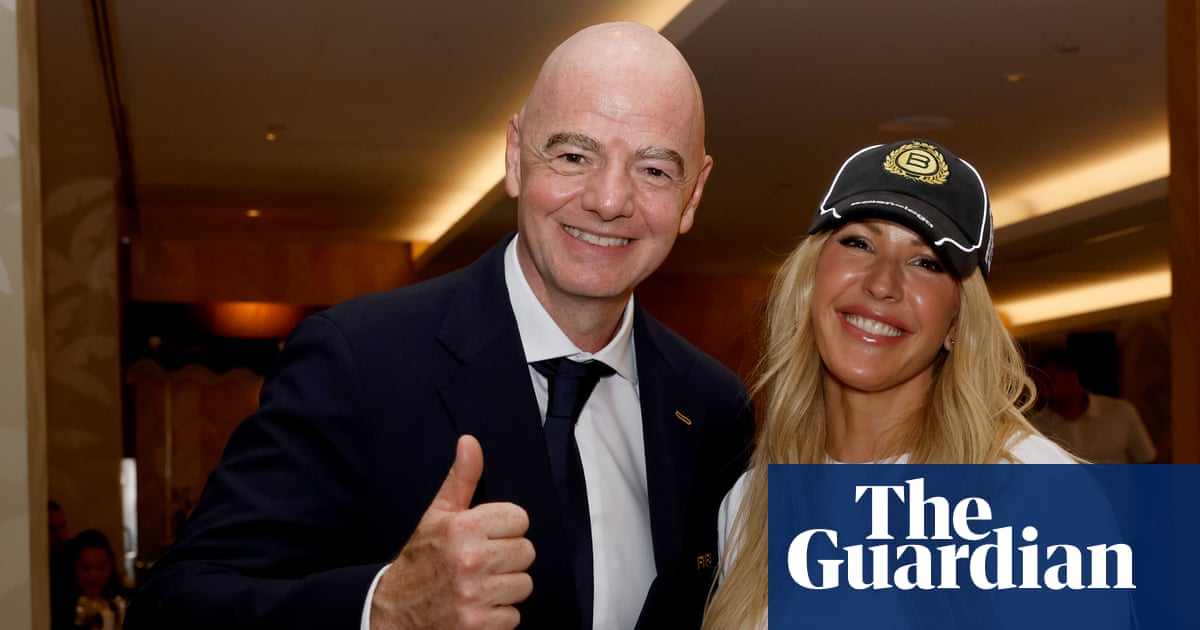
While Norwegian players were screaming at the referee, Infantino was busy in the VVIP suite posing for photos with British pop star Ellie Goulding. She had just performed a stadium-wide half-time show at Hard Rock Stadium. Because nothing says traditional football quite like a pop concert in the middle of a quarter-final.
The 64-Team Cash Grab
The argument that expanding the tournament is about helping smaller nations is a complete lie. Infantino claims that without the World Cup carrot, smaller countries have no reason to develop. He conveniently ignores the existence of qualification, which is supposed to be the actual incentive to get better.
The current 48-team format already has plenty of space for newcomers, but Gianni wants to open the floodgates completely. Let us look at the math for a 64-team World Cup. Under this proposal, we would have 16 groups of four teams.
The top two teams from each group would progress to the Round of 32. This would require an additional 24 matches, bringing the total number of games in the tournament to a ridiculous 128. That is 128 matches of football squeezed into a summer window.
The logistics of the 2030 tournament are already a certified disaster. FIFA has already decided that the 2030 World Cup will be hosted across six countries and three continents: Spain, Portugal, Morocco, Argentina, Uruguay, and Paraguay. The travel schedule is going to be an absolute nightmare for the players and the support staff.
You will have teams flying back and forth across the Atlantic Ocean just to play group-stage matches. Imagine the opening week of the 2030 tournament. You could have Spain playing India in Madrid, Madagascar taking on Colombia in Lisbon, China facing France in Rabat, and Argentina playing New Caledonia in Buenos Aires.
The logistics team will need to manage thousands of players, coaches, journalists, and fans traveling across three continents. The carbon footprint of Gianni's private jet alone will probably destroy a small glacier. But Infantino does not care about the environment, and he certainly does not care about the hamstrings of the players.
He cares about the broadcasting rights, the corporate sponsorships, and the VVIP ticket sales. In his mind, more games mean more money, and more money means he stays in power. He is already hinting at a future where all 211 FIFA member nations qualify, which would at least give Italy a decent chance of playing in a World Cup again.
The Disconnection From the Fans
The problem with this expansion is that it completely destroys the prestige of the tournament. The World Cup used to feel special because it was hard to get there. It was an exclusive club for the very best teams on the planet.
Now, it is turning into a bloated summer festival where half the teams are just there to make up the numbers and sell merchandise. Fans are already starting to feel the exhaustion. The Guardian's letters page has been flooded with messages from supporters who are tired of the constant corporate rebranding of the sport.
One fan, Phil Hess, wrote in to share his memories of the 1982 World Cup in Spain. He spoke of his treasured Panini sticker album and Baumann's book, Fussball Weltmeisterschaft 1982 Spanien, which he still keeps on his coffee table. That was a tournament of 24 teams, where every single match felt like a matter of life and death.
Compare that to the current state of affairs. We are watching games that feel like training sessions, played in half-empty stadiums in Miami, while pop stars perform at half-time. The corporate executives are so busy chasing the American market that they are forgetting what made the sport great in the first place.
They want to turn football into the NFL, complete with commercial breaks and entertainment packages. Even the media cannot keep up with the chaos. FIFA's expansion has made the sport so complicated that even the official newsletters are getting the math wrong.
Recently, fans had to write in to correct a report about Dundee United's victory over Stirling Albion in the cup. As the Football Daily edition showed, the newsletter had claimed the team progressed, but fans pointed out they still had three group games left to play. If the professional analysts cannot keep track of the tournament structures, what chance do the fans have?
We are heading toward a future where the World Cup is a year-round event, played in a hundred different countries, sponsored by multinational corporations, and ruled by questionable technology. It is a corporate dream and a football fan's nightmare. But as long as Gianni Infantino can pose for photos with celebrities and collect his bonuses, the expansion will continue.
The 64-team World Cup is coming, and there is absolutely nothing we can do to stop it. We can only hope that our eyes and our TV screens survive the onslaught.
Read Next
- Infantino’s 64-team expansion is a threat to the World Cup competitive bar
- Jude Bellingham is carrying England on his back to the semi-finals
- Argentina’s FIFA lobbying adds unnecessary noise to a classic rivalry
- FIFA's suspension reversal proves the rulebook is now optional
- 🏆 World Cup 2026 — Full Coverage Hub
- 🏴 England World Cup 2026 — Three Lions Hub