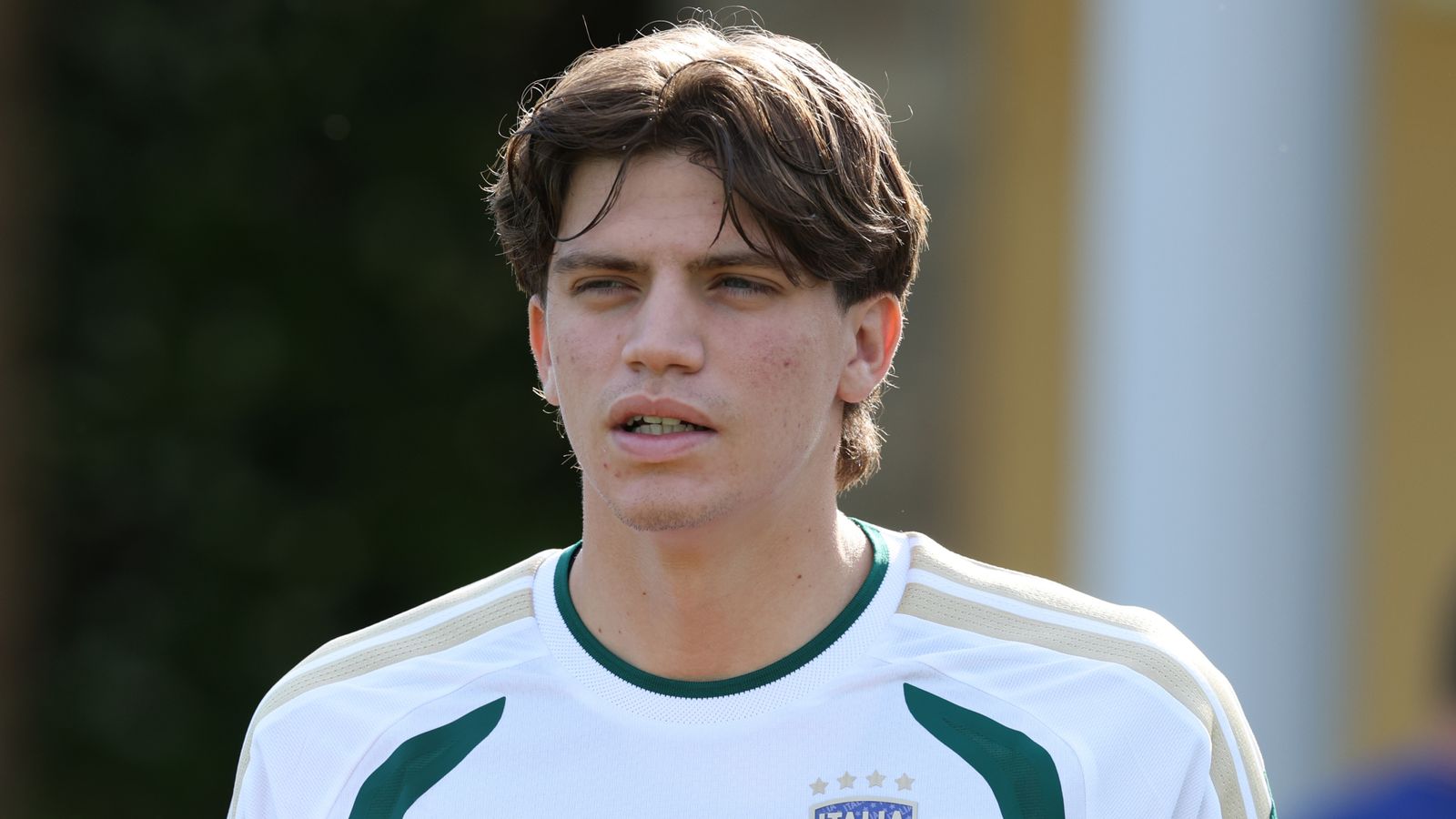
The Italian wing-back heading to Stamford Bridge
Only Juventus forward Kenan Yildiz completed more take-ons than Chelsea's new signing in Serie A last season. For a defender, that is a staggering statistic. Chelsea have secured the services of 21-year-old Marco Palestra from Atalanta in a deal worth £43 million, signaling a clear shift in Xabi Alonso's tactical direction.
The Italian wing-back has committed to Stamford Bridge on a contract running until 2033. This long-term commitment shows how highly Alonso values his profile. The transfer represents the first major signing of the Alonso era at Chelsea, following a quiet window that had left fans restless.
Palestra is coming off a highly productive season on loan at Cagliari. He made 37 appearances in Serie A under Fabio Pisacane, scoring once and providing four assists while maintaining a 76% pass completion rate in the opposition half. His performances in Sardinia were so impressive that they earned him a senior Italy call-up. He made his international debut against Northern Ireland in March before experiencing World Cup elimination against Bosnia-Herzegovina.
But the numbers only tell part of the story. To understand why Alonso wanted Palestra, we have to look at the tactical flexibility he offers. He is comfortable on either flank, capable of playing as a wing-back or a traditional full-back. Alonso sees him as a multi-functional tool to unlock stubborn defensive blocks.
In Alonso's structured possession play, a wing-back isn't just a touchline runner. They must tuck inside to create a box midfield, or form a temporary back three during possession rotations. Palestra's experience playing in the front three on occasion at Cagliari, as well as a defensive full-back, gives Alonso the tactical clay to mold.
The PlayStation wing-back with a unique stride
"He seems like a player built on the PlayStation," Cagliari head coach Fabio Pisacane remarked. "Ninety-nine per cent acceleration and so on. He is handsome even when he runs. He looks like a panther, like a leopard."
This physical dominance did not come naturally. Palestra was considered slow during his early years in the Atalanta academy, which he joined back in 2014. A significant growth spurt in his mid-teens transformed his raw athletic capacity. That physical development turned him into a high-tempo specialist perfectly suited for the English game.
Last summer, Bournemouth registered interest in the defender because of his physical capacity. But Palestra stayed in Italy, where his development accelerated. He went from a reserve player to a Serie A regular who pulled the cart for Cagliari over a grueling eight-month stretch.
His defensive resilience was tested immediately. Palestra made his Cagliari debut in front of 70,000 hostile fans in Naples. Instead of shrinking, he thrived under the pressure. By the 64th minute of his second game, he was executing a spectacular slalom run from deep to set up a goal against Parma.
An assist for Andrea Belotti in the 72nd minute of a victory against Lecce followed immediately. From that moment on, Palestra became irreplaceable in Pisacane's lineup. He proved he could handle the physical demands of playing senior football week in, week out.
At Cagliari, Palestra's defensive workload was immense. Playing in a team that spent 58 percent of matches defending, his recovery runs were vital in preventing transition opportunities down the flanks. This defensive volume prepared him for the physical duels of the Premier League, where wing-backs are frequently targeted in isolation.
Unpredictable ball-carrying and crossing excellence
What makes Palestra so dangerous is his ability to run with the ball using both feet. Francesco Modesto, who coached him in Atalanta’s Serie C development side, highlighted this rare quality. A right-footed player who carries the ball with his left creates massive headaches for defenders.
Opponents never know which way Palestra will turn. This unpredictable ball-carrying is why only Yildiz surpassed him in completed take-ons in Serie A. It also allows him to deliver quality crosses from either wing without needing to cut back.
Palestra ranked 9th in Serie A for successful crosses from open play last season, averaging a 34% cross accuracy. He also ranked third for corners won. These statistics demonstrate his ability to reach the byline and force opponents into desperate defensive actions.
Cesc Fabregas has publicly admired his technical floor. Even Arrigo Sacchi noticed his talent, pushing for his national team call-up. Spalletti may have once gotten his name wrong, but the Italy manager was well aware of his capabilities.
His statistical profile is even more impressive when you consider Cagliari's team dynamics. Cagliari averaged just 42 percent possession last season, resulting in a defensive xG of 1.45 per match. His attacking numbers were produced in a team that rarely dominated games, meaning his output was highly efficient.
Adapting to Alonso's possession-heavy demands
The step up to Chelsea is massive. Cagliari were a bottom-half side that struggled for points and possession. They played a low-block, transition-heavy style that relied on defensive volume. Palestra was used to defending deep and launching long counter-attacks.
At Chelsea, he will play under a manager who demands total control of the ball. Xabi Alonso’s systems require wing-backs to be elite build-up coordinators, not just runners. Palestra will have to adapt to playing in tight, congested spaces against low-blocks.
His defensive discipline in a high line will also be scrutinized. During Italy’s World Cup qualifying campaign, Spalletti's side suffered a painful play-off defeat to Bosnia-Herzegovina in March. While Palestra emerged with credit, the match highlighted his occasional defensive lapses when isolated in wide channels.
According to the official transfer announcement, Chelsea view Palestra as a multi-role defender. This flexibility is key. In Alonso’s fluid system, he can rotate with existing full-backs, providing tactical variety.
As detailed in Sky Sports' tactical analysis, Palestra's physical profile matches the demands of the Premier League. He is built for the transition speed of English football. His ability to cover ground quickly will help Chelsea defend large spaces behind their high defensive line.
The Italian has already tasted elite European competition. He made his professional debut in December 2023 and went on to make appearances in the Champions League for Atalanta. He even featured against Real Madrid in the UEFA Super Cup before his Cagliari loan.
Chelsea's current full-back options have struggled with injury and inconsistency. Alonso's need for dynamic, durable wide players was the driving force behind this deal. By securing a player committed for the next seven years, the club is addressing a critical structural weakness.
Pisacane believes we have only seen a fraction of his true capability. "Marco, in my opinion, has not shown all his potential yet," he said. "Marco has shown, I don't want to exaggerate, 60 to 70 per cent."
If Alonso can unlock that remaining 30 percent, Chelsea will have signed one of the best wide defenders in Europe. The £43 million fee might look like a bargain in a few seasons. Palestra has the tools to become a superstar at Stamford Bridge.
Read Next
- Why Xabi Alonso went all-in on Marco Palestra for his first Chelsea signing
- Can Xabi Alonso fix Chelsea's £107m midfield problem?
- Sheffield Wednesday are gambling their League One rebuild on Callum Slattery
- Chelsea are targeting Rayo Vallecano left-back Pep Chavarría
- ⚽ Bundesliga 2025-26 — Title Race Hub