The Statistical Reality of Stamford Bridge's Collapse
Chelsea finished last season at the absolute bottom of the Premier League fair play table. The team picked up eight red cards over the course of the campaign, double the tally of the next most undisciplined side in the division. This statistic is not merely a reflection of poor temperaments but a symptom of a deeper tactical rot.
When a team is constantly caught out of possession, players resort to desperation fouls. Former managers failed to establish defensive compactness, leaving central defenders exposed in wide-open channels. Xabi Alonso, arriving at Stamford Bridge after a bruising spell at Real Madrid, must immediately address this structural instability.
The Spaniard arrives with the official title of manager rather than head coach. This added seniority indicates the significant role he will play in remoulding the squad. BlueCo's hierarchy has privately admitted that the club needs to shift toward signing ready-made starters rather than purely stockpiling teenage prospects.
Chelsea's pursuit of Granit Xhaka from Sunderland is a demonstration of this new flexibility. The Swiss midfielder represents the exact profile of stability Alonso built his successful Bayer Leverkusen side around. At Sunderland, Xhaka proved he can still dictate the tempo of Premier League games from a deep-lying role.
Bringing in a player of Xhaka's profile is a clear departure from Chelsea's recent recruitment policy. It signals that the club is finally willing to sacrifice theoretical future resale value for immediate tactical control. Alonso needs a physical anchor who can organize the team's rest defense and prevent the transition crises that plagued them last term.
The Midfield Conundrum: Enzo Fernandez and the £107m Question
The biggest tactical puzzle awaiting Alonso is the future of Enzo Fernandez. The Argentina international cost the club a staggering £107m when he arrived from Benfica in 2023. Yet, the 25-year-old midfielder has struggled to justify that fee, culminating in a turbulent spring.
In April, Fernandez was dropped for two games after publicly angling for a transfer away from West London. His defensive output has been a major point of concern, with opponents regularly bypassing him in central areas. If Chelsea can recover a substantial portion of their investment, a sale must be considered.
Alonso must decide whether Fernandez can adapt to his possession-oriented double pivot. The Argentine possesses excellent long-range passing metrics but lacks the mobility required to cover lateral space when the wing-backs push forward. If he cannot be retrained to press effectively, he will remain an expensive mismatch in Alonso's system.
Fernandez's pass completion rate remains high at 88.4%, but these numbers hide a lack of penetration. He frequently drops deep to collect the ball from the center-backs, which duplicates roles and slows down the build-up. Under Alonso, a double pivot must be dynamic, shifting between defensive coverage and forward progression.
Rebuilding the Flanks After the Cucurella Defection
The tactical setup has been further complicated by the departure of Marc Cucurella. The Spanish left-back was sold to Real Madrid, as Sky Sports reported last week, in a transfer valued at £51.8m. While the fee represents good business, it leaves a significant vacancy on the left side of Chelsea's defense.
Chelsea are currently in talks to sign Pep Chavarria from Rayo Vallecano to fill the vacancy. Additionally, the club is monitoring Jorrel Hato, who could step up if Alonso decides to promote from within the current squad. Replacing Cucurella's high-intensity pressing and recovery runs will not be straightforward.
On the opposite flank, Chelsea have secured Atalanta full-back Marco Palestra. While Palestra played the majority of his minutes on the right side in Serie A, his ability to play on either flank makes him a highly versatile asset. As Sky Sports noted in their tactical analysis of Palestra's running power, his profile fits the high-intensity demands of the Premier League.
Palestra's versatility is a massive advantage. His ability to tuck inside as an inverted full-back or stretch the pitch as a traditional wing-back provides tactical options. If Palestra can lock down the right flank, it allows the left-sided player to push higher, creating the asymmetric shape Alonso favored at Leverkusen.
The Snubbed Star: Restoring Cole Palmer
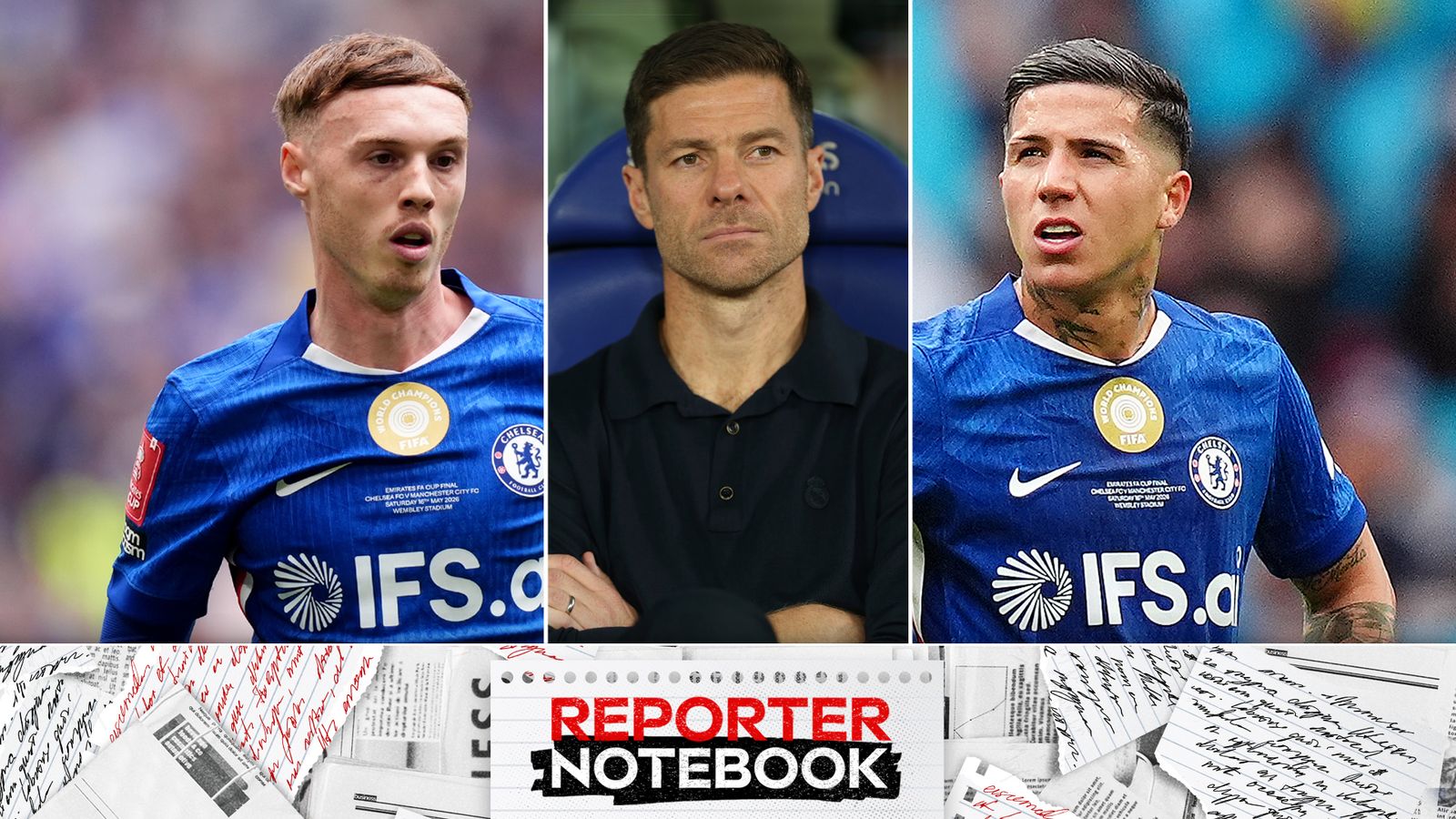
Cole Palmer remains one of the few players deemed untouchable by the Chelsea board. The 24-year-old playmaker endured an injury-hampered campaign last season that severely restricted his output. This dip in form led to a high-profile exclusion from the international stage.
England manager Thomas Tuchel chose to leave Palmer out of his World Cup squad this summer. Tuchel was blunt about the decision when explaining his squad selection to reporters.
"he was not as decisive or influential as he was in the last seasons"
Alonso may secretly welcome the omission. The summer rest allows Palmer to recover fully from his nagging injuries and participate in a complete pre-season. Restoring the former Manchester City academy graduate to his peak form is arguably Alonso's primary task.
In his first two seasons at Stamford Bridge, Palmer was the focal point of Chelsea's attack. Alonso will likely deploy him as one of the two inverted playmakers in a 3-4-2-1 structure. This role will allow Palmer to operate in the half-spaces where his creative passing and shooting can be maximized.
Nicolas Jackson, Liam Delap, and the Striker Gridlock
Chelsea's center-forward position is another area of tactical confusion. Nicolas Jackson returns to the club after a season-long loan spell at Bayern Munich. Bayern chose not to trigger the striker's £56.2m obligation-to-buy clause due to the dominance of Harry Kane.
Jackson showed flashes of quality in Germany but remains an inconsistent finisher. He must now compete with Joao Pedro, another forward whom the club hierarchy considers untouchable. The situation is further complicated by the presence of Liam Delap, who had a disappointing year.
Delap managed just two goals in 41 appearances last season following his move from Ipswich. With Emmanuel Emegha also arriving from Strasbourg, Chelsea have an excess of forwards who need game time. Alonso must quickly trim this group to avoid dressing room unrest and establish a clear hierarchy.
The Goalkeeping Question
Chelsea's refusal to sign an elite goalkeeper remains a persistent mystery. The club spent the last year stockpiling wingers while relying on Robert Sanchez, who has failed to convince the fanbase. Filip Jorgensen is set to leave the club, leaving a vacancy in the squad.
Mike Penders is returning from his loan spell at Strasbourg to compete with Sanchez. Chelsea previously targeted AC Milan goalkeeper Mike Maignan but backed away due to the high asking price. Alonso must decide if Penders is ready for the first team or if a new goalkeeper must be signed.
Without a reliable goalkeeper, Alonso's defensive structure will always be vulnerable. The new manager must demand a shot-stopper who can command the penalty area and match the ball-playing requirements of his system. Resolving this position is key if Chelsea want to return to European football next year.
The Historical Blueprints: Missing Out on Europe
The last time Chelsea spent a season outside of European competition was the 2016-17 campaign. Under Antonio Conte, the club capitalized on the clear weekly schedules to secure the Premier League title. However, the current squad is in a completely different stage of development compared to Conte's experienced group.
There is little expectation that Chelsea will be in the title shake-up this season. The managerial upheaval at fellow big-six clubs might create opportunities, but patience will be the defining theme. Alonso's primary objective is to install a functional playing identity and stabilize a club that has suffered from constant structural change.