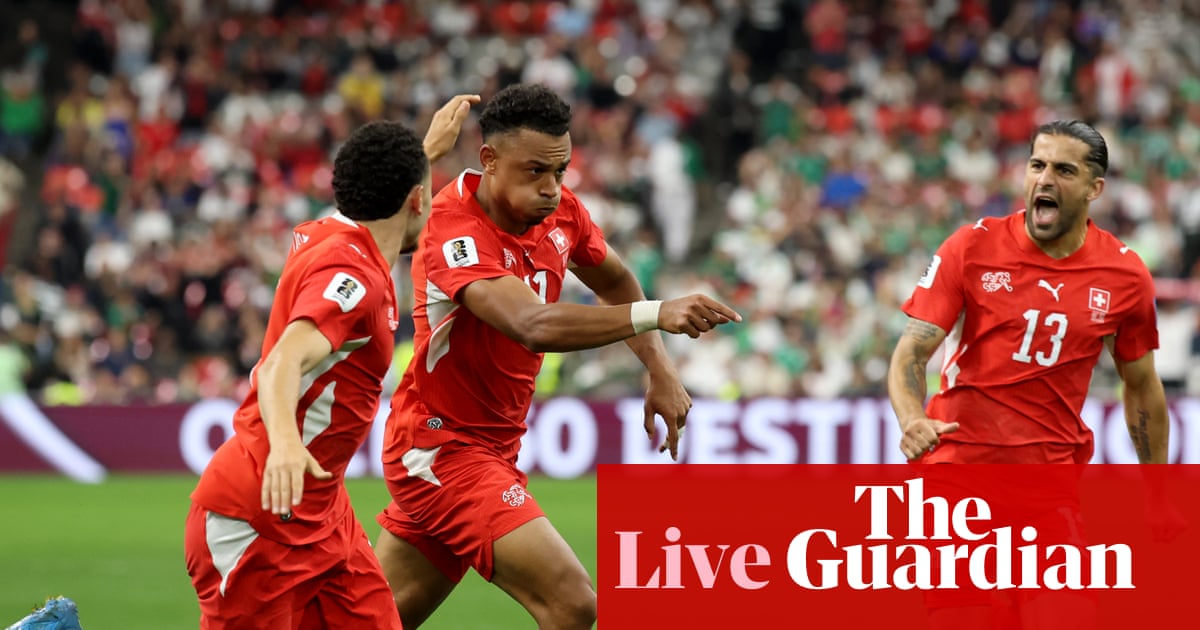
The draw has a funny way of throwing up matchups that feel almost too scripted. When Switzerland walk out at BC Place in Vancouver, they will look across the pitch and see a face that defined their national team for seven years. Vladimir Petkovic, the man who guided the Swiss to the Euro 2020 quarterfinals, now stands in the Algerian dugout.
He faces a Switzerland team that has moved on, evolved, and grown even more ruthless under Murat Yakin. This Round of 32 clash is not just a simple reunion. It is a collision of two diametrically opposed footballing philosophies.
On one side stands a unit defined by structural discipline. On the other, a chaotic collection of individual talent struggling to establish a cohesive defensive identity.
For real-time updates and live commentary during the ninety minutes, check the match tracker on The Guardian.
The Petkovic Paradox
Petkovic’s time with Algeria has been anything but boring. The Fennec Foxes scrambled into the knockout rounds as one of the best third-placed teams from Group J, but their route was incredibly messy. A 3-0 demolition by Argentina exposed their defensive structure, while a wild 3-3 draw against Austria showed both their attacking flair and their tactical fragility.
Petkovic has always favored proactive, front-foot football, but this Algerian side lacks the defensive recovery speed to pull it off. They conceded seven goals in just three group matches. Aissa Mandi and Ramy Bensebaini have looked isolated and slow when opponents transition quickly.
Petkovic’s transition from the structured three-at-the-back system he utilized in Europe to a looser 4-3-3 in North Africa has yielded volatile results. While it allows for explosive transitional play, it lacks defensive cover when the opponent bypasses the first line of pressure. The spacing between the lines has been consistently poor throughout their group stage campaign.
Luca Zidane, who has claimed the starting spot in goal after switching his international allegiance from France, has often been left completely unprotected. The Algerian press is energetic but poorly coordinated. When Amine Gouiri and Houssem Aouar push high, the midfield double pivot of Nabil Bentaleb and Farès Chaibi is stretched across too much ground.
This leaves a massive space between their defensive line and the midfield. If you leave that space open against a team that has Granit Xhaka pulling the strings, you are begging for trouble.
Yakin's Structured Swiss Machine
In contrast, Switzerland’s progression through Group B was a masterclass in game management. Yakin’s side topped their group with 7 points, remaining unbeaten while conceding only two goals. They dispatched Bosnia and Herzegovina 4-1, kept Qatar at arm's length in a 2-0 win, and ground out a 2-1 victory over Canada.
The Swiss play in a highly disciplined 3-4-2-1 system. Yann Sommer has retired, but Gregor Kobel has stepped into the goalkeeper spot without a hitch. Ahead of him, Manuel Akanji organizes the back three alongside Nico Elvedi and Cedric Jaquez.
This defensive line does not panic or overcommit. Instead, they excel at squeezing the space in central areas and forcing play wide. This forces opponents into low-value crossing situations.
The heartbeat of this team remains the veteran midfield partnership of Granit Xhaka and Remo Freuler. Xhaka’s passing numbers in the group stage were metronomic, completing 91 percent of his passes under pressure. He dictates the tempo, decides when to press, and ensures that the Swiss shape never loses its compact structure.
They do not chase games. They choke them.
The Manzambi Factor
While the old guard provides the structure, the spark comes from a new source. The biggest tactical development for Switzerland in this tournament has been the emergence of Johan Manzambi. The 20-year-old SC Freiburg attacker has forced his way into the starting XI and has quickly become Yakin's main creative outlet.
Born in Geneva, Manzambi brings a directness that this Swiss side has sometimes lacked. He operates in the half-spaces, usually starting on the right before cutting inside onto his stronger foot. His ability to carry the ball at pace makes him a nightmare for defenders who prefer to drop deep.
Against Algeria's shaky left-back Jaouen Hadjam, Manzambi will have a massive space to exploit. But Switzerland are not entirely without flaws. In their final group match against Canada, they showed a frustrating tendency to drop too deep once they went ahead.
They stopped pressing the ball in the middle third, allowing Canada to regain momentum and pull a goal back. If they show that same passivity against Algeria’s attackers, they could regret it.
Tactical Battlegrounds
The game will be decided in the zones where Petkovic’s defensive gaps meet Yakin’s transition triggers. Here are the key areas to watch:
- Half-Spaces: How Bentaleb tracks the runs of Manzambi and Ruben Vargas. If the Algerian midfield fails to drop back, Bensebaini will be forced to step out of the backline, opening up space behind him.
- Left Flank: Rayan Aït-Nouri or Jaouen Hadjam must deal with Dan Ndoye's vertical runs. Ndoye's speed is a direct threat to Algeria's recovery pace.
- The Xhaka Trap: Algeria must press Xhaka, but doing so too aggressively will pull their midfielders out of position, leaving Ibrahim Maza and Aouar out of the defensive equation.
Algeria's best chance lies in creating a chaotic transition game. If they can force turnovers in the Swiss half and release Riyad Mahrez or Amine Gouiri before Akanji can set the defensive line, they can cause problems. But Switzerland’s counter-pressing has been exceptionally sharp, and they rarely turn the ball over in dangerous areas.
Petkovic knows his former players well, but he also knows they are exceptionally difficult to break down. His Algerian team has the individual quality to score, but their defensive shape is too fragile for a knockout match at this level. They are too open, too disorganized, and too reliant on Luca Zidane making heroic saves.
The Prediction
Expect Switzerland to control this match from the first whistle. Xhaka and Freuler will dominate the midfield, starving Algeria of possession. Manzambi’s movement between the lines will drag Bensebaini out of position, creating the opening for the first goal.
Breel Embolo will exploit this space, using his physicality to shield the ball and score the opener around the 10th minute. Algeria will be forced to chase the game, which will play directly into Switzerland's hands. Dan Ndoye will put the game to bed early in the second half, sealing a comfortable 2-0 victory for Yakin's side and booking their ticket to the Round of 16.
Read Next
- England will get eaten alive by Mexico if Tuchel doesn't fix the midfield
- Why England's right-back crisis will be exposed at 7,300 feet
- Spain have finally found their post-2010 edge and it starts with Oyarzabal
- Spain dismantled Austria to break a 16-year World Cup knockout curse
- 🏆 World Cup 2026 — Full Coverage Hub
- 🇩🇿 Algeria World Cup 2026 — Desert Foxes Hub
- 🇦🇷 WC 2026 Group J — Argentina, Algeria, Austria, Jordan