Spain have finally shed their self-inflicted skin of horizontal monotony.
The 3-0 demolition of Austria at SoFi Stadium did not just secure a place in the Round of 16; it represented a clean break from the tactical inertia that has plagued La Roja for sixteen years.
For the first time since their golden era in South Africa, Spain looked like a team capable of killing opponents with directness rather than slowly suffocating them in a swamp of sterile possession.
Luis de la Fuente has created a hybrid beast, combining Spain's traditional positional structure with direct wing play and a dynamic central focal point.
The Dallas Horizon and the SoFi Masterclass
What we saw in Los Angeles was a masterclass in modern spatial exploitation.
Luis de la Fuente's side did not merely pass Austria to death; they baited Ralf Rangnick's high press, bypassed it with vertical balls to Lamine Yamal and Nico Williams, and flooded the penalty box.
Rangnick set up Austria in a narrow 4-2-2-2, aiming to choke the passing lanes to Rodri and force Spain to build through the flanks.
Spain responded by using Aymeric Laporte as a deep playmaker, bypassing the first press with diagonal long balls directly to Yamal.
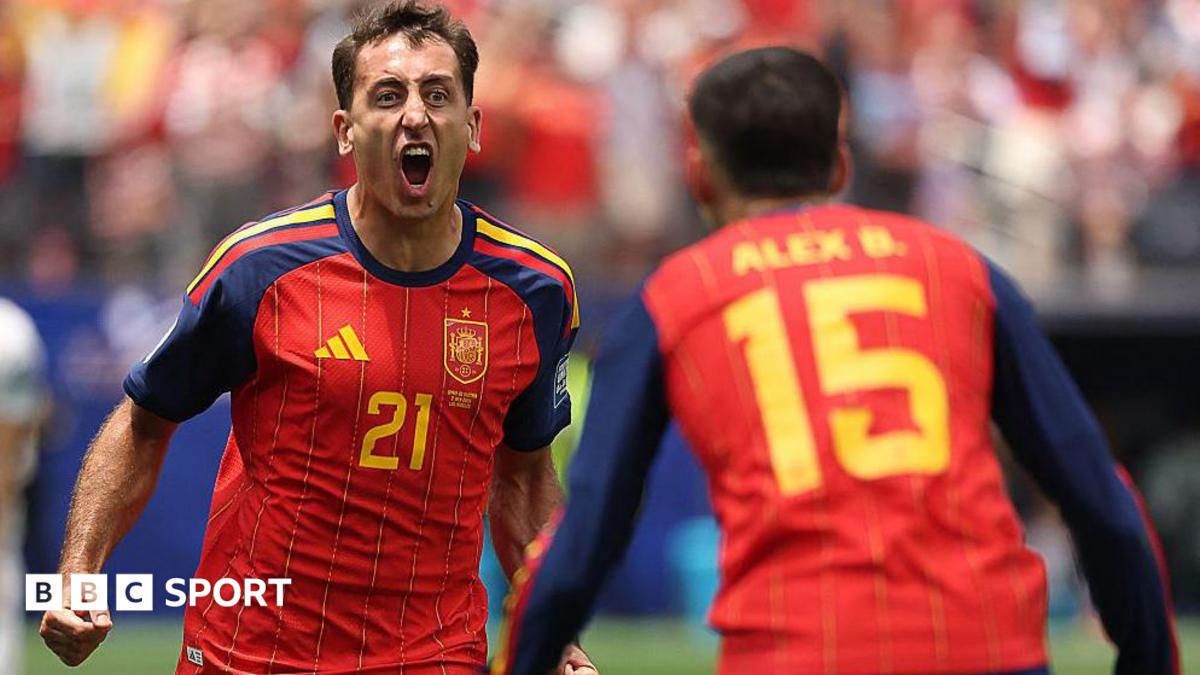
The opening goal in the 36th minute set the template, born from a quick transition where Marc Cucurella slipped into the left half-space to feed a perfectly timed run from Mikel Oyarzabal.
This was Spain's first victory in a World Cup knockout match since 2010, an astonishing statistic for a nation that considers itself a footballing superpower.
As predicted in the pre-match previews, including the tactical analysis from FourFourTwo, La Roja's ability to manipulate Austria's defensive line would decide the tie.
Pedro Porro added a second in the 66th minute with a slashing run from right-back, exploiting the space created when Lamine Yamal drew two defenders out wide.
Oyarzabal put the game beyond doubt in the 89th minute, latching onto another Cucurella cross after a rapid counter-attack.
The statistics backed up the visual dominance, with Spain finishing the match with an expected goals (xG) figure of 2.14 compared to Austria's 0.45.
Spain completed 91 percent of their passes, but more importantly, 28 percent of those passes went forward, a massive increase from the pedestrian 12 percent seen under Luis Enrique.
The Tactical Evolution of the False Nine
Mikel Oyarzabal is not your typical Spanish forward.
The Real Sociedad captain lacks the raw physical speed of Williams or the mesmerizing dribbling of Yamal, yet he has become the heartbeat of de la Fuente's attacking structure.
He is the player who has shone brightest in this squad, as detailed by the profile on BBC Sport, proving that intelligence beats athletic profile when breaking down low blocks.
With four goals in the tournament, Oyarzabal is Spain's top scorer and their primary creative outlet.
His movement out of possession is what unlocks the entire system.
By dropping into the space between Austria's midfield and defensive lines, Oyarzabal dragged center-back Philipp Lienhart out of position, creating the massive gaps that Porro and Fabian Ruiz repeatedly ran into.
This false-nine role is not new to Spanish football, but Oyarzabal executes it with a level of defensive intensity that Alvaro Morata simply cannot match.
Out of possession, Oyarzabal is Spain's first line of defense, registering 24 pressures per 90 minutes.
His pressing trigger—sprinting at the opposing goalkeeper when the ball is played back to the weak-foot side—forces rushed clearances that Rodri routinely intercepts.
There are critical defensive flaws that Spain must fix before their flight to Dallas, however.
In the first 25 minutes against Austria, Spain's counter-press was bypassed three times by direct balls to Konrad Laimer.
If Porro and Cucurella continue to push high simultaneously, Spain's center-backs will face isolated 2v2 situations against elite transition attackers.
A smarter team will exploit the wide spaces behind Cucurella when he underlaps into midfield, a tactical risk de la Fuente seems content to take.
Austria missed two clear-cut chances in transition during the first half because Nicolas Seiwald failed to select the correct final pass.
Against more clinical opponents, that defensive naivety will result in goals.
The Dallas Dilemma: Portugal or Croatia?
The reward for Spain's masterclass in Los Angeles is a trip to Texas on July 6, 2026.
Their opponent is still undecided, with Portugal and Croatia battling it out tonight in a tactical clash that will dictate Spain's preparation.
Should Portugal progress, Spain will face a side that mirror their own winger-heavy threat but with a significantly deeper bench.
Roberto Martínez has built a Portugal side that transitions quickly through Vitinha and Bernardo Silva, presenting a direct threat to Rodri's space.
Martínez uses a fluid 3-4-3 system in possession, pushing Nuno Mendes high and wide while Joao Cancelo tucks inside as an inverted full-back.
Oyarzabal would have to work double-time to pin Ruben Dias and prevent Portugal from building easily from the back.
If Portugal's double pivot controls the tempo, Lamine Yamal will find himself isolated against a low block.
Spain's counter-press would need to be near-perfect to prevent Rafael Leão from exploiting the space behind Porro.
Conversely, a matchup with Croatia would present a slower, more cerebral challenge.
Spain's pressing triggers would have to be perfect to disrupt a midfield trio of Luka Modric, Mateo Kovacic, and Marcelo Brozovic.
Kovacic operates primarily in the left half-space, linking up with Josko Gvardiol, which would force Porro to defend with discipline rather than bomb forward.
Against Croatia's possession retention, Spain would likely struggle to control the tempo of the game.
De la Fuente would be forced to rely even more on rapid transitions rather than sustained possession.
This might actually play into Spain's hands, allowing Williams and Yamal to exploit the aging Croatian defense in wide-open spaces.
Croatia's center-backs, Domagoj Vida and Josip Sutalo, lack the recovery speed to handle Spain's wingers in isolated 1v1 duels.
But it would also test Spain's defensive discipline, which looked shaky when Austria played through their initial press.
The Final Prediction
Spain are no longer the fragile side that exited the last two World Cups on penalties after completing a thousand meaningless passes.
They possess tactical variety, defensive bite, and a striker who understands space better than anyone else in the tournament.
Oyarzabal's form is not a temporary hot streak; it is the logical result of a system designed to maximize his scanning ability and late arrivals in the box.
Portugal or Croatia will find ways to hurt Spain, particularly in transition, but they will not be able to stop Spain's wingers from creating high-value chances.
Expect a tight, physical contest in Dallas where Spain's central block eventually chokes the opposition's creative channels.
The tactical flexibility of Oyarzabal will drag the opposing defense out of shape, allowing Dani Olmo to score the opener from the edge of the box.
Spain will win this match by a scoreline of 2-1, with Oyarzabal once again providing the decisive moment in the second half.
The journey to the final continues, and Spain look ready to go all the way.
Read Next
- Spain dismantled Austria to break a 16-year World Cup knockout curse
- Spain cruised past Austria, but the real battle is in the medical room
- England must fix their midfield spacing before the Mexico showdown
- Top 10: Moments from England's World Cup Run
- 🏆 World Cup 2026 — Full Coverage Hub
- 🇪🇸 Spain World Cup 2026 — La Roja Hub