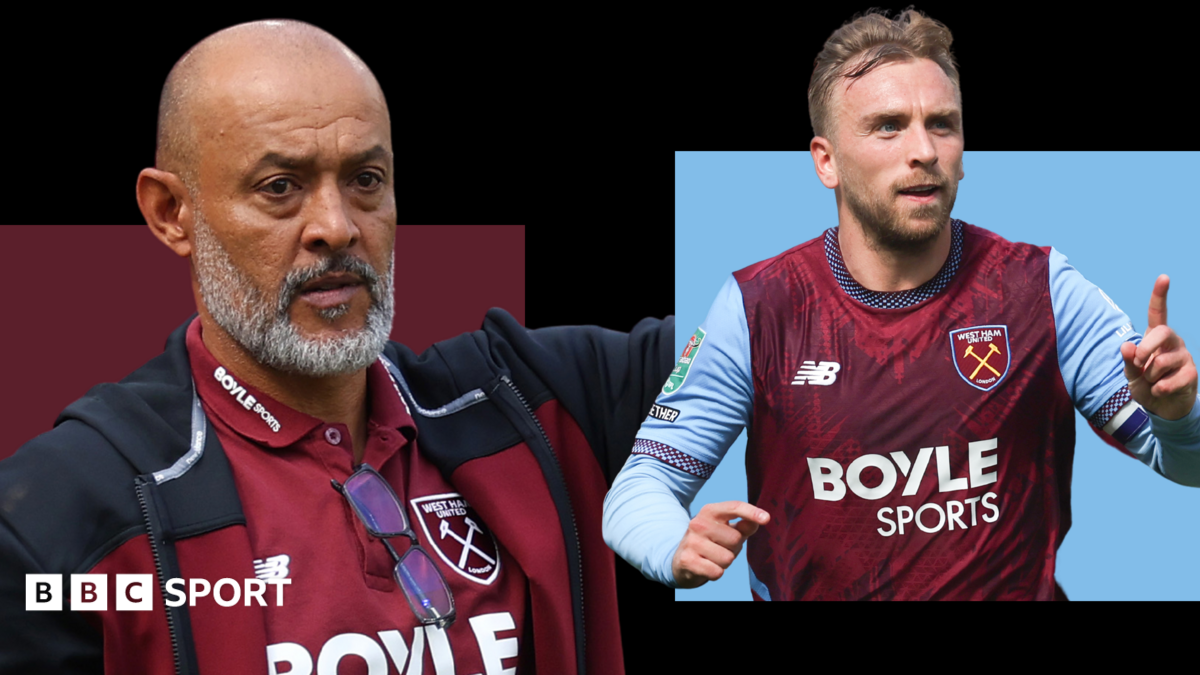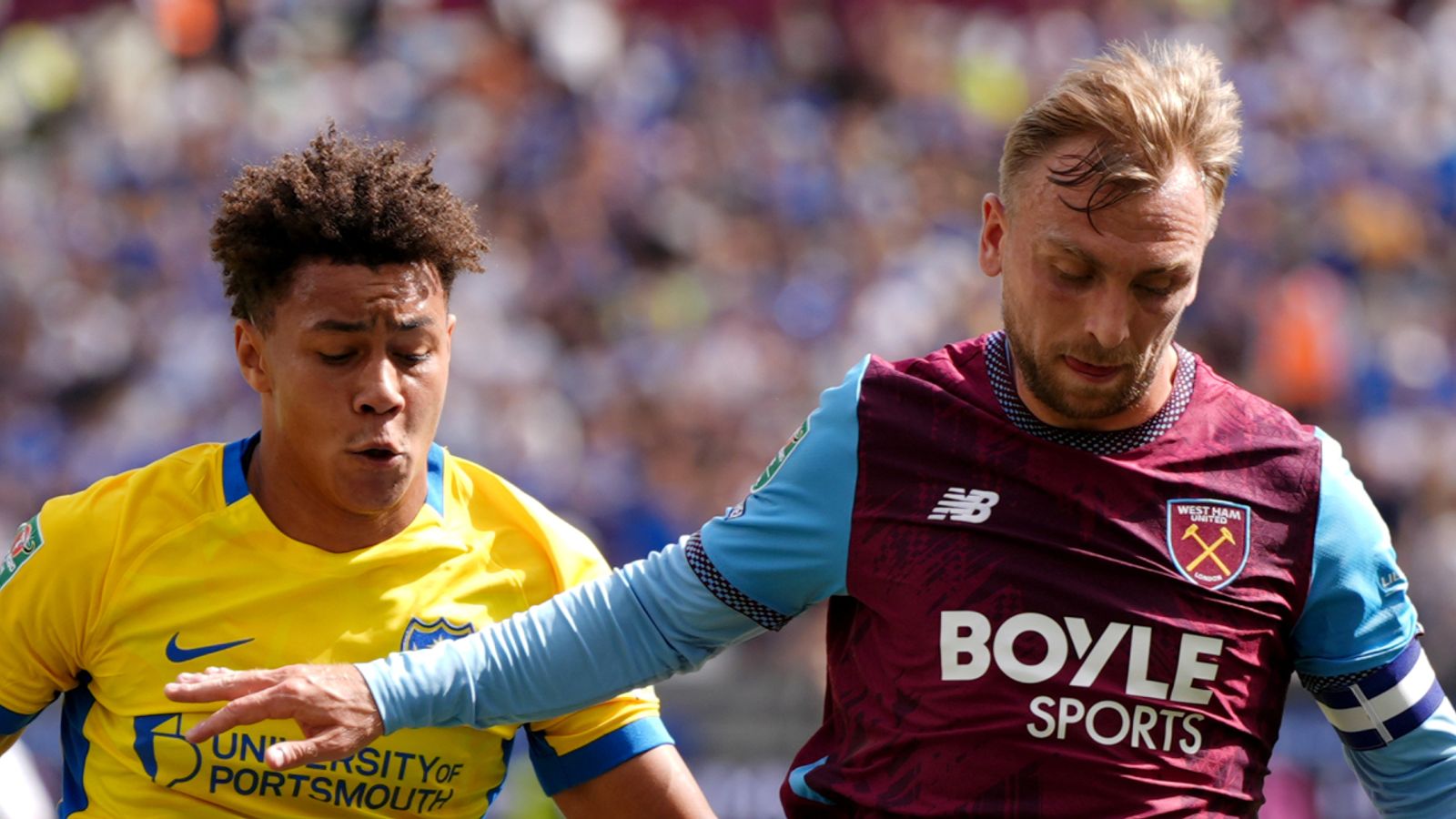
No player in Premier League history has seen their transfer valuation double to £85 million immediately after suffering back-to-back relegations. Yet, Mateus Fernandes is set to undergo a medical at Tottenham Hotspur following a record agreement with West Ham. It is a staggering fee for a player who, on paper, has spent his entire English career in the drop zone.
Just twelve months ago, Fernandes was salvaged from a relegated Southampton side for £38 million. Now, after another demotion with West Ham, Roberto De Zerbi has made him the centerpiece of a high-risk midfield rebuild. The numbers suggest Tottenham are either buying the most misunderstood midfielder in Europe or making a colossal gamble.
To understand why Spurs are willing to pay such a premium, we must look beyond the league table. The underlying data reveals a player whose individual performance profile diverges sharply from the collective failure of his employers.
De Zerbi's High-Intensity Engine
The Pressing Triggers and Ground Coverage
Last season, Fernandes established himself in the top 10 Premier League midfielders for total distance covered. In a West Ham side that frequently surrendered possession, his physical output was relentlessly high. He averaged over 11.8 kilometers per 90 minutes, matching the physical workload of elite box-to-box profiles.
This running power is not aimless. According to Sky Sports analysis, Fernandes ranked as one of the league's toughest tacklers. His ability to cover ground quickly allows him to close down space and execute defensive actions in transition.
Under De Zerbi, who relies on a high-pressing, fluid system, this engine is invaluable. Spurs struggled out of possession last season, barely avoiding relegation on the final day of the 2025/26 campaign. Fernandes represents a direct solution to their lack of central athleticism.
Tackling Volume vs. Positional Integrity
But his defensive numbers must be interpreted with caution. Playing for teams that average 41% possession naturally inflates defensive event counts. The sheer volume of defending he had to do at West Ham boosted his tackling metrics, masking occasional positional lapses.
His defensive workrate is outstanding, but it is often reactive. A high tackle count often indicates a team that is constantly chasing the ball. De Zerbi will need to channel this energy into a structured defensive system rather than individual tracking.
From Advanced Playmaker to Double Pivot
Southampton's Advanced Deployment
When Russell Martin signed Fernandes for Southampton, the intention was to deploy him as a creative No 10. The Portuguese youth international possessed the technical security to operate in tight spaces in the final third. However, Fernandes quickly voiced his preference for a deeper role.
He wanted to be an all-round No 8, involved in every phase of build-up. This positional shift occurred during his sole season at West Ham, where he functioned as a hybrid midfielder between the No 6 and No 8 slots.
The West Ham Hybrid Experiment
The positional evolution has yielded tangible offensive output. In a struggling West Ham team, Fernandes registered five goals and five assists last season. For a 20-year-old operating in a deep double-pivot, those numbers are highly respectable.
His adaptability is backed by a rapid learning rate. In April 2025, while at Southampton, coach Simon Rusk spent just 48 hours training Fernandes on the timing of late runs into the box. The teenager executed the plan perfectly, scoring against Spurs in a match that ironically sealed Southampton's earliest relegation in Premier League history.
Former Southampton interim coach Simon Rusk noted that Fernandes learns quicker than almost any young prospect he has coached. The midfielder's resilience has repeatedly stood out under difficult circumstances.
"If he applies goals, then you're probably moving towards a complete midfielder." — Simon Rusk
The Cost of Being the Alternative
The Anderson Ripple Effect
The transfer market is rarely rational, and the valuation of Fernandes is heavily influenced by external forces. The market for central midfielders this summer is highly competitive, with Manchester City closing in on Newcastle standout Elliot Anderson.
With Manchester United also chasing Fernandes, Tottenham felt compelled to bid a flat, guaranteed fee of £85 million. As reported by Fabrizio Romano, the deal contains no add-ons or future sell-on clauses. It is clean, direct, and incredibly expensive.
If Anderson is the gold standard of the summer market, Fernandes is the premium alternative. But paying a premium for an alternative carries massive structural risk. Spurs are paying elite-tier money for a player who is still developing his game intelligence.
The Tonali Co-existence
The comparison with other targets is telling. Tottenham are simultaneously negotiating with Newcastle United for Sandro Tonali, having already seen an £80 million bid rejected. Newcastle are holding out for over £100 million for the Italian international.
If Spurs complete both deals, their midfield expenditure will exceed £185 million. For a club that finished 17th last season, this is an unprecedented layout. It represents a total rejection of the conservative financial model that previously defined the club.
The Warning Signs of a Relegation Double
Build-up Vulnerabilities Under Pressure
We must address the elephant in the room: Fernandes has been relegated twice. While individual quality can be obscured by poor coaching and weak teammates, consecutive demotions are a red flag. Truly elite midfielders usually find a way to drag their teams to safety.
At West Ham, Fernandes occasionally struggled when asked to anchor the midfield alone. His natural instinct is to chase the ball, leaving huge gaps behind him. If De Zerbi cannot curb this eagerness, Tottenham's defense will remain highly vulnerable.
Furthermore, his pass completion rate in the defensive third dropped to 81.3% under pressure last season. In De Zerbi's risky build-up play, giveaways in this zone are fatal. Fernandes must improve his decision-making when playing out of the back.
The Physical and Mental Toll
There is also the question of mental fatigue. Playing in two successive relegation dogfights takes a heavy toll on a young player. Simon Rusk admitted that the relegation at Southampton hurt Fernandes deeply, and the West Ham collapse will have done the same.
De Zerbi is betting that this pain can be converted into competitive drive. But if Tottenham start the season poorly, the pressure on an expensive signing will be immense. The line between a resilient young star and a shell-shocked prospect is thin.
A New Tactical Identity
Spurs are not just buying a player; they are buying an identity. They have conducted extensive business to reshape their squad for the upcoming campaign. The recruitment team has focused on defensive stability and physical intensity.
Spurs have already secured several key signings to rebuild their defensive unit:
- Jan Paul van Hecke from Brighton
- Andy Robertson on a free transfer
- Marcos Senesi on a free transfer
- Martin Dubravka on a free transfer
De Zerbi wants a team that can press high, run forever, and transition at speed. Fernandes provides the physical foundation for this style. Whether he can provide the tactical discipline is another matter entirely.
The statistical profiles are fascinating, but the grass will decide if this transfer was a masterstroke or desperation. If he adds regular goals to his elite tackling, Spurs have a superstar. If the defensive lapses continue, he will simply be a very expensive player who knows how to go down.