Early Optimism Meets Cold Hard Reality
September 2 sits at a weird, uncomfortable spot on the football calendar. The summer transfer window has finally shut, standard routines resume, and early-season excitement runs into harsh truths. Managers no longer have the transfer market as an excuse for tactical deficiencies.
Over the decades, September 2 has delivered iconic stadium debuts, international qualifying upsets, and record-setting transfer deals. Yet looking closely at these moments reveals a recurring theme: early results on this date frequently deceive. Massive victories hide systemic weaknesses, while narrow escapes foreshadow cataclysmic qualifying failures.
Historic Groundwork and Maverick Genius
1899: Sheffield Wednesday Opens Owlerton Stadium
Sheffield Wednesday moved into their new home at Owlerton Stadium on September 2, 1899. The club abandoned their previous ground at Olive Grove to accommodate expanding crowds in South Yorkshire. Former player and reigning Lord Mayor William Clegg kicked off the inaugural fixture against Chesterfield.
Things started awkwardly for the hosts when Chesterfield captain Herbert Munday scored the first goal in the stadium's history. Wednesday responded furiously, piling on five unanswered goals to claim a 5–1 victory. The venue was later officially renamed Hillsborough in 1914.
Hillsborough grew into one of English football's most celebrated venues, even hosting matches during the 1966 World Cup. However, ninety years after its opening, the ground became synonymous with tragedy. The 1989 disaster forced a total overhaul of British stadium design, eliminating standing terraces and fundamentally altering matchday architecture.
1961: Carlos Valderrama and the Art of Pure Vision
Carlos Valderrama was born in Santa Marta, Colombia, on September 2, 1961. Raised in a footballing family, he emerged as one of the most distinctive playmakers in South American history. With his iconic blonde afro and deliberate posture, he looked entirely out of step with modern athletic trends.
European football in the late 20th century pushed toward relentless pressing and distance running. Valderrama chose a completely different approach, relying on spatial awareness, body language, and instant passing. He anchored Colombia through three consecutive World Cups in 1990, 1994, and 1998, earning South American Footballer of the Year honors in 1987 and 1993.
His time in Europe with Montpellier highlighted both his brilliance and his structural limitations. High defensive lines and physical ball-trackers could isolate him if his teammates failed to provide passing lanes. Yet when given space, his ability to dictate match tempo proved that pure intelligence beats physical speed every single time.
International Qualifying Collapses and Flawed Schemes
2000: Ireland Stuns Van Gaal's Netherlands in Amsterdam
Mick McCarthy brought his Ireland side to the Amsterdam ArenA on September 2, 2000, for an opening 2002 World Cup qualifier. Facing a Dutch squad stacked with world-class talent, Ireland were expected to bunker down and defend for 90 minutes. Instead, Robbie Keane stunned Edwin van der Sar with a clinical strike in the 21st minute.
Jason McAteer extended Ireland's advantage in the 65th minute, sending shockwaves through Amsterdam. Louis van Gaal reacted by throwing every available forward onto the pitch. Late goals from Jeffrey Talan and Giovanni van Bronckhorst rescued a 2–2 draw for the hosts, but the performance exposed deep systemic flaws.
Van Gaal's side suffered from structural rigidity and terrible defensive transitions against direct counterattacks. Throwing five strikers on the pitch salvaged a point, but it solved nothing tactically. One year later, Ireland defeated the Netherlands 1-0 in Dublin, officially knocking Oranje out of the 2002 World Cup entirely.
2006: Steve McClaren's Deceptive Five-Goal Cushion
Steve McClaren began his competitive tenure as England manager on September 2, 2006, with a Euro 2008 qualifier against Andorra at Old Trafford. England stormed out of the gates immediately. Peter Crouch scored in the fifth minute, followed by a Steven Gerrard volley eight minutes later.
Jermain Defoe added two goals across both halves, and Crouch bagged another to lock down a 5-0 win. Prior to kickoff, McClaren dropped David Beckham from the squad, framing the bold move as the start of a brave new era. English newspapers naturally praised the attacking fluidity and midfield freedom.
The five-goal margin masked glaring structural issues that would prove fatal. England's central midfield pairing still lacked discipline, and the team struggled to break down rigid defensive blocks without Beckham's set-piece delivery. Just fourteen months later, Croatia conquered England on a drenched Wembley pitch, destroying McClaren's career and leaving England out of Euro 2008.
2017: Isco Tears Apart Italy's Suicidal 4-2-4
Spain hosted Italy at the Santiago Bernabéu on September 2, 2017, in a pivotal match for direct 2018 World Cup qualification. Midfielder Isco delivered a masterclass performance in midfield manipulation. He opened the scoring in the 13th minute by curling a free kick over the Italian wall.
Right before the break, Isco struck again with a sharp, low left-footed drive past Gianluigi Buffon. He embarrassed the Italian midfield in the second half, famously dragging the ball over Marco Verratti with an effortless flick. Álvaro Morata capped off the night to secure a 3–0 victory.
Italian manager Gian Piero Ventura made a catastrophic tactical decision by deploying an aggressive 4-2-4 formation. Leaving only two central midfielders against Spain's passing carousel was tactical suicide. The humiliating defeat sent Italy to the qualifying playoffs, where they lost to Sweden and missed the World Cup for the first time in sixty years.
Deadline Day Blockbusters and Defensive Mirage
2013: Arsenal's Record Transfer for Mesut Özil
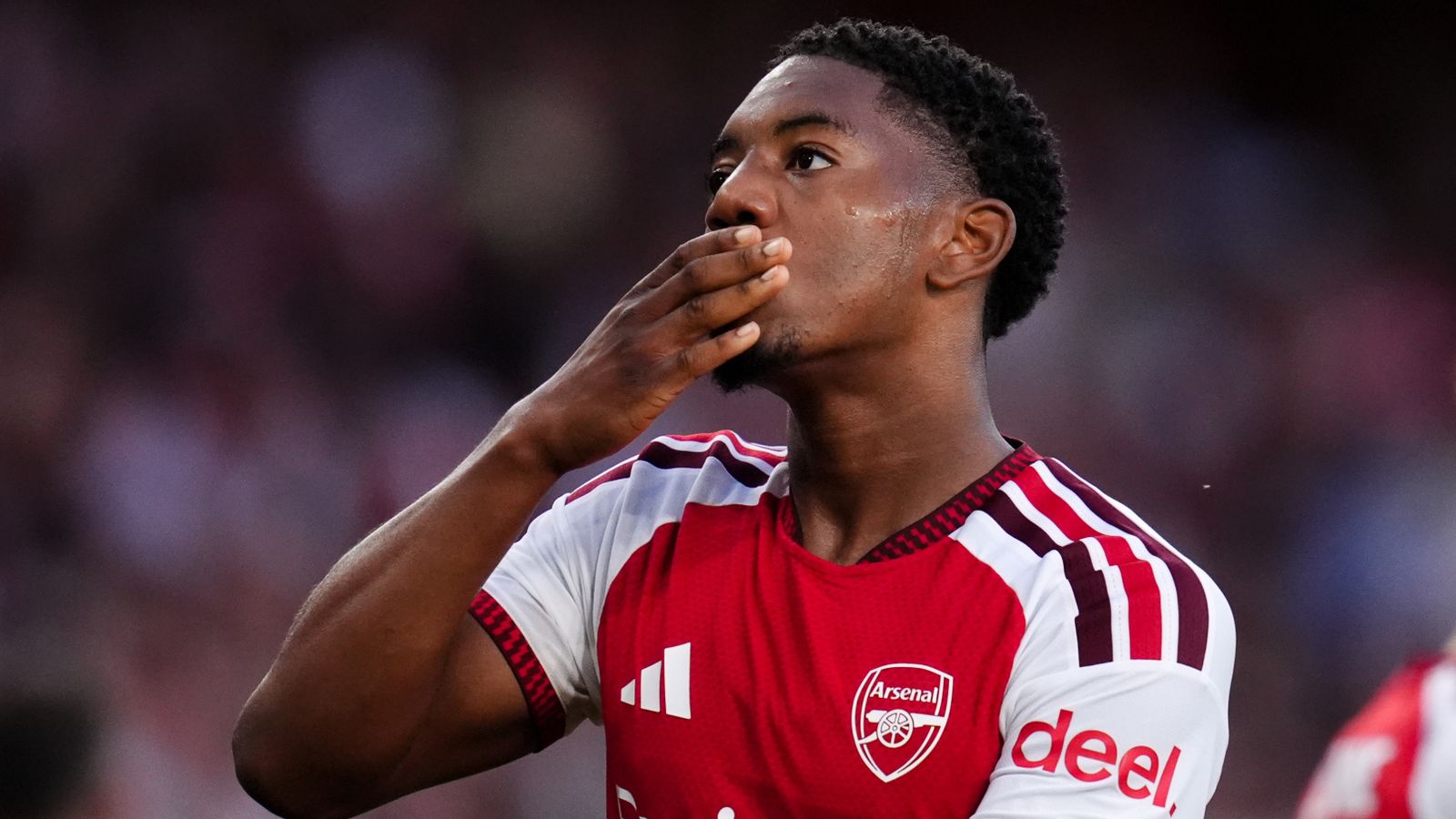
Transfer deadline day on September 2, 2013, delivered one of the most surprising moves in Premier League history. Arsène Wenger smashed Arsenal's club transfer record by signing Mesut Özil from Real Madrid for £42.5 million. Real Madrid had just purchased Gareth Bale, forcing Florentino Pérez to balance the club's financial ledger.
The transfer stunned Madrid supporters, who actively chanted Özil's name during Bale's official presentation at the Bernabéu. For Arsenal, the acquisition instantly changed public perception regarding their financial ambition. Özil paid immediate dividends on the pitch, providing elite vision as Arsenal ended a nine-year trophy drought by winning the 2014 FA Cup.
However, Özil's North London career eventually became a polarizing lightning rod. As English football shifted toward high-intensity counter-pressing, Özil's passive off-ball defensive work became an obvious liability. His massive contract extension later created immense internal friction, turning a fairy-tale signing into a complex tactical dilemma.
2018: Barcelona's 8-2 Rout of Huesca Hides Deep Rot
Ernesto Valverde's Barcelona welcomed newly promoted Huesca to Camp Nou on September 2, 2018. The minnows shocked the stadium by taking the lead in the third minute through Cucho Hernández. That early wake-up call triggered a ruthless, eight-goal onslaught from the Spanish champions.
Lionel Messi leveled the match in the 16th minute before orchestrating a complete masterclass. Messi finished with two goals and two assists, while Luis Suárez also grabbed a double. Strikes from Ousmane Dembélé, Ivan Rakitić, Jordi Alba, and a Jorge Pulido own goal rounded out an 8–2 thrashing.
Despite the eye-popping scoreboard, conceding two goals at home to a tiny club exposed real defensive fragility. Barcelona's midfield lacked structural protection against quick transitions. While Barcelona went on to win La Liga that season, those exact defensive flaws resurfaced catastrophically months later in their infamous Champions League collapse against Liverpool at Anfield.
The Pattern of September 2
Looking back across these historical events on September 2, a clear trend emerges. Scorelines recorded in early September are often terrible indicators of long-term health. Steve McClaren's 5-0 win over Andorra and Barcelona's 8-2 demolition of Huesca looked dominant, yet both contained the seeds of future collapse.
Conversely, moments of tactical failure on September 2—like Louis van Gaal's draw in Amsterdam or Gian Piero Ventura's midfield disaster in Madrid—served as brutal warnings that could not be ignored. Football history proves that September 2 is rarely about immediate celebration. It is the day when structural reality begins to catch up with summer hype.
Read Next
- Arsenal just sold Gabriel Jesus to Barcelona for pennies
- Arsenal race Barcelona for Julian Alvarez as deadline day window closes
- Raphinha and Yamal are turning Barcelona into football's lethal weapon
- Chelsea shut down Liverpool's late deadline day loan bid for Malo Gusto
- ⚽ La Liga 2025-26 — Title Race Hub