The Transfer Market Illusion at Tottenham
If buying shiny new tactical pieces automatically guaranteed tactical coherence, Tottenham Hotspur would be walking away with the league title by autumn. Before kick-off on Saturday, the stadium announcer boomed that Spurs had spent and spent to acquire top talent. Chief executive Vinai Venkatesham doubled down in his matchday programme notes, boasting that the club had secured every marquee target on their wishlist.
Yet ninety minutes later against Matthias Jaissle’s organized Newcastle side, that £237m midfield investment produced zero structural harmony. Newcastle left North London with a comfortable 0-2 victory while the away support gleefully reminded the hosts of their familiar shortcomings.
Watching Roberto De Zerbi’s team collapse in the second half felt like watching a luxury engine installed inside a chassis with no suspension. The balance across the park looked fundamentally broken from the opening whistle.
De Zerbi opted to field a midfield trio containing £92.5m signing Sandro Tonali alongside £85m addition Mateus Fernandes and Rodrigo Bentancur. To make room for new arrival Omar Marmoush—who started just 24 hours after signing for £60m—De Zerbi pushed Pedro Porro into an unfamiliar right-wing role.
The initial fifteen minutes showed brief flashes of ball rotation between Mathys Tel and Andy Robertson down the left flank. However, the system disintegrated the moment Newcastle adjusted their pressing triggers after the interval.
De Zerbi's Structural Breakdown Exposed by Jaissle
During the first half, Tottenham controlled possession without producing genuine penetration beyond a 17th-minute block on Porro's close-range strike. Newcastle goalkeeper Lukas Hornicek turned away header attempts from Tel and Jan Paul van Hecke, but Spurs never looked like choking the space in transition.
Jaissle recognized Tottenham's midfield balance was purely cosmetic and instructed his team to press with absolute aggression after half-time. The tactical shift immediately destabilized Tottenham's deep build-up play.
The decisive breakthrough on 61 minutes laid bare Tottenham's spatial disorganization across the central pitch. Debutant Nico González, signed for £50m from Manchester City, unpicked Spurs with a 60-yard diagonal switch from deep inside his own half. Right-back Amar Dedic surged past his winger to head the ball into Anthony Elanga's path.
Elanga took one touch, span off his marker, and drove a crisp left-foot shot inside Antonin Kinsky’s far post. Spurs had no defensive cover tracking back to close the line of sight.
“Tottenham Hotspur, it’s happened again,” sang the Toon Army as if it needed pointing out.
De Zerbi reacted frantically, introducing Mohammed Kudus for his first match in eight months as part of a triple substitution just five minutes later. The structural panic only worsened when Newcastle doubled their lead in the 72nd minute.
Lewis Hall whipped a deep corner toward substitute Nick Woltemade, who physically dominated Destiny Udogie. Woltemade headed down for Yoane Wissa to audaciously scoop the ball over his head into the net, leaving De Zerbi looking shell-shocked on the touchline.
As The Guardian reported on Tottenham's defeat, De Zerbi admitted his team's total failure to respond was his biggest disappointment of the afternoon. When Tonali was hauled off late in the match to ironic cheers from Newcastle supporters, the reality was undeniable.
Throwing raw talent together without a clear rest-defense shape is a recipe for mid-table mediocrity. Spurs spent big, but they built a house without foundation pillars.
Iraola's Liverpool Teething Troubles vs Tottenham's Systemic Defects
Across the country at Anfield, Andoni Iraola experienced his own baptism of fire during a frantic 2-2 draw against Nottingham Forest. Yet unlike Tottenham's structural void, Liverpool's issues stem from aggressive tactical transition teething troubles under a brand new head coach.
Watching from the directors' box alongside John W. Henry were prospective new vice-chair Amit Bhatia and Indian steel magnate Lakshmi Mittal, whose 1892 Holdings has backed a 38% stake in the club. What they witnessed was an ultra-high defensive line repeatedly targeted by Oliver Glasner's direct vertical tactics.
Forest exposed full-backs Jeremie Frimpong and Jérémy Jacquet twice in the opening six minutes via simple long balls to Dan Ndoye. Forest took the lead when Matz Sels launched a clearance to Igor Jesus, who held off Jacquet and Alexis Mac Allister to feed Morgan Gibbs-White, setting up Ndoye's finish.
“I’ve got two emotions,” said Oliver Glasner. “I’m very proud of the performance and how many chances we created, but I’m disappointed with the result.”
Liverpool equalized on 60 minutes when £116m playmaker Florian Wirtz fed Cody Gakpo, who spun past Neco Williams and Murillo to set up Alexander Isak. However, chaos struck shortly after when Iraola was prevented from making a key triple substitution involving Ryan Gravenberch, Rio Ngumoha, and Kostas Tsimikas due to a malfunctioning fourth official's electronic board.
Liam Delap took a fast throw-in, catching sleeping defenders Jacquet and Frimpong, which resulted in Alisson conceding a penalty that Gibbs-White converted. Iraola was left fuming on the sidelines while his bench fixes stood helpless.
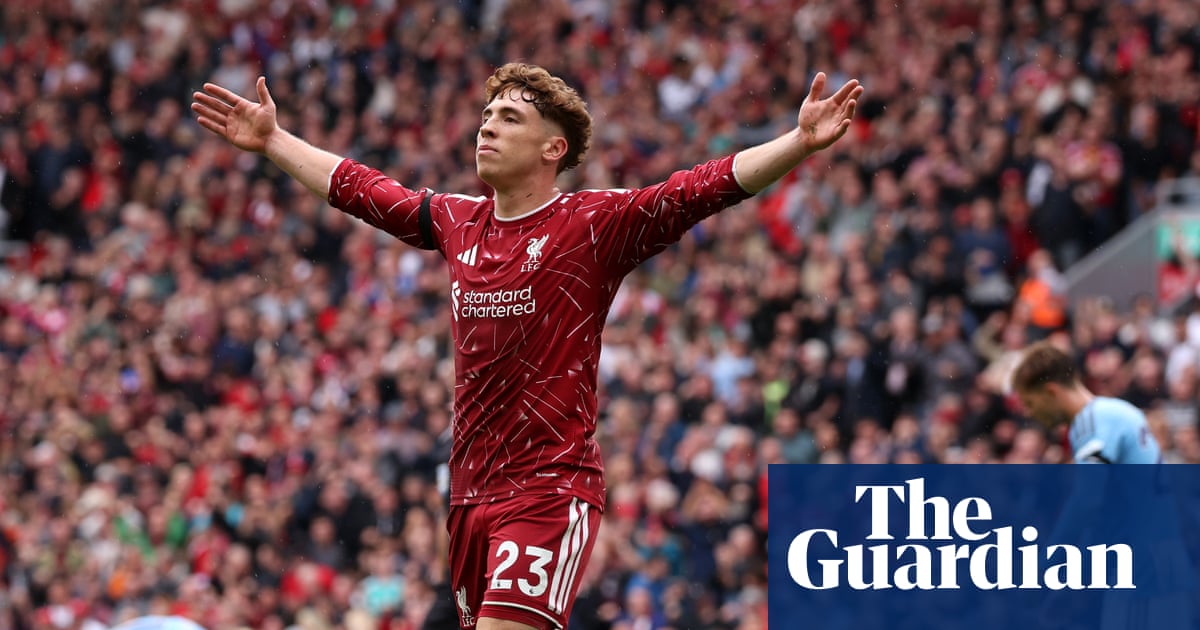
Liverpool rescued a point thanks to £34.5m signing Víctor Muñoz, who smashed Wirtz's precision pass off the underside of the crossbar on his home debut. As detailed in The Guardian's analysis of Anfield's opener, Iraola's side showed plenty of offensive power through Wirtz, Isak, and £123m talent Bradley Barcola despite defensive lapses.
Iraola pulled both Frimpong and Jacquet before the end, finishing with Dominik Szoboszlai at right-back to stabilize the defensive structure. That immediate tactical correction highlighted a manager actively addressing his system's weak points.
The Verdict: Why Spurs Will Slide While Liverpool Fix Their Blueprint
The difference between Iraola’s Liverpool and De Zerbi’s Tottenham comes down to tactical identity versus commercial assembly. Iraola has a clear press-and-punish methodology that currently suffers from defensive spacing errors and full-back overextension. Those problems are fixable through training ground repetition and positioning adjustments.
Frimpong’s defensive struggles and Jacquet’s positional errors are individual flaws within a coherent structure. In contrast, De Zerbi’s setup at Tottenham lacks a defensive spine altogether. Playing Tonali, Fernandes, and Bentancur together creates an overlapping positional profile where no midfielder takes responsibility for central rest-defense.
When opposing teams bypass Tottenham's initial wave of pressure, their central defenders are left completely unprotected against runners like Elanga and Wissa. That structural gap will be exposed again and again by every well-drilled side in the league.
Expect Tottenham's defensive frailties to be punished repeatedly by high-intensity Premier League transition teams over the coming months. De Zerbi will be forced to dismantle his experimental three-man midfield setup before September ends, but the damage to their campaign will already be done.
Spurs simply lack the defensive discipline required to sustain a top-four push in this league. Our firm prediction is that Tottenham will fail to secure Champions League qualification this season, picking up fewer than 62 points.
Meanwhile, Iraola's Liverpool will solve their backline spacing issues once their new signings integrate into the pressing mechanics. Bet against De Zerbi's expensive midfield experiment before the market catches on.
Read Next
- Andoni Iraola is right about sub boards, but Liverpool's meltdown is on him
- Roberto De Zerbi admits Tottenham mentality fix cannot be bought
- Spurs are spiralling while Newcastle survive their summer fire sale
- Liverpool's shiny new era is already giving fans tactical heartburn
- 🏆 Europa League Final 2026 — Full Coverage Hub