
Why Rafa Benitez is the wrong man to rebuild Scotland
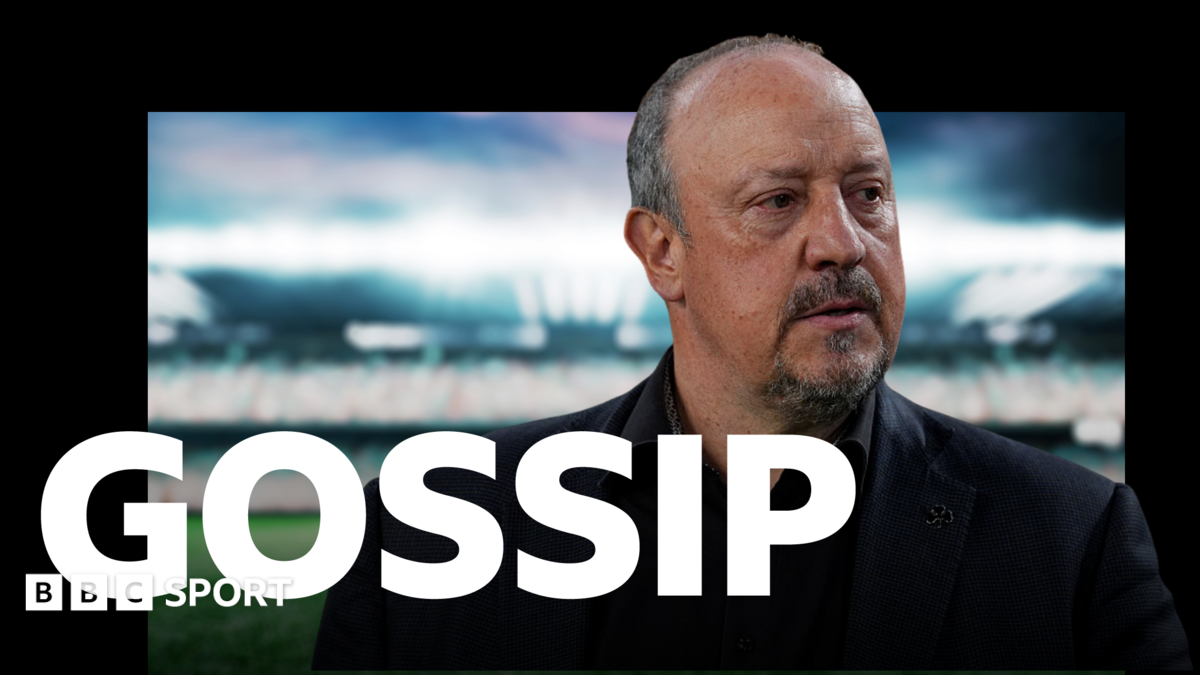
Rafa Benitez and the tactical trap waiting for Scotland
Steve Clarke has departed, leaving the Scotland national team at a historic crossroads. The search for a new identity has begun, and the latest name circulating in the gossip columns is Rafael Benitez.
The former Liverpool and Real Madrid manager is currently a free agent after a miserable stint at Panathinaikos, which ended in May 2026. According to the latest gossip roundup, Benitez has refused to rule out his interest in the vacancy.
For a fanbase desperate for tactical modernization, the Spaniard represents a massive name. But name recognition is a dangerous metric in international football. Scotland do not need a manager whose system has repeatedly failed to adapt to modern high-pressing trends.
They need a builder who understands transition mechanics and modern space creation. Benitez's recent track record should serve as a warning. His Panathinaikos side was painfully rigid, struggling to transition the ball through the lines.
They were repeatedly caught in possession by Greek league opponents who pressed high. Scotland under Clarke suffered from similar paralysis, often generating less than 0.74 expected goals per match. Appointing Benitez would simply reinforce those exact defensive habits.
The national team's historical struggles are deeply rooted in their inability to dictate tempo. When the opposition sits deep, Scotland look clueless on the ball. Benitez has never been a coach known for unlocking low blocks through possession play.
International football has moved past the era of the passive low block. To progress, teams must maintain a threat on the counter-attack. Benitez's signature defensive setups do not facilitate this.
His teams tend to drop deep, defend the box, and leave the lone striker completely isolated. For a Scottish squad lacking elite individual dribblers, this is a recipe for stagnation. They will simply pass the ball sideways before launching hopeless long balls.
During the recent European campaigns, Scotland's passive approach was exposed by dynamic transitional teams. The players looked exhausted from chasing the ball in their own defensive third. Adding another defensive dogmatist like Benitez will not solve this structural issue.
The statistical reality of the Benitez block
Let us look at the numbers. During his final month in Greece, Benitez's side averaged just 3.2 progressive passes per 90 minutes. That was the lowest rate among the top six teams in the Greek Super League.
Their pass completion rate in the opponent's final third dropped to 58%. These are not the statistics of a team ready to break defensive lines. They represent a stagnant, risk-averse style that modern opponents easily read.
Furthermore, Panathinaikos conceded 14 goals in 10 championship play-off matches. The defensive organization that once defined Benitez's career seemed completely absent. His rigid 4-2-3-1 shape left massive gaps in the half-spaces that opponents exploited.
Scotland already struggle with ball retention. In their final matches under Clarke, the midfield struggled to find passes under pressure. Billy Gilmour and Callum McGregor were repeatedly forced to pass backward.
Benitez's rigid positioning would restrict their freedom even further. It would lock them into static zones that are easy to press. Scotland's midfielders need spatial fluidity, not tactical handcuffs.
A passive system also places immense pressure on the central defenders. Scotland's backline is not built to sustain ninety minutes of constant pressure. Without a reliable outlet to relieve that pressure, the defense eventually cracks.
We saw this repeatedly in Greece. Panathinaikos conceded late goals after being pinned in their own penalty box. Scotland cannot afford to repeat these tactical mistakes.
Scott McTominay's late runs into the box have been Scotland's main source of goals. In a Benitez system, McTominay would be forced to maintain structural discipline in midfield. This would effectively neutralize Scotland's most dangerous attacking weapon.
Furthermore, international football requires managers who can adapt during matches. Benitez has historically been slow to alter his pre-planned defensive shapes. If the opponent finds a pocket of space between the lines, Scotland will suffer.
Inside the Rangers midfield revolution
While the national team searches for direction, Rangers are actively reshaping their squad under Derek McInnes. The club is executing a clear strategy in the transfer market. This is reported by BBC Sport as a priority for the Ibrox club.
They are targeting physical profile over experience, chasing two young midfielders who could redefine their style of play. The first target is Jens Hjertø-Dahl, the 20-year-old Norwegian midfielder from Tromsø. Standing at 6'4", Hjertø-Dahl is a unique physical specimen.
He combines defensive aerial dominance with a surprising ability to carry the ball forward. Rangers saw a formal bid of £5.3 million rejected by Tromsø, who view the player as their prize asset. The Norwegian club is holding out for a much higher fee.
The statistics explain why Rangers are willing to pay such a fee. Hjertø-Dahl averages 6.8 progressive carries per 90 minutes in the Eliteserien. He also wins 72% of his ground duels.
This combination of size and ball progression is exactly what the Rangers midfield lacks. Under McInnes, the team has struggled to break through mid-blocks. They often rely on hopeful crosses from wide areas.
Hjertø-Dahl also offers a threat from set-pieces, which is a key component of McInnes's attacking game plan. Last season, Rangers ranked third in the league for goals scored from set-pieces. Adding a giant who can also carry the ball would make them far more versatile.
The second target is Vanja Dragojević, the 20-year-old captain of Partizan Belgrade. Dragojević is a high-volume passer who excels at breaking lines. Rangers have bid £3.8 million for the Serbian midfielder, but Partizan are holding out for £4.5 million.
Partizan have even placed him on a special training regime. This prevents injury during negotiations and protects their asset. The deal is nearing completion but remains held up by the valuation gap.
Dragojević averages 8.4 ball recoveries per 90 minutes. He is a natural leader who understands how to orchestrate a press. Pairing him with Hjertø-Dahl would give Rangers a physically imposing midfield engine.
But relying on two 20-year-olds to run the midfield in Glasgow is a massive gamble. The pressure at Ibrox is relentless, and young players often struggle with the sudden increase in intensity. A bad run of form could destroy their confidence.
Furthermore, neither player has experience in the Scottish Premiership. The league is notoriously physical and fast-paced. They will not be given time on the ball to pick their passes.
The Chermiti dilemma and Celtic's counter-punch
The recruitment drive is funded, in part, by the potential sale of Youssef Chermiti. French side Olympique Lyon have tabled a £15 million package for the young Portuguese forward. Chermiti scored 15 goals last season, operating as the main focal point of the Rangers attack.
His tactical contribution, however, goes far beyond his goal tally. Chermiti averages 28.4 high-intensity sprints per match. This relentless movement stretches opponent defenses, creating space for midfield runners.
Losing him would rob Rangers of their primary transition outlet. Selling him for £15 million would represent a quick profit, but finding a replacement with similar physical output in late July is almost impossible. The club hierarchy must resist the temptation to cash in.
Without Chermiti's pressing output, McInnes's defensive structure would suffer. He acts as the first line of defense, forcing opponent center-backs to make hurried clearances. His absence would immediately make Rangers easier to play through.
Meanwhile, across Glasgow, Celtic are not standing still. They have secured a deal to sign Colombian forward Camilo Duran from Qarabag for £5.5 million. Duran is a highly direct attacker who fits Celtic's high-pressing system.
He is expected to join their pre-season camp in Portugal after completing his medical. Duran averaged 4.2 shots per 90 minutes in European competition last season. He is a high-intensity presser who thrives in the final third.
Celtic's acquisition of Duran is a direct response to Rangers' tactical shifts. It sets up a fascinating tactical battle for the upcoming Premiership campaign. But Duran is not without risks.
He is moving from the Azerbaijani league, where the tactical organization is far less rigid than in Scotland. If he fails to adapt to Celtic's quick transition patterns, he will become an expensive benchwarmer. The pressure is on manager Brendan Rodgers to integrate him quickly.
Scotland's football context is shifting rapidly. The national team is tempted by the nostalgic appeal of Benitez, a move that threatens to trap them in tactical passivity. Rangers are gambling their season on raw, expensive talent from Norway and Serbia.
Celtic are quietly strengthening their attack with proven European performers. The numbers suggest that Celtic's calculated aggression will once again give them the edge. Scotland must choose progress over nostalgia, and Rangers must ensure their gambles pay off.
The Mixer: The Story of Premier League Tactics, from Cantona to Guardiola by Michael Cox
The ultimate tactical breakdown of how the Premier League changed forever.
Frequently Asked Questions
Why did Rafa Benitez leave Panathinaikos?
What tactical formation does Rafa Benitez typically use?
Why is Rafa Benitez linked to the Scotland national team job?
How did Rafa Benitez's Panathinaikos perform statistically in possession?
What are the main tactical concerns with appointing Rafa Benitez for Scotland?
More Coverage

Why Thomas Tuchel made Anthony Gordon undroppable for England
2 days, 5 hours ago
Chiesa wants out at Liverpool as Haaland and Mitoma rumors heat up
5 days, 19 hours ago
Liverpool's injury crisis threatens to derail Iraola's tactical masterplan
1 week, 2 days ago
Manor Solomon can talk all he wants, but Ireland blew Israel away
1 week, 2 days ago
Why Thomas Tuchel's England will sweep Croatia and Czechia to reach the quarters
1 week, 3 days ago
Tuchel's depleted England face Spain test in FIFA's new autumn window
1 week, 4 days agoMore Analysis
Why Thomas Tuchel made Anthony Gordon undroppable for England
2 days, 5 hours ago
Chiesa wants out at Liverpool as Haaland and Mitoma rumors heat up
5 days, 19 hours ago
Liverpool's injury crisis threatens to derail Iraola's tactical masterplan
1 week, 2 days ago
Manor Solomon can talk all he wants, but Ireland blew Israel away
1 week, 2 days ago
Why Thomas Tuchel's England will sweep Croatia and Czechia to reach the quarters
1 week, 3 days ago