The Illusion of Control in Boston
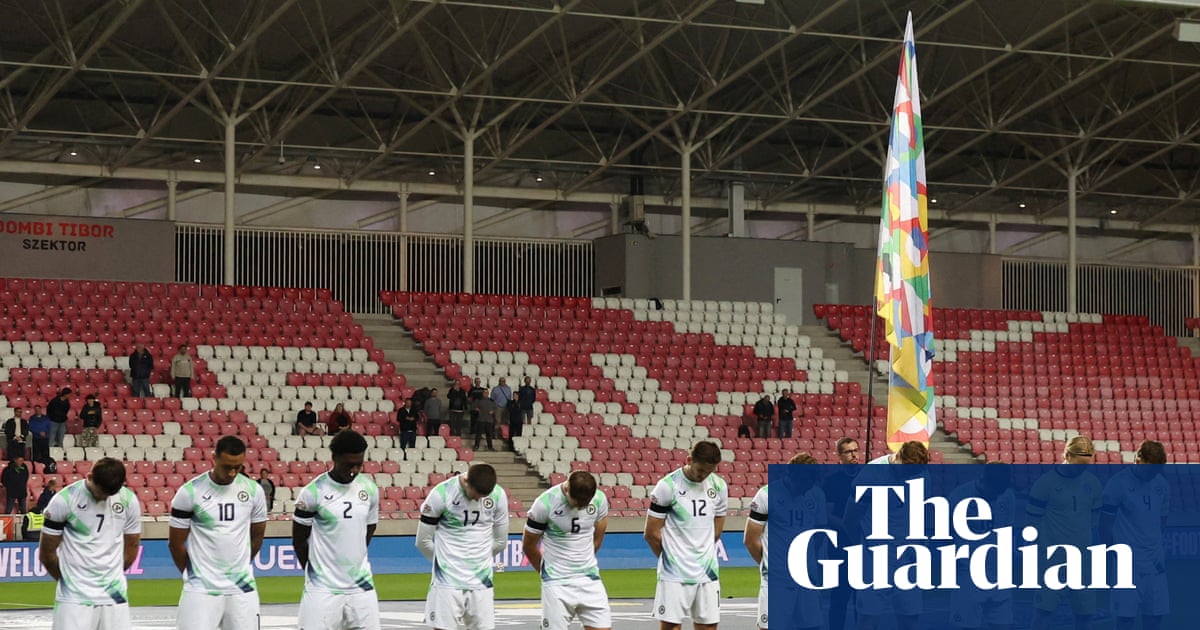
Germany completed 784 passes against Paraguay in Boston, yet they are going home. Their 74% possession share yielded exactly one goal, a disallowed header, and a shootout defeat that exposes the structural flaws of Julian Nagelsmann's possession system. As The Guardian reported, Germany's exit in the Round of 32 represents a massive tactical failure.
It was not a fluke result or a case of bad luck. For forty-four years, the penalty shootout was Germany's ultimate tactical safety net. Four consecutive shootout victories between 1982 and 2006 built a myth of psychological invincibility.
That myth evaporated on a humid night in Boston when José Canale converted Paraguay's sixth penalty to seal a 4-3 shootout victory. Germany's historical safety net failed because their performance over 120 minutes did not deserve progression. Nagelsmann's team controlled the ball, but they never controlled the space.
Paraguay sat in a deep defensive block, refusing to press Germany's center-backs. This passive defensive stance completely neutralized Germany's possession mechanics. Germany passed the ball laterally across the midfield line, waiting for pressing triggers that never came.
The central defenders spent the night passing to each other. This passive circulation allowed Paraguay to rest in possession, maintaining their shape without exerting defensive energy. The German side lacked the tactical variation to disrupt this low block.
The U-Shaped Passing Trap
An analysis of Germany's passing map reveals a massive volume of low-value circulation. Center-backs Jonathan Tah and Antonio Rüdiger exchanged 142 passes between themselves. Deep midfielders Pascal Groß and Joshua Kimmich completed another 186 passes, mostly in their own half.
This created a classic U-shaped passing pattern around the Paraguayan block. Only 12% of Germany's passes entered the attacking third.
Paraguay's compact lines kept the distance between their midfield and defensive units under 12 meters. This tight spacing choked the central zones where Jamal Musiala and Florian Wirtz usually operate.
Germany completed just 14 passes into the penalty area during the entire match. This lack of verticality was not accidental.
Nagelsmann's system relies on drawing opponents out of position through patient circulation. When an opponent refuses to engage, the system stalls.
Germany looked like a team playing in slow motion, unable to increase the tempo of their ball movement. Kimmich, operating in a hybrid right-back role, completed 98 passes but could not find passing lanes through the half-spaces. His distribution became predictable, turning into lateral recycling rather than penetration.
Choking the Half-Spaces
Paraguay's defensive game plan was designed to deny Germany access to the half-spaces. Full-backs Santiago Arzamendia and Gustavo Velázquez stayed connected to their central defenders.
This prevented Wirtz and Musiala from receiving the ball on the half-turn. When Germany did find these pocket players, they were instantly double-teamed.
Germany's wingers failed to provide the necessary width to stretch the defence. Kai Havertz often dropped deep to link play, leaving the box empty. Without a physical presence in the penalty area, Germany's crosses were easily cleared by Paraguay's center-backs.
Junior Alonso and Fabian Balbuena combined for 22 clearances in the match. The possession metrics look dominant on paper, but they obscure the lack of penetration. Germany's speed of pass was wave after wave of slow, lateral movements, averaging 2.4 seconds per touch.
This allowed Paraguay's defensive block to shift as a unit, maintaining their structural integrity. Germany's passing dominance was entirely sterile. The team completed hundreds of passes but failed to create numerical advantages in the final third.
The Shot Quality Crisis
Comparing the Historical Pathology
This tactical failure is not an isolated incident but rather the continuation of a decades-long trend. In 2018, Germany dominated possession against South Korea in Kazan with 70% of the ball, yet they fell to a 2-0 defeat. Four years later in Doha, a similar story unfolded against Japan where 74% possession ended in a 2-1 loss.
Each of these matches followed the same script: high possession, slow ball movement, and vulnerability to the counter-attack. The match in Boston, as detailed on the World Cup Daily podcast, was the third consecutive World Cup tournament where Germany fell victim to their own possession obsession. The team seems incapable of learning that possession without speed is a liability.
In their three group stage matches in 2026, Germany averaged 71% possession but managed just three open-play goals. This lack of productivity should have been a warning sign for Nagelsmann. Instead, he doubled down on the same passing structures against Paraguay, expecting different results.
Germany registered 19 shots over the course of 120 minutes. However, these attempts generated a total expected goals (xG) value of just 1.12. This yields an average shot quality of 0.06 xG per shot.
Germany were forced into taking low-probability shots from distance because they could not penetrate the box. Ten of Germany's 19 shots came from outside the penalty area. Only four shots hit the target, all of which were comfortable saves for Paraguayan goalkeeper Roberto Fernández.
Paraguay, by contrast, generated 0.85 xG from just five shots on the counter-attack. Their opportunities were far more dangerous than Germany's slow-tempo possessions. The sole moment of genuine German quality came in the 78th minute when Niclas Füllkrug headed home a cross from Kimmich.
The goal was ruled out for a marginal offside after a video review. Beyond this isolated incident, Germany failed to create a single big chance. Their attacking play was predictable, slow, and easily read by the Paraguayan defense.
Musiala attempted 11 dribbles but completed only three, frequently running into congested central areas. When the match went to penalties, German history suggested they still held the advantage. Since their first World Cup shootout in 1982, Germany had never lost one.
Shattering the Shootout Myth
They converted 17 of their 18 penalty attempts during that 44-year period. That record of efficiency stood as a monument to German mental composure. That composure cracked under the Boston lights.
Fernández saved Germany's second penalty from Musiala, who opted for placement over power. When Tah missed the target entirely with Germany's fifth kick, the pressure shifted back to the Germans. Canale's subsequent conversion sealed a historic upset and sent Germany home early.
Germany's shootout record, once feared globally, was broken by a team that executed their game plan perfectly. The defeat marks the end of an era of German tournament reliability. This defeat must trigger a reassessment of Germany's football identity.
The obsession with passing volume has detached the team from the efficiency that once defined them. Nagelsmann's tactical setup prioritized ball retention over penetration, resulting in a toothless attack. Paraguay's disciplined block exposed a system that has run out of ideas.
The numbers from Boston do not lie. Germany completed more passes than any other team in the Round of 32, but they produced the lowest xG per shot of any seeded nation. Possession without penetration is merely defensive play for the opponent.
Unless Germany can rediscover their vertical edge, their status as a global force will continue to slide. The post-mortem of Julian Nagelsmann's system will be long and painful.
Read Next
- Why Nagelsmann must fix Germany's broken midfield against Paraguay
- Why Julian Nagelsmann's passing obsession destroyed Germany in Boston
- That extra-time VAR decision has Germany fans ready to riot
- Germany's passing obsession has finally run its course
- 🏆 World Cup 2026 — Full Coverage Hub
- 🇩🇪 Germany World Cup 2026 — Die Mannschaft Hub