The Houston Standoff
NRG Stadium in Houston hosts a classic clash of tactical systems tonight as Carlo Ancelotti's Brazil faces Hajime Moriyasu's highly disciplined Japan. This is the Round of 32, a stage where structural errors are punished with immediate elimination. There is no safety net, no group stage math to rescue a disjointed performance.
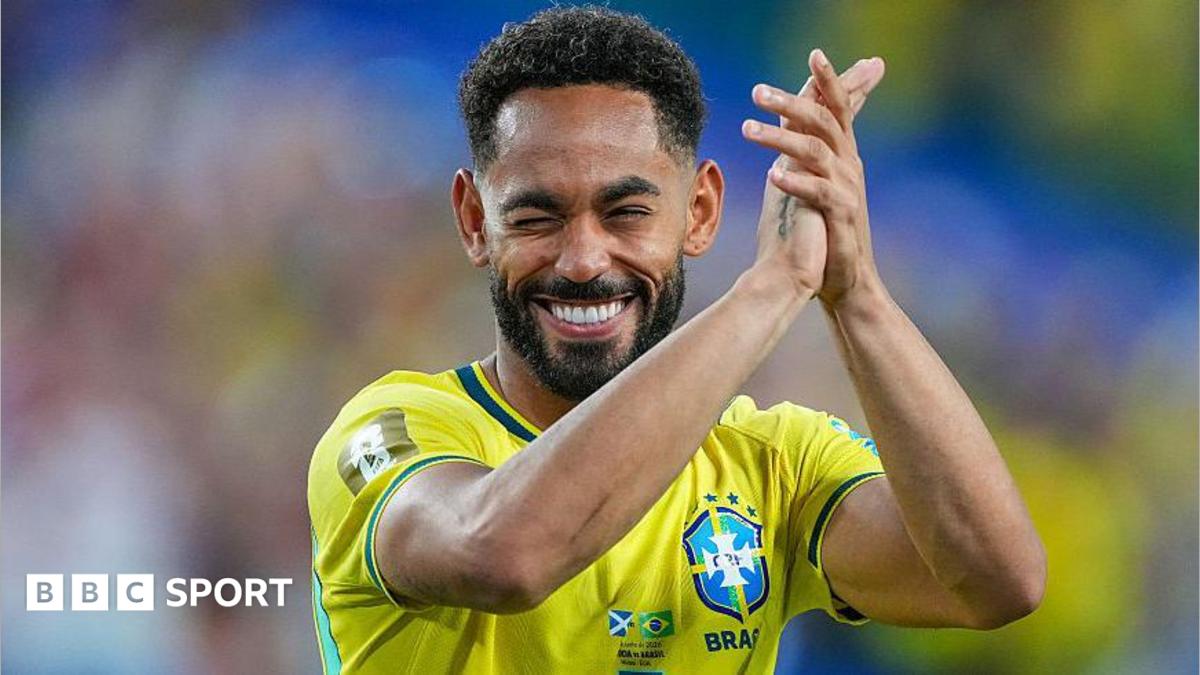
Ancelotti has spent the first half of this tournament searching for a functional attacking blueprint, and he has found it in Matheus Cunha. The Manchester United forward has transformed from a squad option into the tactical heartbeat of the Seleção. His evolution has solved the structural emergency that threatened to derail their campaign early on.
Japan will not provide a comfortable canvas for Brazil's flair. Their defensive block in Group F was outstanding, frustrating both the Netherlands and Sweden as Moriyasu choked the space between the lines. To progress, Brazil must show the same tactical maturity that defined their final group games.
Ancelotti's Tactical Pivot
To understand Cunha's importance, look back to the frustrating 1-1 draw against Morocco in New Jersey on June 13. The performance was stagnant, defined by isolated wingers and a disconnected midfield. Vinícius Júnior scored in the 32nd minute, but the team struggled to create high-quality chances, finishing with a team xG of just 0.84.
The issue was a complete lack of central presence. Brazil played with a traditional striker who stayed high, pinning the Moroccan center-backs but offering no passing lanes. Opposing midfielders easily blocked the half-spaces, dropping Brazil's final-third pass completion to a mediocre 71%.
Everything changed when Ancelotti inserted Cunha into the starting lineup. As a recent BBC Sport analysis pointed out, Cunha operates not as a classic number nine but as a hybrid forward who drops deep to create midfield overloads. In doing so, he bridges the gap between the double pivot and the front three.
The statistical shift was immediate. Against Haiti on June 19, Brazil's final-third pass completion rose to 86% as Cunha scored twice in the 23rd and 36th minutes. His work out of possession was even more impressive, completing 28 passes in the middle third to drag defenders out of their low block.
The Space Maker for Vinícius
Vinícius Júnior is the direct beneficiary of Cunha's movement, scoring four goals in three matches including a double against Scotland on June 24. When Cunha drops, he forces the opposition defense to choose between following him or dropping off to let him turn. That hesitation opens the half-spaces for Vinícius to exploit.
Consider Vinícius's first-half goal against Scotland in the 7th minute. Cunha dropped deep, pulling Scottish center-back Ryan Porteous ten yards out of the defensive line. That movement opened a vertical passing lane for Lucas Paquetá to slide a pass to Vinícius, who cut inside and swept the ball home.
Without Cunha's movement, Porteous remains in position to cover the diagonal run. Cunha's heat map from that match shows a player who spent more time in the center circle than the penalty box. Yet, he still managed to score in the 60th minute, arriving late to convert a Raphinha cutback.
This hybrid role has drawn comparisons to Roberto Firmino's peak years in the yellow shirt. Like Firmino, Cunha does not measure his game solely in goals, focusing instead on energy, mobility, and link play. He is the glue that allows Brazil's expensive attack to function as a unit.
The Japanese Trap
Hajime Moriyasu's Japan will not be easily pulled apart after finishing second in Group F. They held the Netherlands to a 2-2 draw, coming from behind twice to score an 89th-minute equalizer through Daichi Kamada. Their defensive organization is built on discipline rather than individual recovery pace.
Japan's defensive shape transitions between a 5-4-1 out of possession and a 3-4-3 when they transition. Their wingbacks drop deep to form a back five, neutralizing wide overloads. This poses a direct challenge to Vinícius and Raphinha, who prefer isolated 1v1 duels on the touchline.
Against Sweden, Japan allowed only three shots on target in a 1-1 draw. Their pressing triggers are highly coordinated, waiting until the ball enters the middle third before trapping. If Brazil's midfielders play slowly, Japan's double pivot will swarm them.
Wataru Endo remains the master of disrupting possession. He averaged 4.2 tackles per 90 minutes in the group stage. If he cuts the supply line to Cunha, Brazil's attack will stall, forcing Vinícius to drop deep to retrieve the ball and reducing his effectiveness near the box.
Brazil's Defensive Vulnerability
No team is perfect, and Ancelotti's Brazil has a glaring weakness in defensive transitions. When Cunha drops deep, Brazil pushes both fullbacks high to maintain width, leaving the center-backs exposed to quick counters. The defensive line must be perfect in their positioning to avoid disaster.
Morocco exposed this flaw in the opening match when Ismael Saibari scored in the 21st minute. Japan has the speed and technical quality to replicate this counter-attacking template. They will wait for the transition moment to strike.
In their 4-0 win against Tunisia, Japan scored three of their goals from direct transitions. Junya Ito and Kaoru Mitoma are lethal when given green grass. If Brazil loses the ball cheaply in midfield, Ancelotti's defense will be severely punished.
Furthermore, Paquetá's defensive discipline is a concern. He has picked up two yellow cards in three matches, often committing fouls when caught out of position. A third booking tonight would rule him out of a potential round of 16 clash, a risk Brazil cannot afford to ignore.
Decoding the Tactical Chess Match
The first 20 minutes will dictate the flow of the match in Houston. Japan will drop into their mid-block, challenge Brazil to break them down, and hunt for transitions. Brazil must resist the urge to force vertical passes through the middle where Endo is waiting.
Cunha will need to be patient to avoid entering Endo's defensive zone too early. He must time his runs to drop into the half-spaces, forcing Japan's center-backs to make a decision. If they refuse to follow him, Brazil's midfielders must shoot from distance.
Paquetá and Bruno Guimarães possess the quality to test Zion Suzuki from range, forcing Japan to step out of their defensive shell. Raphinha's role on the right will also be key. He needs to stretch the play, keeping the Japanese wingbacks wide and preventing them from tucking inside to support the center-backs.
Brazil's counter-press must be sharp. If Japan is allowed to make the first pass out of pressure, Mitoma will transition them 40 yards up the pitch in seconds. Brazil's midfield must commit tactical fouls early to break the rhythm of Japan's counter-attack.
Prediction: A Narrow Escape in Houston
Brazil has too much attacking quality, but they will not run away with this. Japan's defensive organization is too disciplined to collapse under pressure. Expect a tense, low-scoring encounter that hinges on a single moment of individual quality.
Cunha will again be the player who decides the match. In the 72nd minute, after a tiring Japanese midfield begins to lag, Cunha will drop deep, drag his marker, and slide a ball to Vinícius for the winner. Brazil wins, but they will leave Houston knowing they survived a tactical chess match.
Prediction: Brazil 1-0.
Read Next
- Andoni Iraola is inheriting a high-stakes tactical puzzle at Liverpool
- Why Thomas Tuchel must shift Ezri Konsa to right-back immediately
- Why England cannot afford to underestimate DR Congo in Atlanta
- Why Yan Diomande choosing PSG over Liverpool is a tactical mistake
- 🇧🇷 Brazil World Cup 2026 — A Seleção Hub
- 🇯🇵 Japan World Cup 2026 — Samurai Blue Hub