Why Kevin Keegan's tactical chaos was ahead of its time
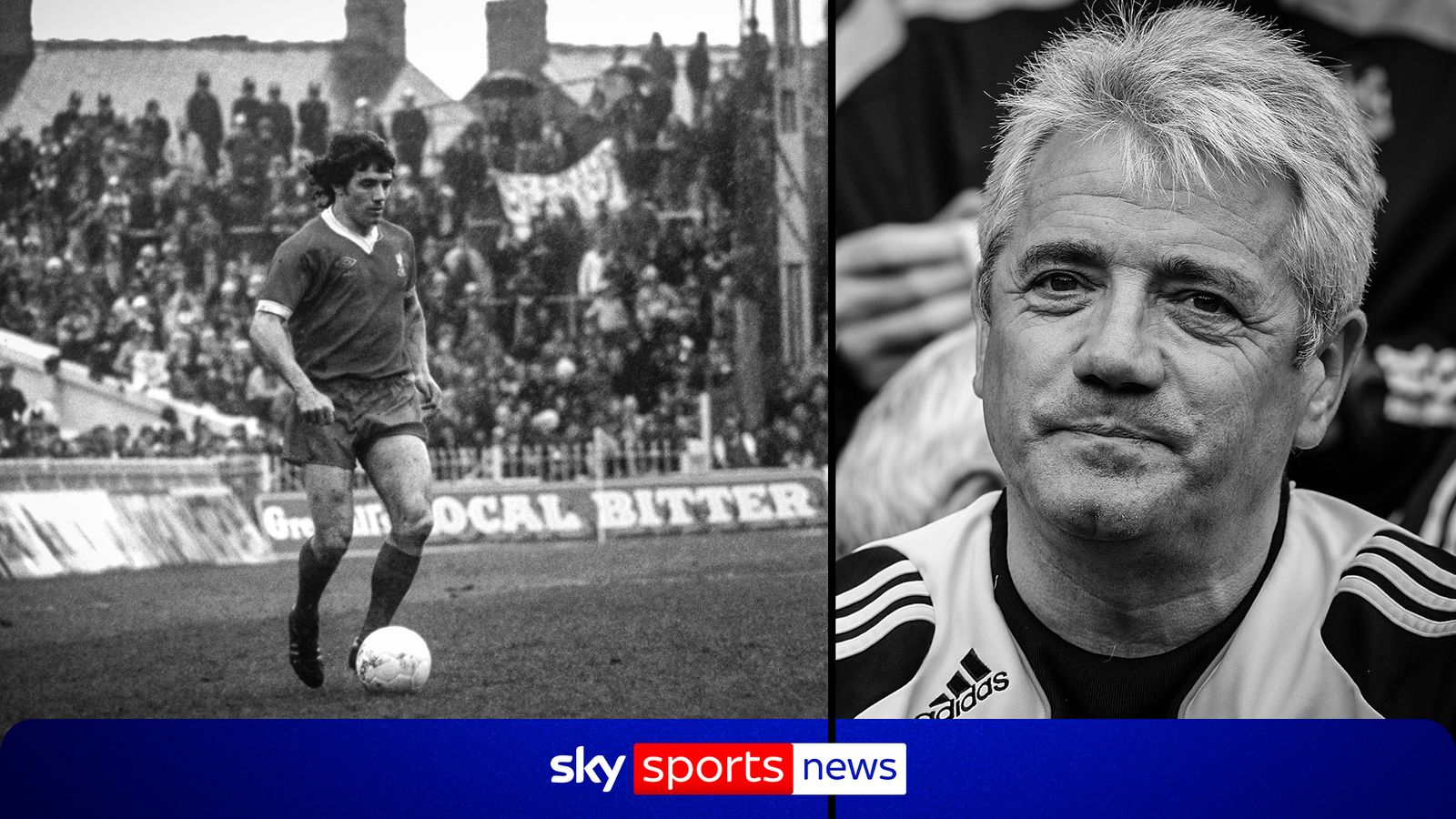
The Passing of a Football Romantic
The news of Kevin Keegan's death at the age of 75 marks a sharp break from an era when football still allowed itself to be human. Diagnosed with stage four stomach cancer in January after entering hospital with abdominal problems, his passing was confirmed today, July 20, 2026. As Metro UK reported, the former England captain and manager died following a short battle with illness, prompting a flood of tributes from across the sport.
Jamie Carragher led the reactions, celebrating Keegan's status as a true legend. Alan Shearer, whom Keegan signed for Newcastle in the summer of 1996, paid tribute to his hero. In his farewell tribute, Oliver Holt described him as a diminutive pioneer who let his emotions run wild. Keegan was a riot of color and flame in a grey world.
"one of the greatest players this country has ever produced"
To understand Keegan, we must look past the nostalgia. He is often remembered as an emotional lightning rod, a motivator who relied on motivation rather than systems. This does his tactical legacy a massive disservice. Keegan was a tactical innovator who changed the way English forwards moved and how attacking teams occupied space.
Keegan the Player: The Pressing Forward Before the Press
In the early 1970s under Bill Shankly and Bob Paisley, English football was tactically rigid. Forward lines were static partnerships. The big striker won the aerial duel, and the small partner ran onto the second ball.
Keegan, playing alongside the imposing John Toshack at Liverpool, broke this mold completely. He refused to stay in his designated central channel. Instead, Keegan operated as a buzzing, relentless menace, dropping deep to drag center-backs out of position.
If a defender followed him, Toshack had space to run into. If the defender stood off, Keegan turned and drove directly at the back four. It was an early version of the modern drifting forward.
His defensive work-rate was a tactical weapon. Keegan did not wait for the opposition to build play from the back. He hunted down full-backs, forced hurried clearances, and acted as Liverpool’s primary pressing trigger in the final third.
This forced turnovers high up the pitch. It allowed Liverpool to maintain possession and strangle opponents in their own half. Keegan was the engine of this early English press.
His transfer to Hamburg in 1977 proved his tactical adaptability. Under the demanding training methods of Branko Zebec, Keegan reached his peak. Zebec utilized him as a wide-drifting forward who could create overloads on either flank.
This fluid movement disrupted traditional zonal marking schemes in the Bundesliga. His tactical flexibility earned him consecutive Ballon d'Or awards in 1978 and 1979. He succeeded through relentless movement and spatial intelligence.
Keegan the Manager: The Asymmetric Madness of the Entertainers
When Keegan took over Newcastle United as manager in 1992, the club was facing relegation to the second division. Within four years, he built a team that came within a whisker of winning the Premier League. The lazy narrative suggests this team was built on pure emotion.
We are told Keegan simply sent them out with a pat on the back and told them to score goals. That is a myth. Keegan’s Newcastle played a highly sophisticated, asymmetric 4-4-2. This system exploited the rigid defensive lines of mid-90s English football.
Let’s look at how that team occupied space. On the right wing, Keith Gillespie was a traditional winger who stayed wide, stretched the opposition, and crossed early. On the left, David Ginola was given complete license to cut inside onto his stronger right foot.
To balance Ginola's inward movement, left-back John Beresford pushed high, playing almost as a winger. This created a constant overload on the left flank. Opposition right-backs were repeatedly caught in two-on-one situations.
In the center, Peter Beardsley played as a deep-lying forward. Beardsley was the key connector. When Ginola cut inside and Beardsley dropped deep, Newcastle formed a box midfield in possession.
This pre-dated modern box structures by twenty years. Les Ferdinand occupied both center-backs, creating the depth needed for Beardsley to play. Rob Lee made late, vertical runs from midfield to exploit the space Ferdinand cleared.
By January 1996, Newcastle held a 12-point lead at the top of the table. They were playing the most fluid football England had seen in a generation. It was a tactical masterclass in attacking rotation.
The Structural Flaws that Cost Newcastle the Title
But the system was tactically fragile. Keegan’s commitment to attacking overloads left Newcastle exposed in transition. They lacked any form of rest defense.
When Newcastle lost the ball, they had no structure to halt counter-attacks. The central midfield pairing of Rob Lee and Lee Clark often pushed too high, leaving the center-backs isolated. Philippe Albert, a ball-playing center-back who loved to carry the ball into the final third, was frequently caught out of position.
This left Steve Howey to defend massive spaces alone. The structural flaw was laid bare on April 3, 1996, in the famous 4-3 defeat to Liverpool at Anfield. Leading 3-2 in the second half, a tactically mature team would have dropped into a mid-block.
They would have compacted the lines and protected the lead. Instead, Keegan’s Newcastle kept pushing bodies forward. When they turned the ball over, Liverpool exploited the vacant spaces on the wings.
Stan Collymore’s winning goal in the 92nd minute was a direct result of this tactical negligence. Newcastle’s full-backs were caught high up the pitch, and the midfield failed to track the runners. Keegan’s refusal to compromise his attacking principles cost Newcastle the title.
His famous live television meltdown, where he shouted that he would love it if Newcastle beat Manchester United, revealed a manager cracking under tactical pressure. Alex Ferguson had figured out how to bait Keegan. By conceding possession and playing on the counter, Manchester United systematically picked Newcastle apart.
Keegan’s inability to adapt his system mid-game was a major tactical failure. He was a romantic who believed that scoring one more goal than the opponent was a moral duty. He refused to compromise, even when the data suggested otherwise.
The Asprilla Conundrum
In February 1996, Newcastle signed Colombian forward Faustino Asprilla from Parma. It was a signing that showed Keegan's transfer philosophy: acquire talent first, figure out the tactics later. Before Asprilla’s arrival, Newcastle's attacking flow was predictable but highly efficient.
The relationship between Les Ferdinand and Peter Beardsley was established. Beardsley knew exactly when to drop, and Ferdinand knew when to run the channels. Asprilla’s introduction disrupted this chemistry.
He was an individualist who wandered across the front line, occupying the spaces Beardsley liked to exploit. To accommodate Asprilla, Keegan shifted Beardsley into a deeper midfield role, which weakened Newcastle’s defensive shield.
In the final three months of the season, Newcastle’s goals-per-game ratio dropped, and they conceded soft goals on the counter. It was a classic example of a manager prioritizing individual brilliance over system balance. Alan Shearer, signed for a world-record £15 million in the summer of 1996, was the ultimate target man, but the tactical issues had already started earlier that year.
The Limits of Romanticism: England and Manchester City
Tactical Overrun on the International Stage
His tenure as England manager from 1999 to 2000 further exposed his tactical limitations. Keegan remained wedded to a traditional English 4-4-2 at a time when European football was moving toward three-man midfields and lone strikers. At Euro 2000, England’s midfield was repeatedly overrun.
Against Portugal in the opening group match, England raced into a two-goal lead thanks to crosses from David Beckham. But Keegan's side could not control the tempo of the game. Portugal's playmaker, Rui Costa, was allowed to roam freely between the lines.
England's central midfield pairing of Paul Ince and Dennis Wise could not get close to him without leaving the defense exposed. Portugal won 3-2, exposing England's rigid banks of four. The final group match against Romania was a repeat performance, ending in another 3-2 defeat.
The defeat to Germany in October 2000, the final game at the old Wembley Stadium, was the end. Dietmar Hamann scored the only goal of the game from a long-range free-kick. Keegan resigned in the Wembley toilets shortly after the final whistle.
He admitted he was tactically outclassed, stating that he felt he was short at this level. It was a rare moment of honesty from a manager who knew his limits. He was honest enough to realize that his brand of emotional, high-energy football was struggling against the cerebral, structured systems of continental Europe.
The High-Scoring Chaos in Manchester
Despite his England failure, Keegan's attacking principles found success at club level once more. He took charge of Manchester City in 2001, guiding them to the First Division title in 2002. That team scored 108 goals, playing a style that mirrored his Newcastle side.
He paired the playmakers Ali Benarbia and Eyal Berkovic in midfield. It was a bold, creative partnership that defied the physical, direct style of English second-tier football. In the Premier League, City played with the same offensive intent.
They finished ninth in their first season back, scoring 47 goals but conceding 54. Keegan refused to play defensive football. He signed forward Nicolas Anelka and pushed full-backs high up the pitch.
But the defensive problems remained unresolved. City was a team that could beat Manchester United 3-1 in the final derby at Maine Road, yet lose to lower-half teams due to defensive mistakes. His players loved playing for him, but his teams could never achieve sustained success because they could not control matches.
The Modern Era's Pursuit of Sterile Control
Today's game is obsessed with control. Managers like Pep Guardiola and Mikel Arteta design systems to eliminate risk. Passes are mapped, positions are strictly maintained, and players are expected to function as cogs in a machine.
The modern winger is no longer allowed to be a wild entertainer like Ginola. Instead, they must hold the touchline, make decoy runs, and play safe back-passes to maintain possession. Keegan’s teams were the exact opposite.
They were built on individual expression and emotional momentum. When it worked, it was breathtaking. When it failed, it was spectacular.
This emotional connection is what the modern game has lost in its pursuit of efficiency. As The Daily Mail detailed in their coverage of his passing, the outpouring of grief from Newcastle fans shows that Keegan gave them something far more valuable than trophies. He gave them a team that reflected their own passion.
In a sport that is increasingly corporate and sterile, Keegan’s legacy is a reminder that football is, at its heart, an entertainment business. He understood that fans do not buy season tickets to watch a team keep a clean sheet through 90 minutes of sideways passing. They buy tickets to see something that makes their hearts beat faster.
Read Next
- Kevin Keegan understood football’s soul in a way the modern game never will
- Liverpool just dropped a bag on Mao Itamura and social media is already losing it
- How Spain’s tactical chokehold dismantled Argentina in the World Cup final
- Ipswich Town are accelerating their summer rebuild with Diop signing
Nike Men's Mercurial Superfly 9 Academy Firm Ground Soccer Cleats
Speed-focused boots to help you dominate your local pickup game.
Frequently Asked Questions
When did Kevin Keegan pass away?
Why is Keegan considered a pioneer for modern forwards?
How did Keegan use his defensive work-rate tactically?
What role did Branko Zebec play in Keegan's career?
Where did Kevin Keegan start his managerial career?
More Coverage
Why Thomas Tuchel made Anthony Gordon undroppable for England
2 weeks ago
Liverpool's injury crisis threatens to derail Iraola's tactical masterplan
3 weeks ago
Manor Solomon can talk all he wants, but Ireland blew Israel away
3 weeks ago
Why Thomas Tuchel's England will sweep Croatia and Czechia to reach the quarters
3 weeks ago
Tuchel's depleted England face Spain test in FIFA's new autumn window
3 weeks, 2 days ago
Premier League transfer rumors reveal a dangerous trend of tactical panic
3 weeks, 2 days agoMore Analysis
Why Thomas Tuchel made Anthony Gordon undroppable for England
2 weeks ago
Match of the Day's main hosts are dating while BBC Sport faces mutiny
2 weeks ago
Beckham, Ronaldo, and 90 years of October 6 football madness
2 weeks ago
Why Sir Alex Ferguson's ruthless contract rule is coming back to football
2 weeks, 3 days ago
Chiesa wants out at Liverpool as Haaland and Mitoma rumors heat up
2 weeks, 3 days ago