The Santa Clara Standoff
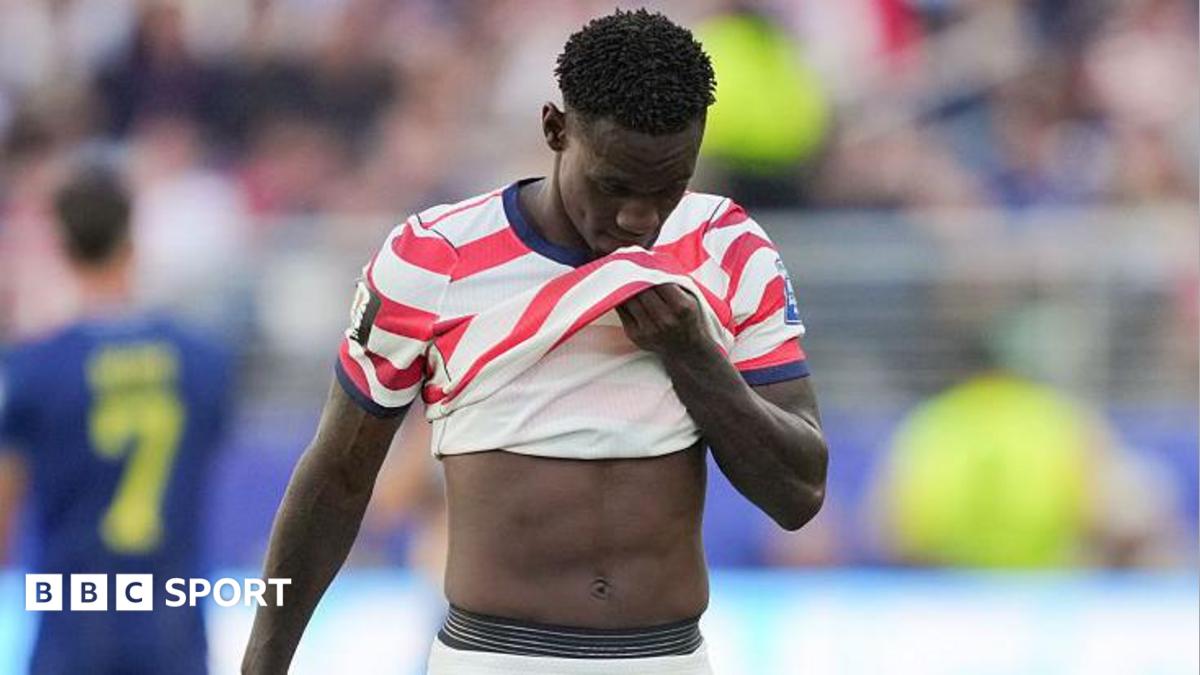
An expected goals difference of 1.85 to 0.12 in the first half of a World Cup knockout match usually signals a comfortable progression. Yet, the United States retreated to the Levi's Stadium dressing room with just a fragile 1-0 advantage against Bosnia and Herzegovina. As BBC Sport analyzed, the USA marched on, but Balogun's red card in the 64th minute has thrown the tournament plans into chaos.
The card was a straight red, following a lengthy VAR review that judged his challenge on Tarik Muharemović to be serious foul play. Under FIFA disciplinary codes, there is no route to appeal a subjective VAR judgment. While Malik Tillman's 81st-minute free kick secured a 2-0 victory, the USA must now prepare for a World Cup last-16 meeting with Belgium in Seattle on July 6 without their starting striker.
This is a devastating blow for Mauricio Pochettino's tactical blueprint. Balogun is not just the team's top scorer, contributing 30% of the USA's ten goals in just 219 minutes of play. His defensive work and off-the-ball movements are the engine of the entire system.
The Tactical Anatomy of Pochettino's Press
Pressing Triggers and Spacing
Under Pochettino, the USMNT defends from the front. Balogun is the initiator, averaging 18.4 pressures per 90 minutes. He angles his runs to cut off the passing lanes between the opposition center-backs and their defensive midfielders, forcing direct long balls.
Pochettino's pressing demands are not new, but their execution has been highly dependent on Balogun's physical profile. In his time at Monaco, Balogun developed a keen sense of when to press, registering a 32% success rate in high pressures. Pepi's success rate in the Eredivisie with PSV Eindhoven sits at just 21%, showing a clear difference in defensive anticipation.
The statistical drop-off when Balogun is off the pitch is stark. During his minutes on the field, the USA has maintained a PPDA of 8.2. When he was rested in the final group game against Turkey, that PPDA figure rose to 12.4, allowing the Turkish defenders to build play comfortably in their 3-2 victory.
A similar defensive collapse occurred immediately after Balogun's dismissal for serious foul play. In the final 26 minutes of the match, Bosnia took total control of the midfield tempo. They registered six shots on Matt Freese's goal during that brief window, compared to just two shots in the preceding 64 minutes.
The Spacing and Passing Disconnect
This spatial collapse has a cascading effect on Tyler Adams. In the Paraguay and Australia fixtures, Adams sat in a compact mid-block because Balogun kept the opposition center-backs pinned. Against Bosnia's ten-man phase, Adams was forced to cover 40% more ground laterally to plug the midfield gaps.
This striker dependency also affects Sergiño Dest's attacking output. Balogun's runs to the channels create space for Dest to underlap into the half-spaces, a movement that yielded two key passes against Paraguay. Without that lateral movement, Dest is restricted to standard overlapping runs, which are easier to track and neutralize.
Furthermore, the pass completion rate in the final third fell off a cliff. With Balogun on the pitch, the USA completed 78% of their passes inside the opponent's 18-yard box. In the final 26 minutes against Bosnia, that number plummeted to 62%.
The Striker Conundrum: Pepi vs. Wright
Pepi's Isolation in Possession
Pochettino has two primary central options to replace Balogun: Ricardo Pepi and Haji Wright. Neither player matches the tactical profile required by this system. Ricardo Pepi is a pure penalty-box poacher who thrives on service but offers little in the build-up.
Pepi's isolation remains a recurring issue. While Balogun receives 7.4 progressive passes per 90, Pepi averages just 3.1. When Pepi leads the line, the team struggles to transition, leaving wingers like Christian Pulisic to carry the ball longer distances under pressure.
Haji Wright offers a different but equally problematic profile. Wright is at his best when starting on the left wing and cutting inside on his right foot. During the domestic season for Coventry City, Wright played 68% of his minutes on the left flank, meaning central deployment would cause spacing issues with Pulisic.
Spatial Bottlenecks and Shot Quality
During the group stage, Wright and Pulisic occupied the same ten-yard radius in possession on six separate occasions. This crowding makes it easy for defenders to double-team the ball. Instead of creating width, the attack becomes congested, shutting down the half-spaces that Pulisic prefers to exploit.
The difference in shot quality is also significant. Balogun's expected goals per shot in this tournament is an elite 0.18. Wright, by contrast, has a historical national team average of 0.10 xG per shot, indicating he settles for lower-quality opportunities from distance.
The Belgian Threat and Pochettino’s Defensive Adjustment
Preparing for Seattle
Belgium enters this Round of 16 match after a grueling 3-2 extra-time victory against Senegal. Domenico Tedesco's side was pushed to the limit, trailing 2-0 before fighting back to win in the 125th minute via a Youri Tielemans penalty. While Belgium is fatigued, their defensive pairing of Wout Faes and Zeno Debast will relish facing a static American striker.
If Pochettino starts Pepi, Faes and Debast can remain compact. This allows Belgium's full-backs to press high, squeezing the space for Weah and Pulisic. However, if Pochettino tries to play without a traditional striker—perhaps using Malik Tillman as a false nine—the team's defensive structure will suffer.
Tillman has played centrally for his club, but his teams suffer a 20% drop in final-third defensive recoveries when he leads the line. Against a Belgian side that transitions with speed, a weak press will be fatal. Pochettino has four days to solve this tactical puzzle, or the home nation's tournament will end in Seattle.
Read Next
- Belgium's Seattle escape cannot mask a broken tactical system
- World Cup fans are losing their minds over geriatric stars and trap games
- England escaped disaster in Atlanta but the Azteca will be their graveyard
- Why Crysencio Summerville is the wrong answer to Spurs' winger problem
- 🏆 World Cup 2026 — Full Coverage Hub
- 🇺🇸 USMNT World Cup 2026 — Team USA Coverage Hub
- 🇧🇪 Belgium World Cup 2026 — Red Devils Hub