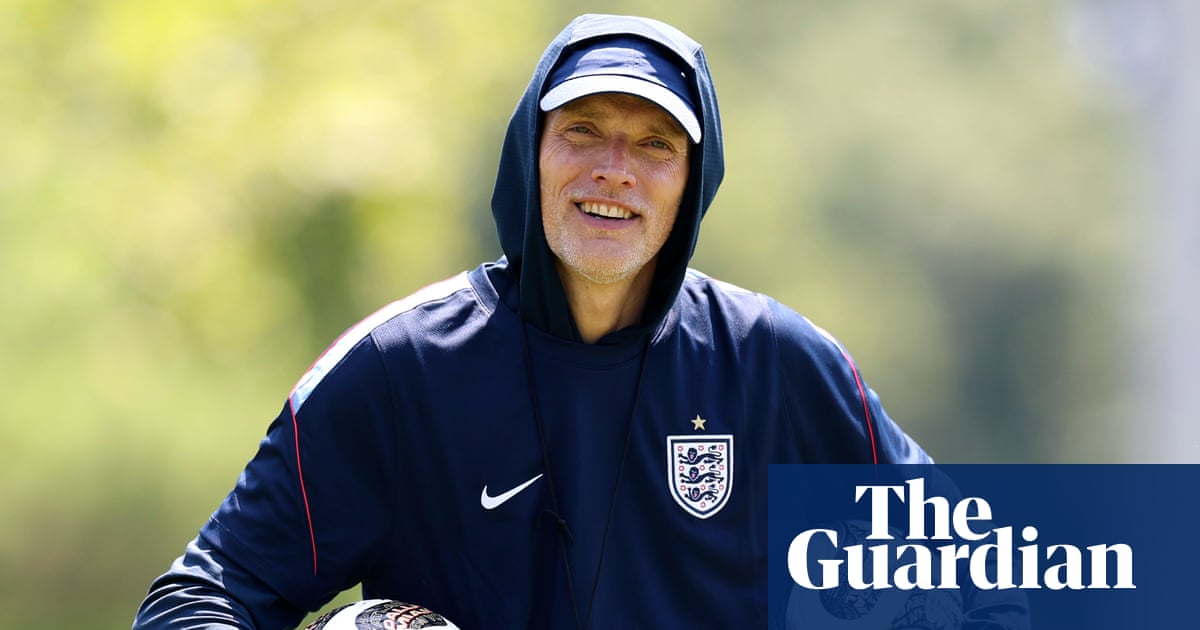
The jockey, the horse, and the tactical rift
Thomas Tuchel did not hide his frustration after the quarter-final. Despite England securing a 2-1 extra-time victory over Norway on July 11, the manager labeled his side's performance "sloppy." Jude Bellingham did not take the critique quietly, telling reporters that the manager might not understand the pitch conditions in the Miami heat. Tuchel retorted yesterday, quoting Arrigo Sacchi's famous line that a good jockey does not need to have been a horse. This public sparring highlights the friction inside England’s camp before the semi-final in Atlanta.
Yet, this friction might be exactly what England needs to survive. Tuchel’s rigidity has turned England into a defensive block that is difficult to break down. While Bellingham carries the offensive load with six goals in this tournament, the team's progress is defined by structured containment. As David Hytner reported for The Guardian, Tuchel is banking on this defensive resilience to frustrate Argentina. He expects his players to rise to the occasion and put on a fight against the defending champions.
The tension between Bellingham and Tuchel is not just media drama. It is a fundamental clash of footballing philosophies on a global stage. Tuchel demands tactical obedience, positioning, and strict adherence to the defensive shape. Bellingham, playing with the adrenaline of a superstar, wants the freedom to follow his instincts. If they cannot reconcile this before kickoff, Lionel Scaloni's side will exploit the gaps.
The Norway post-mortem and England's structural flaws
England's performance in Miami was far from convincing. Norway took the lead in the 36th minute when Andreas Schjelderup cut inside and fired past Jordan Pickford. The goal came from a structural failure in England's midfield press. Neither Declan Rice nor Kobbie Mainoo stepped up to close down the passing lane, leaving the defense exposed. England looked heavy-legged and disorganized for the first half-hour.
England finished the match with an expected goals (xG) of 1.14 compared to Norway's 0.89. They survived on individual moments rather than cohesive play. Bellingham's equalizer in the 45+2 minute was a piece of pure individual brilliance. His extra-time winner in the 93rd minute came from a set-piece transition. Against a tactical side like Argentina, relying on moments will not be enough.
Furthermore, England's pass completion rate in the opposition half was a poor 78%. Harry Kane was left isolated upfront, registering only 22 touches in 120 minutes. The distance between England's midfield pivot and the front line often stretched to 30 meters. This gap prevented any sustained buildup play. If England replicates this spacing against Argentina, Enzo Fernandez and Alexis Mac Allister will dominate the pitch.
Scaloni's multi-headed attacking machine
Argentina enters the semi-final as the most prolific attack in the tournament. They have scored 17 goals across five matches, with eight different players finding the net. This variety makes them incredibly difficult to plan against. If you close down Messi, Julian Alvarez exploits the space behind the defense. If you double-team the wingers, Alexis Mac Allister arrives late into the box.
During their 3-1 extra-time victory over Switzerland on July 11, Argentina showed their tactical patience. The Swiss sat in a deep 5-4-1 block, frustrating the South Americans for long periods. But Argentina kept moving the ball, recording 68% possession and an xG of 2.45. They eventually broke the Swiss resistance through vertical passing combinations in the half-spaces. Messi, even at 39, remains the central hub of these combinations.
Messi's physical output has decreased, but his mental speed remains unmatched. He operates primarily in the right half-space, waiting for the opponent's midfield to shift. When the pivot steps out to press, Messi slips the ball into the path of an overlapping fullback. This pattern has been Argentina's primary weapon throughout the tournament. Neutralizing it requires collective discipline, not individual marking.
Choking the zone 14 lanes in Atlanta
Tuchel's game plan will focus entirely on denying Messi space in zone 14. Expect England to deploy a compact 4-4-2 mid-block out of possession. The distance between the defensive line and the midfield line must remain under 15 meters. This compact structure will force Argentina to pass sideways and backwards. Tuchel will accept giving up possession if it keeps Argentina outside the penalty area.
Declan Rice will play a restricted role, rarely crossing the halfway line. His primary task is to shadow Messi's movements when the Argentine captain drifts inside. As Tuchel noted in his press conference, England must focus on neutralizing the Argentine captain collectively rather than relying on individual markers. Rice's physical presence and tackling ability are England's best shield.
Mainoo will need to match this discipline, resisting the urge to press high. This setup will make the match a slow, methodical grind. England will look to exploit Argentina's high defensive line on transitions. Bukayo Saka and Anthony Gordon will be the outlets on the wings. When England wins the ball, the instruction will be to launch immediate diagonal passes behind Argentina's fullbacks.
This is where Bellingham’s late runs will become dangerous. It is a low-risk, high-reward strategy that fits Tuchel's cup-football blueprint. If England can execute the defensive phase cleanly, the transition opportunities will appear.
The Prediction: Gridlock in Georgia
This match will not be a footballing spectacle. It will be a tactical chess match played at a slow tempo under the closed roof of the Atlanta Stadium. Argentina will control 62% of the possession but will struggle to find vertical passing lanes. England's defensive shape will hold, frustrating Messi and Scaloni.
The breakthrough will come late in the second half. In the 78th minute, Rice will intercept a loose pass from Rodrigo De Paul and release Saka. Saka's low cross will find Bellingham, who will slot it home at the near post. England will defend the lead to secure a 1-0 victory.
This narrow victory will vindicate Tuchel's pragmatic philosophy. It will prove that a good jockey knows exactly how to guide the horse, even when the ride is rough. England will advance to the final on July 19 to face Spain or France. Tuchel's defensive gridlock will have done its job.
"Maybe he doesn't know what it's like to play in those kind of conditions"
Read Next
- Argentina vs England is the high-stakes chess match we all deserve
- Didier Deschamps is finally out and France are in complete ruins
- Spain just turned the French national team into a practice squad
- Arsenal chasing Alvarez is a tactical gamble that ignores the buildup void
- 🇦🇷 Argentina World Cup 2026 — Defending Champions Hub
- 🏴 England World Cup 2026 — Three Lions Hub