Tuchel's Atlanta Escape
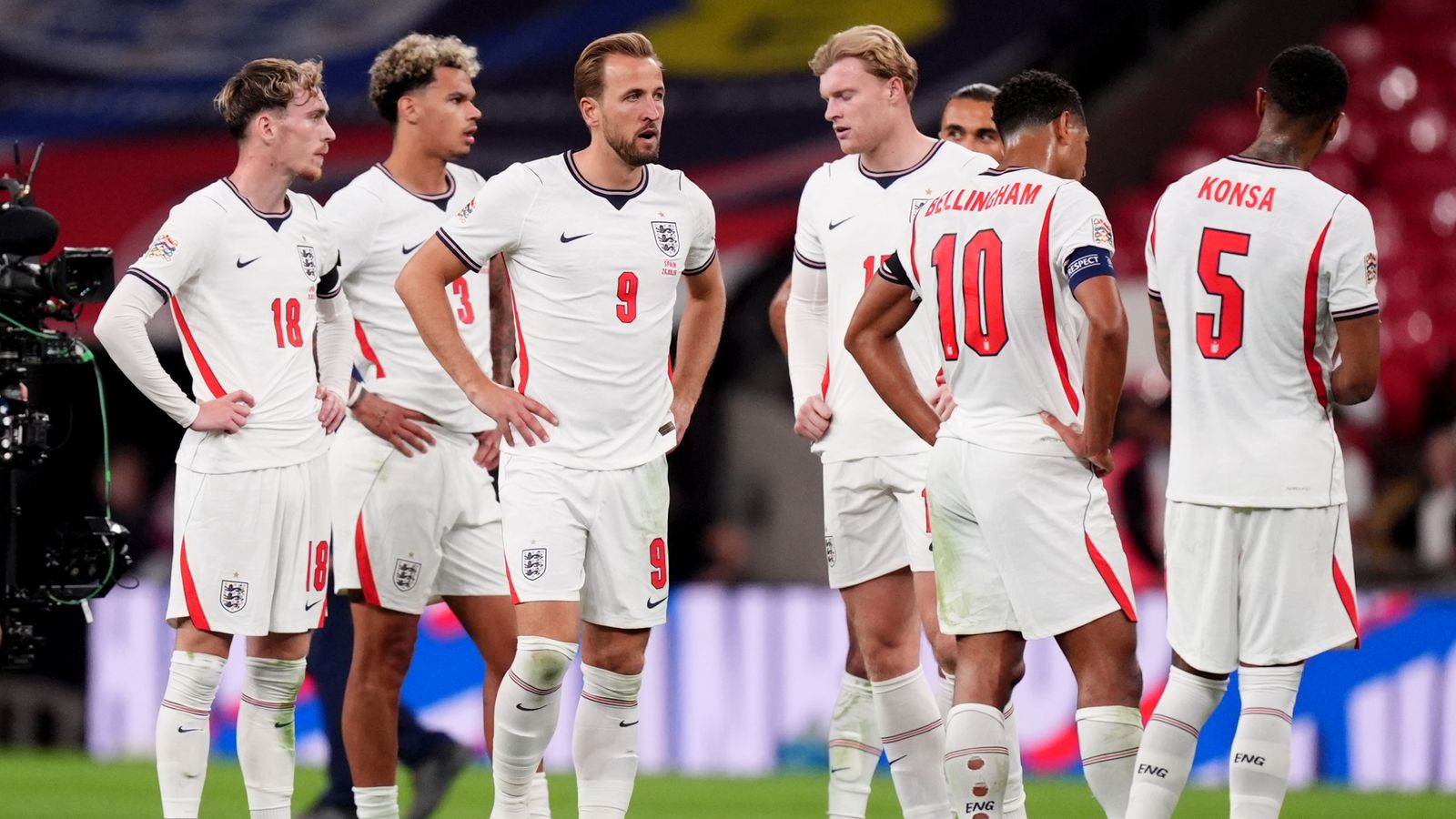
England survived their Round of 32 clash in Atlanta, but they did not resolve their systemic issues. The 2-1 victory over DR Congo on July 1, 2026, was a rescue mission led by Harry Kane rather than a triumph of Thomas Tuchel's tactical framework. For seventy-five minutes, England looked sluggish, disjointed, and alarmingly vulnerable to simple transitional movements.
As reported in The Guardian's match report, Tuchel's side flirted aggressively with disaster. The performance highlighted a fundamental disconnect between England's possession structure and their rest defense. Against a well-organized mid-block, England's build-up was slow, predictable, and easily contained.
The numbers paint a damning picture. England averaged 68% possession in the first half but generated an expected goals (xG) figure of just 0.62 before the break. DR Congo, sitting in a disciplined 4-4-2 block, easily shuttled England's sideways passes across the backline without breaking their shape.
Before Kane's late intervention, as seen in the BBC highlight package, England were structurally devoid of ideas. The central problem lay in the double pivot. Declan Rice and Jude Bellingham frequently occupied the same horizontal line, making it simple for DR Congo's midfield pairing to screen the passing lanes.
This spacing failure left the center-backs isolated when attempting to progress the ball. John Stones was repeatedly forced into low-value sideways passes to Marc Guéhi. The passing tempo was too slow to shift the opponent's defensive block.
When England did attempt to play through the lines, the receiving players were immediately swarmed. The distances between England's attacking midfield trio and the double pivot were too wide, leaving massive gaps in the center of the pitch. DR Congo exploited these gaps ruthlessly on the counter-attack.
The opening goal in the 34th minute was a direct consequence of this structural imbalance. A loose pass from Bellingham was intercepted, and within three passes, DR Congo had bypassed England's midfield to create a three-on-two situation against Stones and Guéhi. The defensive line was exposed.
The Spacing Conundrum and Kane's Movements
Harry Kane's late double saved England, but his overall performance highlighted a tactical conundrum. Throughout the first half, Kane dropped deep into the midfield space to help progress the ball. This movement, while useful for retaining possession, vacated the penalty box entirely.
Without a runner attacking the depth, DR Congo's center-backs could step up aggressively to press England's attacking midfielders. The spaces became congested, and England's threat vanished. The wingers had to run narrow, which squeezed the space even further.
When the wingers moved inside, the full-backs had to overlap, but they did so too late, allowing DR Congo to shift their block and double-team the wide areas. The attack was stagnant. England lacked the verticality needed to disrupt a low block.
It was only in the 75th minute when Tuchel adjusted the shape that England began to look dangerous. The introduction of direct runners on the flanks stretched the pitch horizontally. This created the space Kane needed.
Kane was finally able to operate inside the eighteen-yard box, where his clinical finishing rescued the tie. But relying on individual quality to bail out structural defects is a dangerous strategy. The tactical debate over how to address these flaws is already raging, with commentators in the Daily Mail's post-match analysis questioning Tuchel's defensive setup.
The Threat of Mexico's Press
Mexico in the Round of 16 represents a significant step up in tactical sophistication. Under their current system, Mexico utilizes a high-intensity press designed to trap opponents in wide areas. Unlike DR Congo's passive mid-block, Mexico will actively seek to disrupt England's build-up from the goalkeeper.
If Stones and Guéhi are left without passing options, England will turn the ball over in dangerous areas. Mexico's wingers are exceptionally quick to transition from defense to attack. They will target England's slow defensive transitions.
Furthermore, Mexico excels at exploiting the half-spaces. Their midfielders make diagonal runs behind the opponent's full-backs, a zone where England has looked vulnerable throughout the tournament. England's center-backs cannot afford to be pulled wide.
To counter this, Tuchel must consider a formation change. Shifting to a 3-4-2-1 system would provide England with three central defenders to handle Mexico's central overloads. This would stabilize the defense.
A back three would also allow the wing-backs to push higher, matching Mexico's wide threats without pulling the center-backs out of position. This adjustment would provide better coverage during defensive transitions. It would give England a numerical advantage in the first phase of build-up.
- Shifting to a three-man defense to match Mexico's front line.
- Introducing a central defensive midfielder to anchor the pivot.
- Keeping the vertical distances between lines under fifteen meters.
The midfield selection will decide this match. Continuing with a flat double pivot against Mexico's dynamic midfield trio is a recipe for disaster. Tuchel needs to introduce a dedicated holding midfielder who can anchor the space in front of the defense.
This would free Bellingham to play in a more advanced role where he can support Kane. A midfield triangle would offer better angles for ball progression and improve England's counter-press. It would prevent England from being overrun in transition.
Without a functional counter-press, England will be pinned back. The distance between the units must be kept under fifteen meters to deny Mexico the space they need to combine. The physical load will also be immense.
Mexico's high-pressing style requires England to make quick decisions under pressure. If England's midfielders take three or four touches before releasing the ball, they will be dispossessed. Speed of thought is non-negotiable.
A Bold Call for the Knockout Stage
Tuchel's reputation as a tactical master-mind is on the line. He was hired to win the World Cup, not to scrape past lower-ranked opponents through individual brilliance. The fans expect a performance that matches the talent in the squad.
If England repeat their Atlanta performance, Mexico will punish them. The defensive gaps that DR Congo failed to exploit will be target areas for Mexico's quick forwards. There is no room for error in the knockout stages.
England possess the talent to win this tournament, but talent without structure is useless. A tactical realignment is required immediately. Tuchel must show he can adapt.
Expect a tense, tactical battle in the first half. Tuchel will likely opt for a more cautious setup to protect his defense. This could result in a slow, frustrating start for England fans.
Ultimately, England's quality in the final third should see them through. But it will be a narrow, grueling affair. It will require patience and discipline.
My prediction is a tight victory for England, but only if they transition to a back three. If they stick to a back four, Mexico will pull off the upset. The margin of error has vanished.
Read Next
- Thomas Tuchel's right-back headache is the exact trap DR Congo needs
- England escaped disaster in Atlanta but the Azteca will be their graveyard
- England got lucky in Atlanta, but Mexico at the Azteca will be different
- Top 10: england
- 🏆 World Cup 2026 — Full Coverage Hub
- 🏴 England World Cup 2026 — Three Lions Hub