The Big Picture
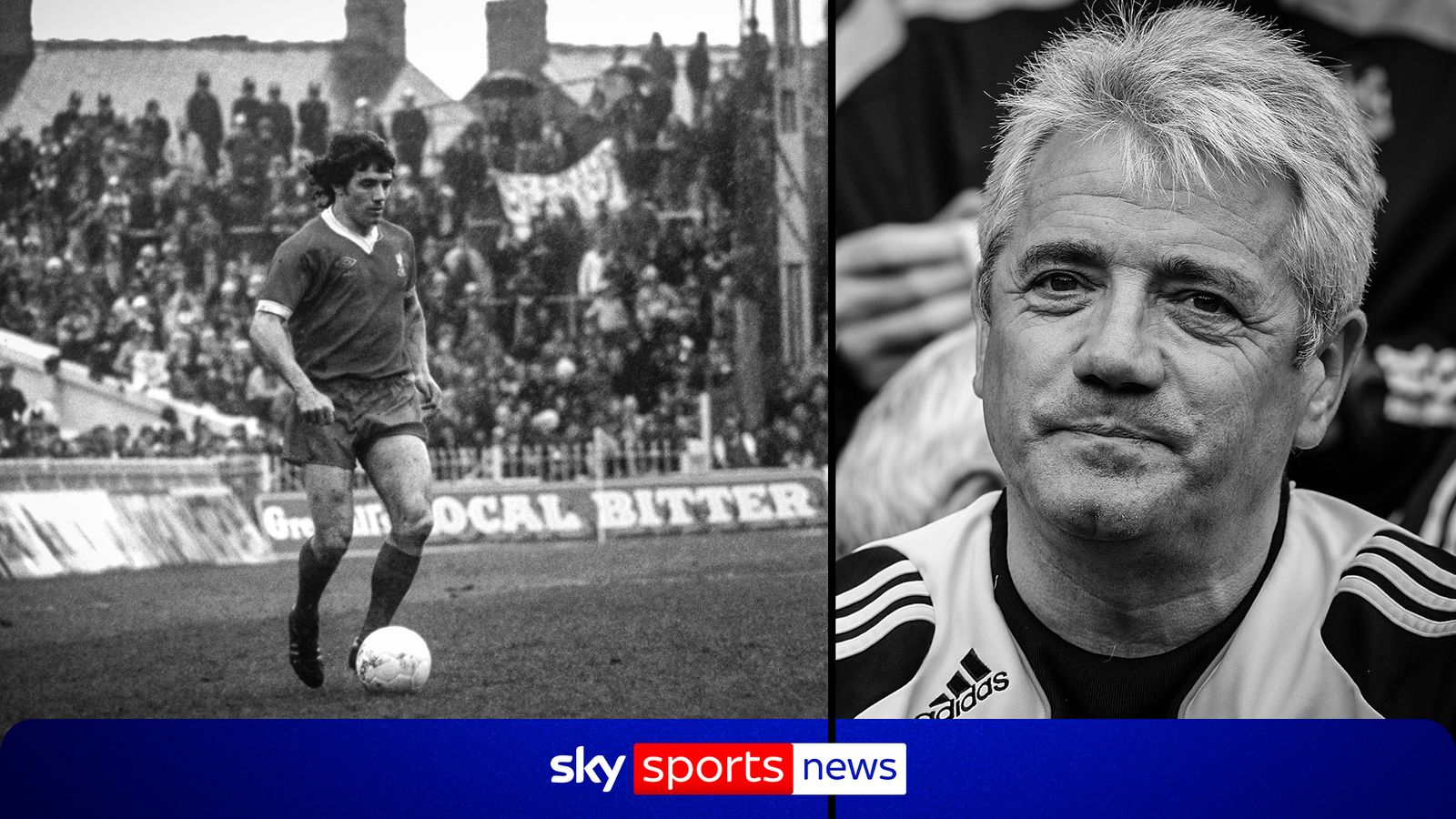
English football icon Kevin Keegan has died at age 75 after a battle with stage four stomach cancer, passing away on July 20, 2026, after a January diagnosis. As reported by the Daily Mail, he was admitted to hospital with abdominal problems prior to the diagnosis. Here is the definitive ranking of the ten defining moments in the career of one of English football’s most electrifying personalities.
The Rankings
1. The "I would love it" rant, 1996
The live television breakdown on April 29, 1996, remains the ultimate Premier League drama. After beating Leeds 1-0, Keegan snapped at Alex Ferguson’s suggestion that teams tried harder against Manchester United. His fury ended with a legendary declaration that he would love it if Newcastle beat them to the title.
It ranks top because it encapsulates the raw emotion that defined Keegan's entire career. While critics argue his emotional fragility cost Newcastle the championship, this explosion cemented him as the ultimate anti-corporate manager. It represents the absolute peak of the mind-games era, showing a man who wore his heart on his sleeve.
2. Retaining the Ballon d'Or with Hamburg, 1979
Winning the Ballon d'Or once is elite, but retaining it abroad in the late 1970s is legendary stuff. Keegan claimed the trophy in 1978 and again in 1979 while playing for West German giants Hamburg. He remains the only English player to win the award multiple times, a feat even modern English stars have failed to replicate.
This ranks second because it proves Keegan was a world-class footballer outside the Anfield system. His success in the physical Bundesliga silenced European skeptics who thought English players could not adapt to continental tactics. It was a period of absolute individual dominance that established him as a global superstar.
3. Securing Liverpool's first European Cup, 1977
In his final Liverpool game, Keegan secured the club's first European Cup on May 25, 1977. Facing Borussia Mönchengladbach in Rome, he terrorized legendary defender Berti Vogts for 90 minutes. His efforts won the 82nd-minute penalty that sealed the 3-1 victory.
It takes the third spot because it was the perfect farewell to Anfield. He chose to leave at the absolute peak of his powers, having conquered Europe on his own terms. His performance proved he could deliver under the most intense pressure imaginable.
4. Assembling Newcastle's "Entertainers", 1995-1996
Assembling Newcastle's "Entertainers" in the mid-1990s redefined Premier League football. Keegan built a side featuring Les Ferdinand and David Ginola that prioritized attack over defense. They blew a 12-point lead in the 1995-96 season, finishing second to Manchester United in a wild race.
While finishing second is historically a failure, this team ranks fourth because of its cultural impact. Keegan’s refusal to play negative, defensive tactics won the hearts of neutral fans worldwide. It remains the greatest team to never win the Premier League.
5. The 1974 Charity Shield brawl with Billy Bremner
The 1974 Charity Shield brawl between Keegan and Leeds captain Billy Bremner remains Wembley’s most famous fight. On August 10, 1974, the two clashed after heavy challenges, exchanging punches. Both were sent off by referee Bob Matthewson and threw their shirts off in protest.
This entry ranks fifth because it showed the fiery, uncompromising edge behind Keegan's nice-guy image. The FA handed both players massive 11-match bans and £500 fines, a record punishment at the time. It was a chaotic, iconic display of 1970s football grit.
6. Shock transfer to Second-Division Newcastle United, 1982
In August 1982, Keegan shocked the football world by signing for Second Division Newcastle United from Southampton. As Oliver Holt wrote in his tribute, Keegan was 'Mighty Mouse' — the little man who would never give up. He drew a crowd of 35,000 for his debut, scoring the winning goal against Queens Park Rangers.
This ranks sixth because it laid the foundation for his legendary relationship with the Tyneside club. He single-handedly revitalized a dormant giant, earning them promotion back to the First Division in 1984. It proved Keegan was motivated by passion and connection rather than just top-flight trophies.
7. Resigning in the Wembley toilets as England manager, 2000
Keegan's England manager tenure ended in shambles in the Wembley toilets on October 7, 2000. Following a 1-0 defeat to Germany in the final match at the old stadium, Keegan resigned immediately. He walked into the dressing room, admitted he was outclassed, and quit.
This critical moment ranks seventh because it exposed Keegan's limitations at the elite tactical level. While he was a master motivator, his lack of tactical flexibility was exposed on the international stage. It remains one of the most abrupt and embarrassing exits in England national team history.
8. Saving Newcastle from relegation and earning promotion, 1992-1993
When Keegan returned to Newcastle as manager in February 1992, the club was facing relegation to the Third Division. He galvanized a struggling squad, secured survival, and then won the First Division title in 1992-93. They secured the division title with 96 points, scoring 92 goals in a stunning display of attacking football.
This ranks eighth because it was the catalyst for the Newcastle boom of the nineties. Without this initial rescue mission, the famous Premier League title runs would never have happened. It showed Keegan’s unique ability to inspire belief in a club that had completely lost its way.
9. The pioneering transfer to Bundesliga club Hamburg, 1977
Keegan’s summer 1977 transfer to Hamburg for a British record fee of £500,000 changed the financial structure of European football. He became a pioneer, moving abroad when English players rarely left the UK. He initially struggled, facing hostility from German teammates who resented his massive wages.
It ranks ninth because it was a brave, high-risk career move that paved the way for future British exports. Keegan adapted, eventually won the Bundesliga title in 1979, and became a beloved figure in Germany. It proved he had the mental resilience to match his athletic talent.
10. Winning the 1973 UEFA Cup Final with Liverpool
In the 1973 UEFA Cup Final, Keegan scored twice to lead Liverpool to a 3-0 first-leg win over Borussia Mönchengladbach. He also set up John Toshack for a header, securing Bill Shankly's first-ever European trophy. Liverpool held on in the second leg, winning 3-2 on aggregate.
This entry ranks tenth because it was the first major step in Keegan's rise to European stardom. It established him as Bill Shankly’s key attacking weapon on the continental stage. This triumph laid the groundwork for Liverpool's subsequent decade of European dominance.
Honorable Mentions
Several key moments just missed the cut. His debut goal for Liverpool against West Ham in August 1971 set the tone for his Anfield career. His infamous fall off a bicycle during the BBC's 'Superstars' show in 1976 showed his immense popularity and physical courage. Finally, his second managerial stint at Newcastle in 2008 ended in a bitter dispute with owner Mike Ashley, proving his principles always came before board-level politics.
Following his death, players and pundits paid tribute to his massive influence. As Metro UK reported, Jamie Carragher hailed Keegan as 'one of the greatest players this country has ever produced.' Former Newcastle striker Alan Shearer also paid tribute to his hero, reflecting the deep impact Keegan made across generations.