
The weight of the Keane captaincy rift remains a national burden

The ghosts of Saipan still haunt the dressing room
International football is defined by moments of friction that refuse to dissipate. Two decades on from the infamous rift, the echoes of the Roy Keane fallout continue to shape how we perceive Irish leadership. While recent retrospectives by former teammates focus on the eventual reconciliation, the tactical and psychological scars left during that period serve as a blueprint for managerial instability.
We talk about high pressing and defensive discipline, yet we ignore that the most successful eras in Irish football were built on a specific, fragile hierarchy. When Keane walked in 2002, the team lost its primary engine. It wasn't just about losing a midfielder who performed at a elite level, the kind of player who would dominate the middle of the park with 90 percent pass completion. It was the total collapse of an identity that demanded relentless accountability.
Tactical decay through professional mourning
Northern Ireland currently finds itself staring at a similar void in leadership and offensive production. The figures don't lie. When a squad record high possession in the middle third but fails to penetrate the final 16 yards, that is rarely a technical issue. It is a psychological one. The players are hesitant. They lack the decisive, aggressive mentality that Keane once provided by proxy.
The failures described in recent analysis of the Northern Ireland national team suggest a team stuck in neutral. They cycle the ball until the opposition settles into a low block, then recycle back to the center-backs. It is a sterile game-plan that lacks the explosive intent of an elite side. Transition play is virtually non-existent, leaving the strikers starved of service.
The cost of elite ego in international setups
Managing personalities like Keane is the ultimate test for any international head coach. When you possess a player whose intensity is a 10/10, the coach either aligns with them or gets consumed by them. The current Irish struggle for offensive creativity is proof that a team without a dominant, guiding force on the pitch will inevitably retreat into a defensive shell.
It is worth noting that the reliance on defensive stability has backfired significantly. In 2026, you cannot expect to win games while registering less than 0.8 xG per match. The game has moved beyond the idea that grit replaces tactical ingenuity. We see this in the way top-tier nations utilize quick vertical transitions rather than horizontal safety balls.
The structural failure of identity
When Keane exited the camp in 2002, he left a vacuum that created a culture of caution. The fear of making a mistake—a fear that would have been crushed by his presence—instead became the guiding principle of the team. That legacy persists in the current setup. The lack of risk-taking in the final third is an indictment of a coaching staff that has failed to encourage individual expression.
By failing to address this, the current crop of players continues to trend in the wrong direction. If the objective is to reach a major tournament, the strategy needs a total overhaul from the ground up. You need to abandon the obsession with possession for its own sake. Opt instead for a direct, high-pressing style that targets the weak shoulders of opposing full-backs.
The reconciliation of these old feuds matters because it signals a move toward healing, but football does not care about feelings. It cares about efficiency. Until Ireland reconciles the tactical lessons of the last twenty years with the urgent reality of the 2026 fixture list, they will remain exactly where they are: watching from the outside.
Official FIFA World Cup 2026 Edition - 4 Inch 3D Replica Trophy
The world's most iconic trophy, scaled down for your desk or shelf.
Frequently Asked Questions
How did Roy Keane's exit from the 2002 squad affect Irish football?
Why does the author feel Northern Ireland’s team lacks offensive production?
What is the primary tactical criticism of the current Irish approach?
How does elite player intensity challenge international head coaches?
How does the culture of fear influence modern player performance?
More Coverage

The Ireland and Israel tunnel spat is the wildest Nations League drama yet
4 days, 14 hours ago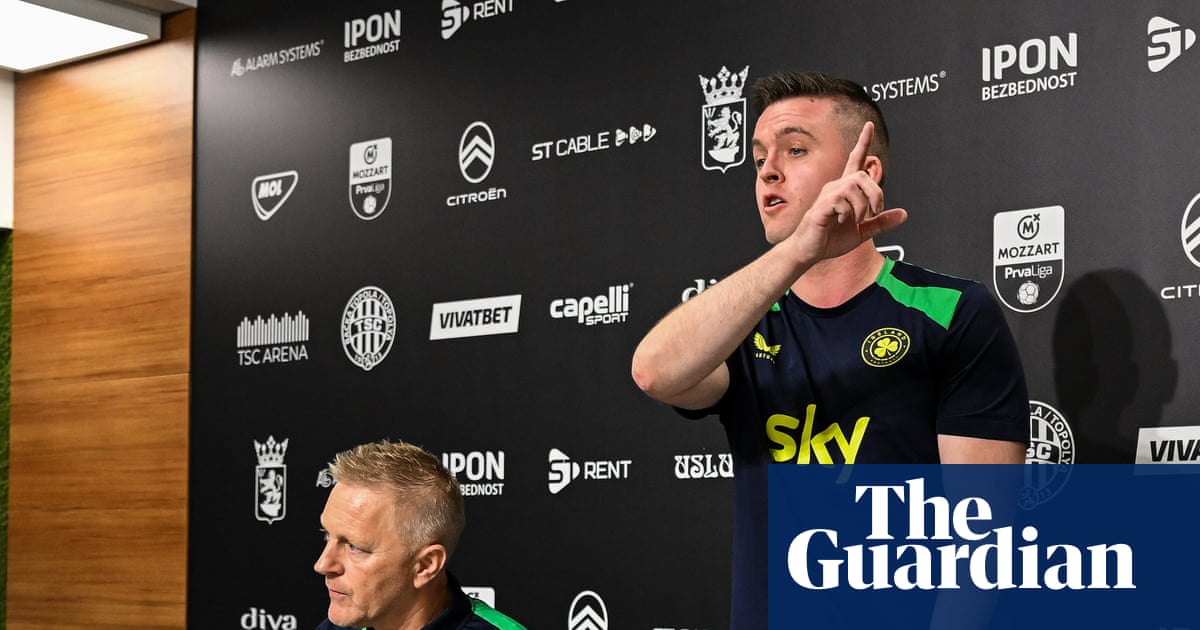
Ireland must block out the noise in Serbia after chaotic press conference
6 days, 1 hour ago
Ireland cut short press conference in Serbia as tensions with Israel boil over
6 days, 1 hour ago
Ireland's wild international week is spinning completely out of control
6 days, 3 hours ago
The City Earthquake, Catalonian Spacing, and Spain's Structural Supremacy
1 week, 3 days ago
Beyond the Debuts: Tactical Assimilation, 'Half-Beat' Composure, and the USMNT Pipeline
1 week, 4 days agoMore Analysis
The Ireland and Israel tunnel spat is the wildest Nations League drama yet
4 days, 14 hours ago
Ireland must block out the noise in Serbia after chaotic press conference
6 days, 1 hour ago
Ireland cut short press conference in Serbia as tensions with Israel boil over
6 days, 1 hour ago
Ireland's wild international week is spinning completely out of control
6 days, 3 hours ago
The City Earthquake, Catalonian Spacing, and Spain's Structural Supremacy
1 week, 3 days ago