The Golden Generation Delusion Needs a Cold Shower
Every four years, American soccer fans put on the exact same pair of rose-colored glasses. We look at guys playing in Europe and pretend we are five minutes away from lifting the trophy. If you listen to soccer talk radio or scroll Reddit after a friendly win, you would think this squad is prime 2010 Spain with better accents.
Let us get real for five minutes over a pitcher of cheap beer. The USMNT is not a secret superpower waiting to shock the world on home soil in 2026. They are a talent-heavy, structurally flawed side that still struggles whenever a competent opponent sets up a low block or brings an aggressive press.
We have been calling this group the Golden Generation since Christian Pulisic was a teenager scoring against Trinidad and Tobago in a match we normally try to erase from memory. But they are no longer teenage prodigies with potential. They are seasoned veterans in their mid-to-late twenties, playing for top European clubs. The window to stop making excuses and start delivering on the biggest stage is closing fast.
If this team wants to reach a semifinal in 2026, they need far more than good vibes and host-nation crowds. They need immediate answers to systemic problems that have plagued American soccer for two decades. Otherwise, we are heading straight for another Round of 16 exit that gets spun as a respectable learning experience.
The Pulisic Carrying Job and the Midfield House of Cards
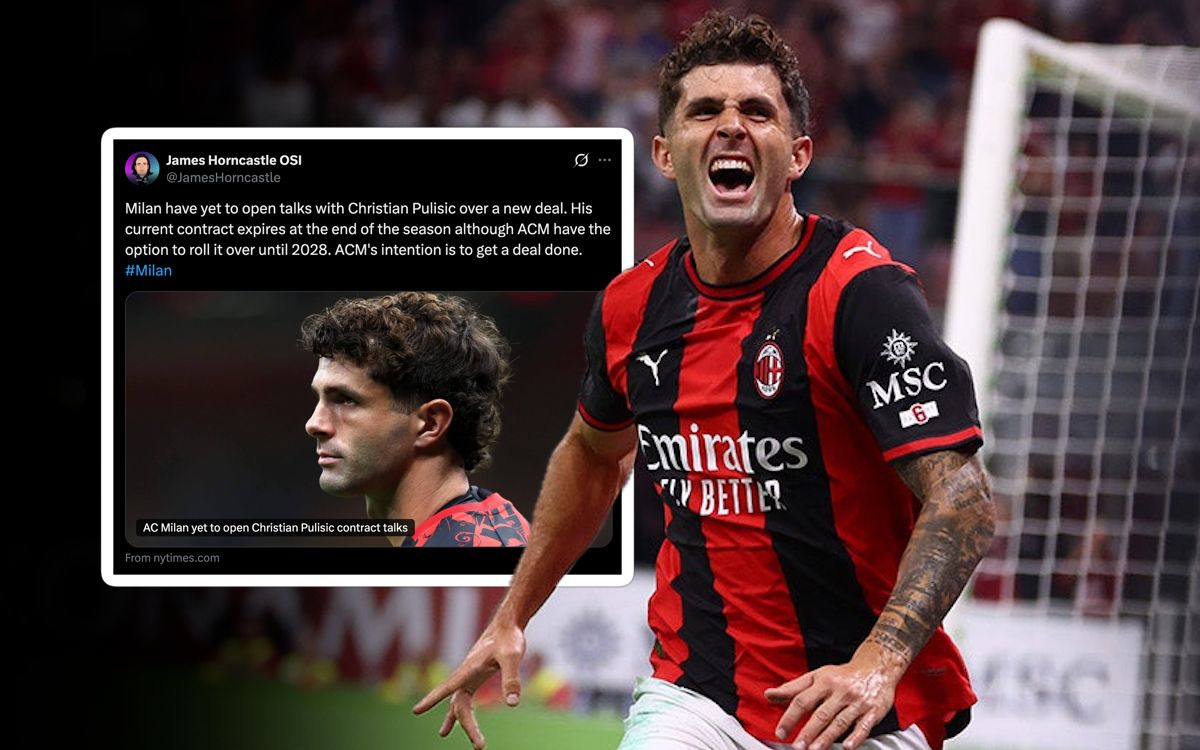
Christian Pulisic remains the undisputed king of American soccer, and his star turn at AC Milan proved he belongs on elite pitch surfaces. He drives defenders inside out, picks up the ball in half-spaces, and scores actual goals against Serie A and Champions League heavyweights. But behind Captain America, the offensive engine dries up at an alarming rate.
When Pulisic is off the pitch or blanketed by a disciplined double-team, the attacking structure devolves into slow, sideways passing around the perimeter. Pulisic accounted for over 38% of shot creation during recent international windows. That is not a modern attacking scheme. That is a desperation strategy you see in emergency high school soccer matches.
Gio Reyna possesses world-class vision, but his career has been a rollercoaster of muscle injuries and club bench spells at Borussia Dortmund and Nottingham Forest. When Reyna is not fit to unlock stubborn defenses, the creative burden falls entirely on Pulisic's shoulders. That is far too much weight for one player to carry through a grueling seven-game tournament.
Then you look at the famous MMA midfield of Weston McKennie, Yunus Musah, and Tyler Adams. On paper, it sounds like a midfield trio built in a lab to bully international opponents. They can run for 90 minutes, smash into tackles, and transition rapidly. In reality, that engine breaks down the moment a clever team sits back and asks them to pass through narrow defensive lines.
McKennie brings chaotic energy and aerial danger, but his passing distribution can be as unpredictable as a roulette wheel. Musah has elite ball-carrying metrics, yet he frequently drifts out of games for 30-minute stretches. And Adams has played so few consecutive full matches due to persistent hamstring issues that his legs belong in a medical journal.
When Adams is fully fit, he is an elite defensive shield who covers every blade of grass from box to box. When he is missing, the USMNT central space looks like an open lane on the highway during morning commute. You simply cannot run a deep World Cup campaign when your primary defensive destroyer is constantly on the trainer table.
The Center-Back Crisis, Fullback Gambles, and No Goalkeeper Savior
Let us talk about the defense, because this is where the real nightmares live. Tim Ream has been a heroic warrior for this country, but relying on a 38-year-old center-back to track world-class strikers in 95-degree humidity is flat-out reckless. Age catches up to everyone, and elite international forwards exploit half-step delays instantly.
Chris Richards has shown real flashes at Crystal Palace, but he desperately needs a commanding, vocal leader next to him. Cameron Carter-Vickers dominates the Scottish Premiership, but international football is not Celtic cruising against Ross County. When top South American and European nations turn up the tempo, our central defense looks terrified of turning around.
Remember that painful 3-1 loss to the Netherlands back in Qatar? Denzel Dumfries had enough space on the right flank to set up a lawn chair and read a book because our back line completely lost track of back-post runners. Two years later, those exact defensive miscommunications still happen against top-tier opposition.
Out wide, Antonee 'Jedi' Robinson is an absolute machine for Fulham, charging down the left flank with unlimited stamina. But Sergiño Dest remains the ultimate wild card. Dest offers magical dribbling ability, but his defensive positioning can be an absolute disaster, like his infamous red-card meltdown against Trinidad and Tobago. When Dest gets caught upfield, opponents counter straight into the space he vacated.
Even worse, we no longer have a brick wall between the posts. For twenty years, American soccer relied on legendary goalkeepers like Kasey Keller, Brad Friedel, and Tim Howard—who set a World Cup record with 16 saves against Belgium in 2014. Today, Matt Turner is struggling for starting minutes on Premier League benches, while Patrick Schulte and Gaga Slonina are still learning the ropes. We do not have a proven shot-stopper who can steal a game single-handedly.
The Striker Black Hole and Pochettino's Reality Check
Up front, the striker situation remains equally volatile. Folarin Balogun arrived with massive fanfare after a €40 million transfer to Monaco, but his international output has been a roller-coaster. He has matches where he looks like a lethal penalty-box assassin, followed by games where he completely disappears into thin air.
Ricardo Pepi brings endless hustle and clutch late goals for PSV, but he averages just 0.12 xG per 90 when starting against top-twenty FIFA ranked teams. Josh Sargent works his tail off in the Championship, but working hard does not terrify France, Argentina, or Spain. We do not have a clinical killer who converts half-chances when games get tight in extra time.
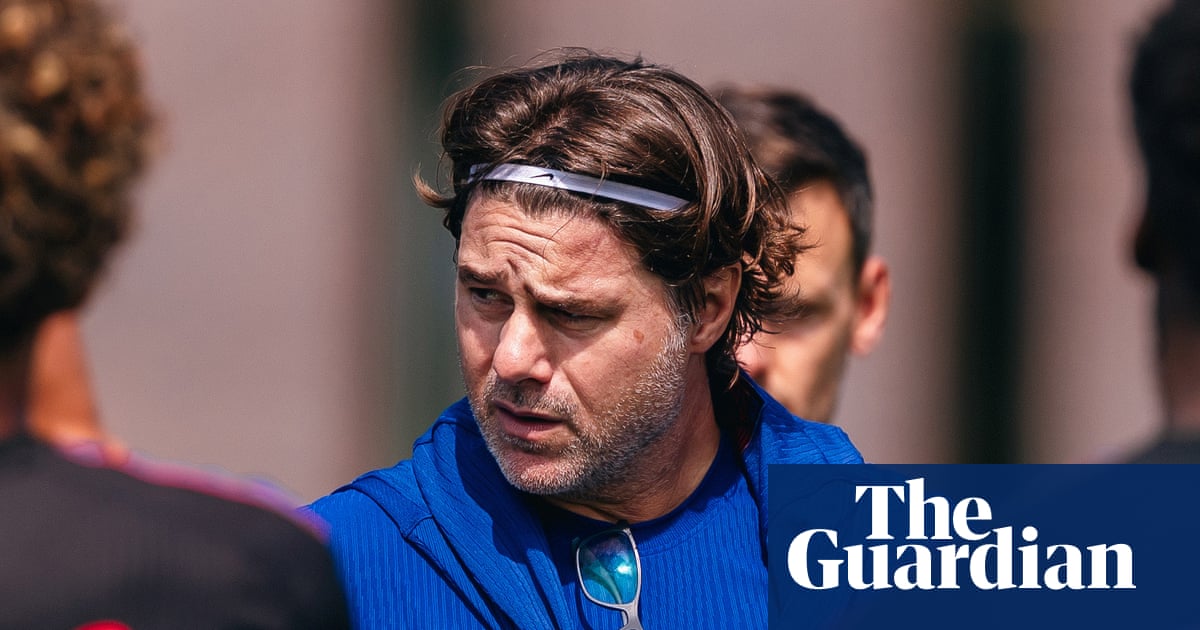
Hiring Mauricio Pochettino was the wake-up call this federation desperately needed after years of tactical complacency under Gregg Berhalter. Pochettino brings actual elite credentials from Tottenham Hotspur and Paris Saint-Germain. He will not tolerate players cruising on reputation alone, and his demanding high-press system can elevate this group. But tactics alone cannot magically create squad depth.
Playing at home in 2026 is a double-edged sword. Everyone points to South Korea in 2002 or France in 1998 as proof that host nations get a massive energy boost. But home pressure can also crush teams under impossible expectations. Look at Brazil in 2014 when the pressure turned their defense into jelly during that infamous 7-1 thrashing by Germany.
American fans expect a quarterfinal at minimum, with dreams of a magical semifinal run on home turf. But looking at this squad objectively, we are still two injuries away from starting emergency backup options against World Cup contenders. A single suspension in midfield or an ankle tweak to Pulisic exposes how thin the roster really is. Unless this Golden Generation grows up fast, 2026 will end with another heart-breaking exit before the party even gets started.
Read Next
- FIFA's 48-Team World Cup Is Pure Bloat and Total Chaos
- Post-Ronaldo Portugal is a powerhouse — if Roberto Martinez doesn't ruin it
- Tottenham dropped £300m this summer yet their attack still looks toothless
- Honest Review: Are the adidas Tiro Club Shin Guards Worth Your $15?
- 🏆 World Cup 2026 — Full Coverage Hub
- 🇺🇸 USMNT World Cup 2026 — Team USA Coverage Hub
- ⚽ MLS 2026 Season Hub — World Cup Year Guide