We have reached the business end of the first bloated World Cup, and I am already exhausted just looking at the bracket. The talking heads on television are serving up their usual corporate platitudes about how this is a historic celebration of global soccer. Let's cut through the public relations nonsense and address the reality of what we are about to watch.
The knockout stages are a different beast entirely, especially under this ridiculous new format. When the remaining heavyweights collision-course their way into the semi-finals in Dallas and Atlanta, they will be running on fumes. Here are the five biggest questions and stories that will actually define the final four.
The expanded gauntlet is breaking the players
FIFA wanted more games, more broadcast revenue, and more corporate sponsorship dollars. What they got is a 104-match marathon that is actively turning world-class athletes into walking injuries. By the time we reach the semi-finals in Dallas and Atlanta, the players won't be running; they will be crawling.
Under the old format, you needed seven matches to lift the trophy. Now, thanks to the addition of the Round of 32, the final four teams will have to survive 8 grueling fixtures in the North American summer heat. It is a physical tax that is already showing in the tired legs of the tournament's biggest stars.
Look at Jude Bellingham, who looked absolutely spent by the third group match. He played over fifty matches for Real Madrid this season, tracking back and launching forward in Carlo Ancelotti's midfield. Expecting him to play another high-intensity match in July after five weeks of travel is not just optimistic; it is outright delusion.
We are going to see semi-finals decided not by tactical masterclasses, but by which team has the better medical staff. The squad depth of countries like France and Spain will be tested like never before. If your starting defensive midfielder pulls a hamstring in the quarter-finals, your tournament is essentially over.
The Pochettino hype train vs. American reality
The collective delusion of American soccer fans has reached a fever pitch. Ever since Mauricio Pochettino took the reins of the USMNT, the media has been acting like the US is a lock for a deep knockout run. Let's dial back the hype before we suffer a humiliating reality check.
Sure, Christian Pulisic is having the tournament of his life, and Folarin Balogun can find the net when he gets service. But have you actually looked at the American defense? Chris Richards and Miles Robinson are decent center-backs, but they are not shutting down Kylian Mbappe or Vinicius Junior on a hot afternoon in Houston.
If the USMNT somehow stumbles their way into the semi-finals, it will be because of home-field advantage and sheer luck. Pochettino is a brilliant tactician, but he cannot transform a MLS-level backline into the 2006 Italian defense in a matter of months. When the US faces a true heavyweight in the quarters, the defensive cracks will widen into canyons.
We saw this exact movie in the group stage when they struggled to keep a clean sheet against decent opposition. The American media wants a Cinderella story to justify their massive TV contracts. What they are actually going to get is a defensive horror show that leaves Matt Turner stranded in no-man's-land.
The Messi and Ronaldo retirement home tour
It is the storyline that sports networks will shove down your throat until you turn off the TV. Lionel Messi and Cristiano Ronaldo are both still here, occupying starting spots for Argentina and Portugal. But let's stop pretending their presence is purely beneficial for their teams.
Messi is 39 years old, playing his club football in Miami, and essentially walking through matches. Argentina has to run a system where Enzo Fernandez and Alexis Mac Allister do twice the work to cover for his lack of defensive pressing. It worked in Qatar when he was younger, but in the heat of 2026, it is a massive tactical liability.
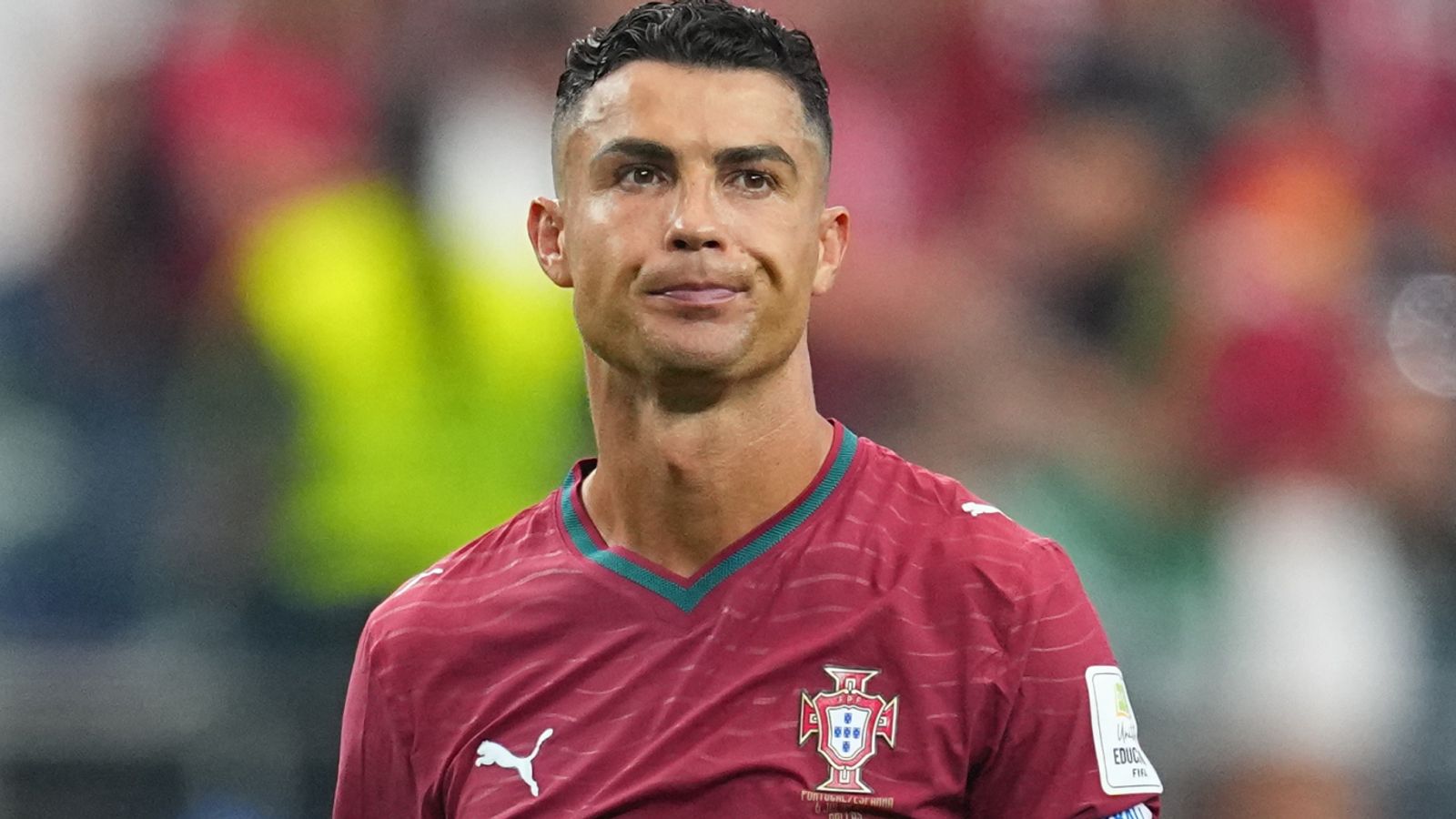
Then we have Portugal, who are still catering to the massive ego of a 41-year-old Ronaldo. Portugal's squad is absolutely stacked with prime talent like Rafael Leao and Bruno Fernandes, yet everything still revolves around feeding Cristiano. It is like watching a Ferrari driver slow down to let a vintage tractor stay in the lead.
If either team reaches the semi-finals, it will be in spite of their legendary aging stars, not because of them. The romanticism of one last final clash is a marketing dream. In reality, modern football demands intense pressing, and you cannot press with a forward line that belongs in a museum.
The Spanish youth revolution is too fast for you
While the old legends are clinging to their spots, Spain is showing everyone what the future looks like. Luis de la Fuente has unleashed a team that plays with zero fear and maximum speed. At the heart of this electric side is Lamine Yamal, who is playing like a seasoned veteran at just eighteen.
Spain is no longer the boring, possession-for-the-sake-of-it team that passed opponents to sleep in 2018. They are direct, aggressive, and incredibly fun to watch. Yamal and Nico Williams are terrorizing full-backs, turning every transition into a defensive nightmare.
But the big question heading into the semi-finals is whether these teenagers can handle the physical targeting they are about to face. Elite defenders are not going to stand by and watch Yamal do step-overs. We already saw how Italy tried to kick him out of the game, and the refereeing protection will only decrease as the stakes rise.
If Spain can protect their young wingers, they are the clear favorites to win the whole thing. But if de la Fuente keeps playing them for ninety minutes every single game, they will hit a wall. Even teenage legs have a limit, and Spain's reliance on their youngsters might backfire when the pressure peaks.
The UEFA and CONMEBOL chokehold remains unbroken
We all loved Morocco's run to the semi-finals in 2022. It was the kind of story that makes you remember why you fell in love with this sport. But if you are expecting a repeat of that magic in 2026, you are going to be severely disappointed.
The expanded 48-team format was advertised as a way to give smaller nations a chance on the big stage. Instead, the extra knockout round has made it even harder for underdogs to survive. To reach the semi-finals, a surprise team has to pull off three consecutive upsets against elite opposition.
Look at the talent gap. A squad like France can bench a player worth a $150 million transfer fee and not lose a step. An African or Asian underdog does not have that luxury; they rely on twelve or thirteen key players who will be completely exhausted by the quarter-finals.
The semi-finals will inevitably feature the same old faces from Europe and South America. We might get a surprise team in the Round of 16, but the final four will be a closed shop. FIFA's greed has ensured that the elite nations with the deepest squads will always hold the trophy at the end.
Expect a war of attrition where the last team standing is simply the one that managed to keep its hamstrings intact. FIFA wanted a spectacular show, but they have built a system that rewards survival over brilliance. When the semi-finals arrive, don't expect beautiful, flowing football; expect a tactical gridlock of exhausted millionaires.
It is going to be chaotic, occasionally ugly, and completely unpredictable. Grab a cold drink, mute the commentary, and enjoy the madness. Just don't act surprised when the tournament ends with a tired powerhouse lifting the trophy after a grueling 1-0 final.
Read Next
- Rio Ferdinand warns Thomas Tuchel over £221m duo as Man United eye Nmecha
- Thomas Tuchel must listen to Big Sam before England face Panama
- Why the 2026 World Cup final is heading toward a tactical disaster
- England might actually win the World Cup and it is terrifying
- 🏆 World Cup 2026 — Full Coverage Hub
- 🇦🇷 Argentina World Cup 2026 — Defending Champions Hub
- 🇪🇸 Spain World Cup 2026 — La Roja Hub
- 🇵🇹 Portugal World Cup 2026 — A Seleção Hub
- ⚡ UCL Semi-Finals 2026 — Full Coverage Hub