The forty-eight team circus and the illusion of parity
Every four years, FIFA serves up a massive plate of marketing spin and asks us to pretend every nation on earth has a puncher's chance. Expanding the tournament to 48 teams across three countries is a logistical fever dream designed to print cash and bloat the group stage into oblivion. You are going to watch third-place group survivors grind out goalless draws in sixty-thousand-seat NFL stadiums with artificial grass rolled over concrete.
Do not let the expanded bracket fool you into thinking democracy has arrived in international football. Cinderella gets gunned down in the round of thirty-two every single cycle. When the knockout rounds hit the furnace of July, the trophy always ends up in the hands of an elite football aristocracy.
Winning seven straight knockout fixtures on a continent spanning three time zones requires depth that only four or five nations possess. You need twenty-three players who start for Champions League quarter-finalists, not eleven patriotic heroes running on fumes. If your backup left-back plays in the Belgian second division, your tournament ends the second an elite winger isolates him in space.
Strip away the regional hype and flag-waving optimism. When you filter out the noise, only three genuine heavyweights have the tactical maturity, elite bench power, and cold-blooded nerve to actually win the final in East Rutherford.
The two real heavyweights: Spain and France
Spain are the apex predator
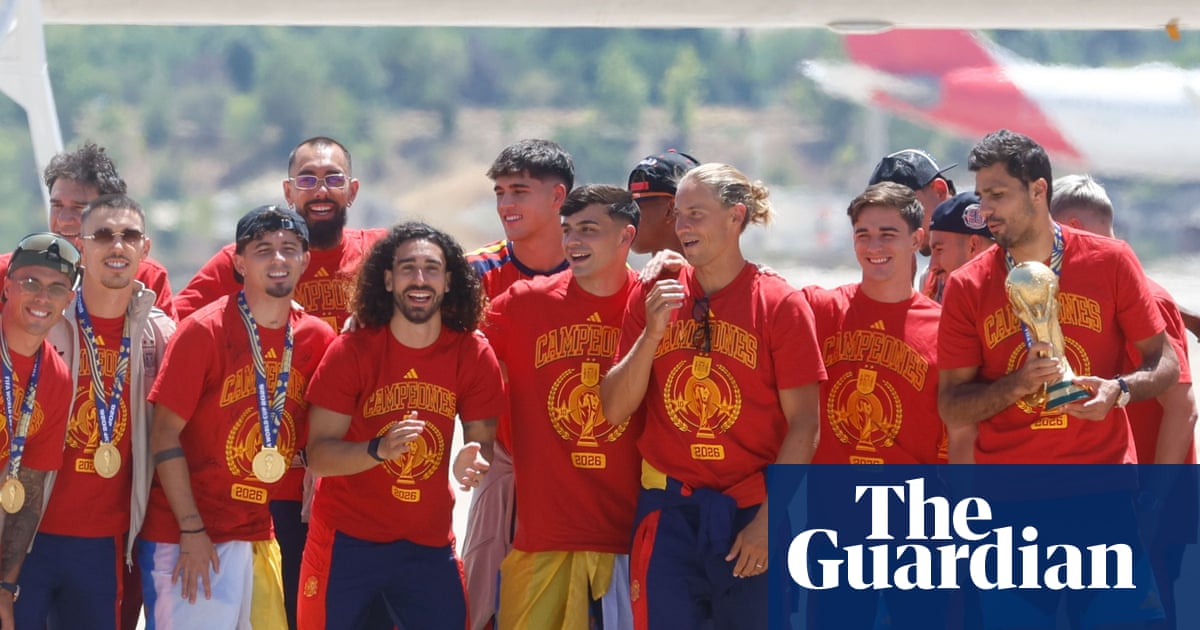
Spain entered Euro 2024 with skeptics claiming Luis de la Fuente was just an interim youth coach out of his depth. Seven matches later, they had battered Croatia, smothered Italy, dispatched Germany in Stuttgart, outclassed France, and broken English hearts in Berlin. That was not a fluke run; that was an eviction notice served to the rest of the continent.
What makes this Spanish side terrifying is that they abandoned the toothless tiki-taka that turned their past tournaments into hostage situations. They no longer pass sideways eight hundred times just to appease the ghost of 2010. They win possession, punch the ball into half-spaces, and let two dynamic wingers terrorize fullbacks with raw vertical speed.
Lamine Yamal plays tournament football with the casual audacity of a teenager nutmegging his older brother in a courtyard. Pairing his surgical left foot with Nico Williams sprinting down the opposite flank gives defenses an impossible tactical riddle. Double-team one flank and you leave the other isolated against a sprinter who loves cutting inside.
Behind them sits Rodri, the reigning Ballon d'Or winner and the most commanding midfield general on the planet. He controls game tempo like an air traffic controller directing rush-hour traffic in bad weather. When matches turn chaotic, he simply steps into passing lanes, absorbs contact, and kills opponent momentum with ruthless efficiency.
There is a crack in the armor, however, and pretending otherwise is dishonest. Their central defense relies on Aymeric Laporte and Robin Le Normand, a pairing that looks distinctly mortal when exposed to rapid transitions. If an opponent bypasses Spain's counter-press, their backline lacks recovery pace, though their midfield stranglehold rarely gives anyone enough oxygen to exploit it.
France still hold the cheat codes
No nation on Earth produces elite footballers at the industrial volume of France. Didier Deschamps could pick an entire starting eleven from players left off his primary roster and still reach the quarter-finals. Between William Saliba anchoring the backline, Eduardo Camavinga eating up transition lanes, and Aurélien Tchouaméni breaking up play, their spine is built out of reinforced titanium.
Then you have Kylian Mbappé. International tournament football is frequently ugly, disjointed, and decided by single moments of individual brilliance, and Mbappé remains the ultimate get-out-of-jail-free card. In the 2022 final in Lusail, France played like corpses for seventy minutes before Mbappé casually scored two goals in ninety-seven seconds to turn reality upside down.
Give him open grass inside an NFL dome during a humid July afternoon and opposing defenders will look like they are running in wet cement. He does not need elaborate tactical patterns to ruin your summer. He just needs one loose ball, two strides, and a clean sight of goal.
The problem with France is never athletic capability; it is existential boredom and dressing room drama. Their Euro 2024 campaign was an unwatchable slog defined by own goals, penalties, and a shocking lack of attacking cohesion. Deschamps treats flair like an unpaid tax bill, choking out games until his squad looks paralyzed by caution before inevitably combusting.
The pretenders club: Argentina, England, and the ghost of Brazil
Let us address Argentina first, because sentimentality is a terrible betting strategy. Lionel Scaloni pulled off one of the greatest coaching runs in modern history by claiming consecutive Copa Américas and a World Cup. They know how to suffer, they master tournament gamesmanship, and their midfield tackles like bailiffs repossessing a luxury sedan.
Father Time remains undefeated, though. Lionel Messi will be thirty-nine years old when the knockout rounds kick off, and Ángel Di María already stepped away from the international setup. Relying on Rodrigo De Paul and Alexis Mac Allister to sprint for two men across a grueling month is asking for trouble.
England, meanwhile, enter a fascinating new identity crisis under Thomas Tuchel. The talent is undeniable, boasting Jude Bellingham's box-crashing ferocity, Phil Foden's tight-space mastery, and Bukayo Saka's unrelenting consistency. Tuchel brings tactical edge and knockout pedigree that Gareth Southgate simply lacked in high-stakes moments.
Yet England carry a cultural allergy to finishing the job that borders on supernatural. We all saw the Berlin final, where Mikel Oyarzabal poked home the winner in the 86th minute to seal a 2-1 triumph while Harry Kane lumbered around like an anchor dropped in shallow water. Until England prove their golden generation can handle pressure without shrinking into a low block, they remain very expensive posers.
Then there is Brazil, a team currently surviving on nostalgia and yellow jersey royalties. Watching the Seleção during qualifying has been an exercise in pure melancholy. The technical swagger of Ronaldinho and Kaká has been replaced by a disjointed midfield that struggles to string five passes together under pressure.
Vinícius Júnior is an undisputed superstar in Madrid, but wearing the national shirt seems to weigh fifty pounds. Dorival Júnior spent Copa América looking completely out of ideas while Uruguay kicked them off the pitch in Las Vegas. Brazil have no commanding midfield playmaker, no stable identity, and a defense prone to catastrophic lapses against organized presses.
The dark horses and the final verdict
Every tournament produces romantic narratives, and people will inevitably whisper about Germany or Portugal crashing the party. Julian Nagelsmann restored dignity to Germany with Jamal Musiala and Florian Wirtz providing electric attacking spark. Yet their defense still bleeds cheap goals against physical center-forwards who challenge them aerially.
Portugal possess an absurd roster on paper, but Roberto Martínez manages major tournaments with the urgency of a Sunday afternoon nap. Furthermore, their tactical setup remains hostage to Cristiano Ronaldo's refusal to accept that the nineties are over. When your entire attacking game plan revolves around servicing a veteran's farewell tour, elite defenses will swallow you whole.
To win an expanded tournament with extra knockout rounds, a champion needs three non-negotiable qualities:
- A world-class midfield pivot capable of dictating tempo against relentless pressing.
- Dynamic wingers who create separation in one-on-one situations without needing tactical overloads.
- An established tournament culture that does not panic when conceding first in the seventy-fifth minute.
Spain check every single box on that list without breaking a sweat. France match them for raw horsepower and tournament resilience, provided Deschamps removes the tactical handbrake. Everyone else is hoping for bracket luck, penalty shootout heroics, or divine intervention from an aging legend.
The sports bars will be packed with fans shouting about dark horses, host nation energy, and plucky underdogs. Save your breath and keep your money in your pocket. When the dust settles in New Jersey, football's ultimate prize will belong to the nations that control the midfield and finish their chances with cold, industrial precision.
Read Next
- Pochettino needed America to finally get the Manchester United job
- Six November 26 Moments That Completely Rewrote Modern Football
- Man United's goalkeeper crisis could force an emergency move for Kaique
- Man United's Lisbon trip lays bare an absurd statistical collapse
- 🏆 World Cup 2026 — Full Coverage Hub