
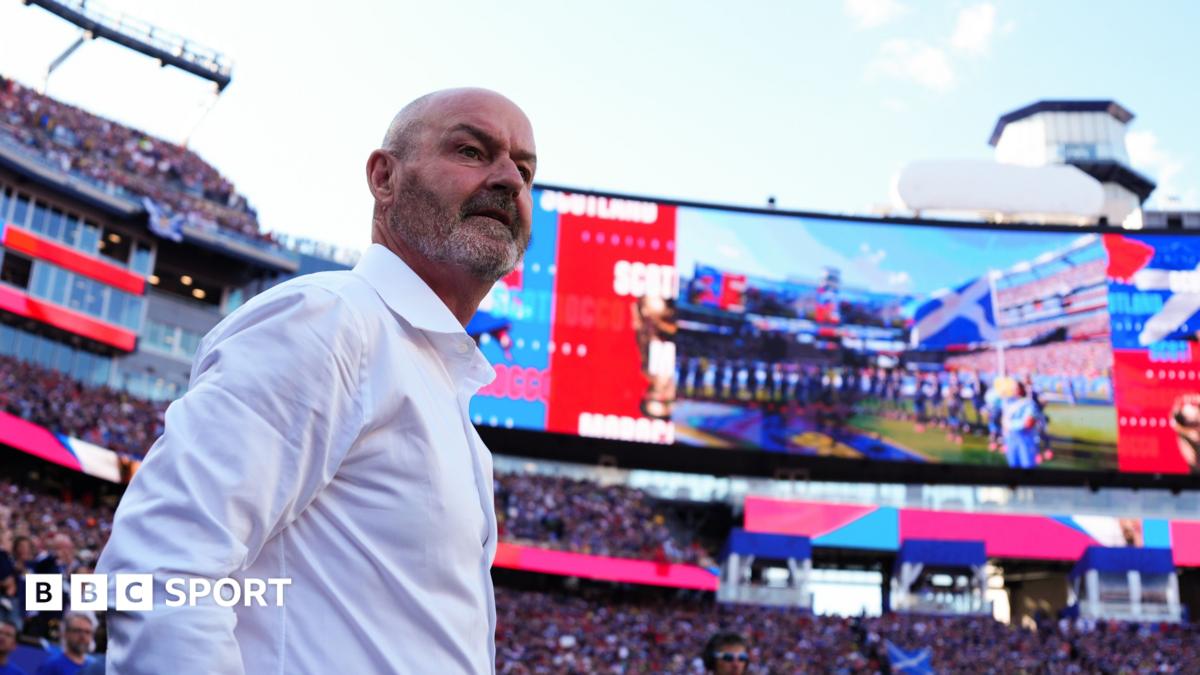
The Saltcoats Saviour Packs His Bags
Scottish football has always been a soap opera. The last 24 hours, however, have been absolute cinema. Steve Clarke, the man who dragged the national team kicking and screaming out of a generation-long international exile, has officially resigned.
The exit was swift. Less than an hour after Croatia beat Ghana on Saturday night, Scotland's mathematical hopes of scraping into the World Cup knockout stage were officially snuffed out. Within minutes, the head coach walked away.
Seven years of grim defiance ended with a quiet midnight press release. The timing is pure chaos. Just last month, the SFA handed Clarke a new four-year contract.
Now, after one victory and a painful exit, he is gone. Clarke decided he had taken this group as far as possible after 81 games in charge.
For a fan base that spent decades treating major tournaments like a myth, the reaction is a war zone. Half the country wants to build him a statue. The other half is glad to see the back of his defensive wall.
In his resignation letter, Clarke admitted he was warned the job was a poisoned chalice. He took it anyway, and for a long time, he made us believe the poison was just a spicy mixer.
Belgrade Nights vs. Miami Meltdowns
To understand the civil war on Tartan Army boards, you have to look at the two eras of Clarke's reign. On one side are the romanticists. They still talk about that freezing November night in Belgrade in 2020.
They remember David Marshall saving Mitrovic's penalty in the empty stadium to send Scotland to Euro 2020. They remember the sea of blue invading Germany in 2024. It was the stuff of dreams.
These fans point to the facts. Clarke qualified for consecutive European Championships and Scotland's first World Cup in 28 years. He succeeded where a generation of managers failed.
As BBC Scotland's timeline shows, he rebuilt the connection between the team and the fans. On the forums, the pro-Clarke contingent is mourning the end of an era.
One fan on the Tartan Army forum wrote: "Clarke took us from losing to Kazakhstan to playing Brazil. We won a World Cup match for the first time in 36 years because of him. Show some respect."
And they are right about that milestone. Scotland's narrow victory over Haiti, courtesy of a John McGinn strike, was their first World Cup win since 1990. For the romanticists, that victory was worth the wait.
They believe Clarke broke the psychological barrier that had crippled Scottish football for decades. He restored national pride. He gave a new generation of fans memories that will last a lifetime.
The Grim Reality of the Pitch
Then you talk to the skeptics. For all the joy of qualification, Scotland's tournament record is a brutal watch. Across three major tournaments under Clarke, they won exactly one match.
The returns are grim: one win, two draws, and six defeats. That is one win from nine matches on the biggest stage. The football was often rigid, passive, and lacking in creative spark.
The 2026 campaign was supposed to be the moment Scotland kicked on. Instead, it was the same old story of individual errors and tactical paralysis. A heavy defeat against Morocco set the tone, and then came the match against Brazil in Miami.
A 3-0 beating that, as Kris Boyd rightly pointed out, could have easily been five or six if goalkeeper Angus Gunn hadn't stood on his head. The gulf in class was enormous. Scotland looked like they were running in wet cement.
Former Scotland midfielder Craig Burley did not hold back on American television. He argued that the expansion to 48 teams was simply rewarding mediocrity, and that Scotland did not deserve to progress.
"I'm sorry, I know this is the way it works with 48 teams, but we are just rewarding complete mediocrity here, and they don't really deserve to go through, if we're being honest."
Many fans agreed, pointing to Clarke's refusal to adapt. One popular Reddit comment read: "We played five at the back and looked terrified. Clarke got us there, but he had no idea what to do once we arrived."
The Poisoned Chalice is Empty Again
The contrarians blame the players rather than the manager. They argue that Clarke worked miracles with a mediocre squad. While Andy Robertson has earned 97 caps, the squad depth drops off a cliff.
Scotland simply does not produce the ball-playing defenders of the past. This leaves the manager with no choice but to deploy a low block and pray for a set-piece transition. The system was a necessity, not a choice.
Who actually takes this job now? according to Sky Sports, the next manager inherits a Nations League group containing Slovenia, North Macedonia, and Switzerland. If they perform poorly there, the momentum built over seven years will disappear instantly.
With Euro 2028 being co-hosted on home soil, the pressure to get the next appointment right is astronomical. Sacking Clarke is the easy part. Finding someone who can do better with this pool of players is another story.
Clarke's exit is a classic case of staying one tournament too long. He deserved the chance to lead the team in the USA, but his tactical ideas had run dry. The system looked dated, and the fans had run out of patience.
In his letter, Clarke thanked his staff, including John Carver and Alan Irvine, but the reality is that the squad needed fresh ideas on the training pitch. The message had grown stale. The players needed a new voice.
The Final Verdict
Ultimately, the skeptics have the stronger argument. Clarke was the perfect manager to stabilize a sinking ship and install a culture of professional discipline. He got Scotland back to the table, but he could not teach them how to use the cutlery.
You cannot go to three major finals and look like you are apologizing for being there in every single game. The defensive setup was designed to minimize damage, but it also minimized hope. Scotland needs to show some ambition on the pitch.
Clarke leaves as the most successful Scotland manager of the modern era, and his legacy is secure. The Belgrade penalty shootout, the Wembley draw, and the Miami sun will live long in the memory. But his resignation is the correct decision for all parties.
The Tartan Army is ready for something different, even if that something different is the familiar, terrifying drop back into the international wilderness. The throne is vacant, the poisoned chalice is poured, and the search for the next Saltcoats saviour begins.
Read Next
- Steve Clarke has turned Scotland into the ultimate tournament buzzkill
- Why Scotland's 0.07 percent World Cup survival math is peak comedy
- Why Mexico's perfect World Cup group stage is a total illusion
- FIFA's bloated 48-team World Cup was saved by its own players
- 🏆 World Cup 2026 — Full Coverage Hub
- 🏴 Scotland World Cup 2026 — Tartan Army Hub
- 🇧🇷 WC 2026 Group C — Brazil, Morocco, Scotland, Haiti
- ⚽ Scottish Premiership 2025-26 — Celtic vs Rangers Hub


