The Stoppage-Time Heroics and the Hidden Medical Gamble
Rubin Colwill delivered the dramatic equalizer Cardiff City desperately needed in their Championship opener against Wrexham, lashing home a free-kick in the 8th minute of stoppage time. The strike salvaged a 1-1 draw at the Cardiff City Stadium after Kieffer Moore had put Wrexham ahead early. But behind the bedlam of the Welsh derby lies a troubling medical reality for Bluebirds head coach Brian Barry-Murphy.
Colwill was not supposed to play more than a brief cameo. The Wales international entered the opening weekend nursing an ankle injury that had severely restricted his pre-season workload. He had managed just two days of full team training before being named on the bench for the derby clash.
For over an hour, Cardiff huffed and puffed without finding any offensive spark. Wrexham missed multiple clear opportunities to put the game completely out of reach, leaving Cardiff hanging by a thread. Sensing the game slipping away, Barry-Murphy abandoned his conservative medical plan.
Colwill was introduced just after the sixty-minute mark as part of a flurry of substitutions aimed at turning the tide. That decision injected roughly 30 minutes of intense derby action directly into a joint that was nowhere near fully conditioned.
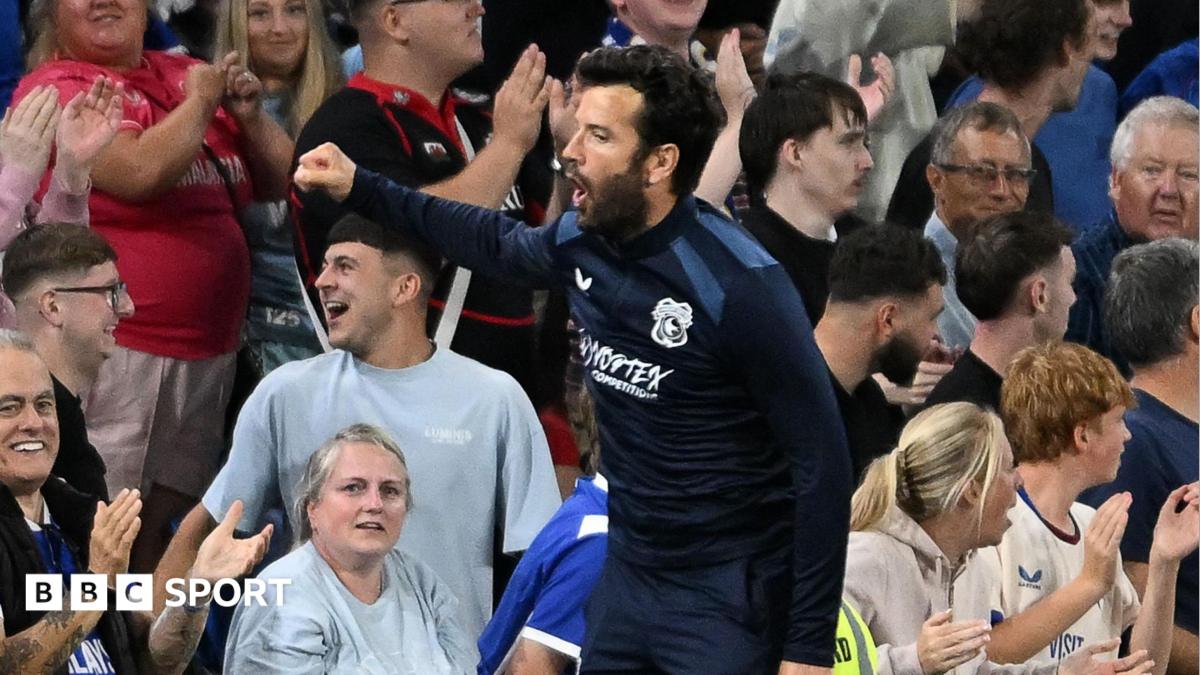
The tactical gamble paid immediate dividends on the scoreboard, but Barry-Murphy knew he crossed a boundary with his sports science staff. Amid the wild celebrations following Colwill's equalizer, Barry-Murphy was even cautioned by the referee for leaving his technical area.
When asked afterward if the yellow card was worth it, Barry-Murphy smiled and brushed it off. "No, no, no. I don't want to be paying any fines," he joked. "I was a bit embarrassed."
Yet behind the smiles, the head coach acknowledged the truth about his match-day decision. As reported by BBC Sport, Barry-Murphy admitted his tactical urgency overrode proper medical protocol.
"He's only trained for two days really, so I probably shouldn't have put him on as early as I did."
That admission raises immediate alarm bells for sports biomechanics specialists. Throwing a player with minimal conditioning into intense derby minutes creates extreme exposure to secondary joint injuries.
Ankle Mechanics and the High Risk of Relapse
Ankle ligament sprains demand structured rehab progressions to rebuild joint proprioception, lateral stability, and muscular fatigue resistance. When an athlete misses key weeks of pre-season preparation, the surrounding soft tissue structures lose functional load tolerance.
Two brief sessions of team training are simply insufficient to build fatigue resilience. As metabolic fatigue accumulates during second-half match conditions, muscular stabilization around the anterior talofibular and calcaneofibular ligaments degrades rapidly.
When surrounding lateral muscular stabilizers tire, the ankle joint absorbs unattenuated ground impact forces. That mechanical vulnerability is precisely how minor inversion sprains escalate into major ligament tears or chronic instability.
Colwill's stoppage-time strike was a masterclass in technical quality, striking the ball clean from distance under physical pressure. Yet the biomechanical stress of plant-foot rotation and full-instep extension on an under-conditioned ankle joint carries a steep physical toll.
Medical data across professional football shows players returning with fewer than five full sessions face a significantly higher rate of re-injury within fourteen days. The acute-to-chronic workload ratio spikes dangerously when foundational training volume is bypassed.
Cardiff cannot afford a prolonged absence from their primary creative playmaker. Fresh off promotion from League One under Barry-Murphy, the club needs Colwill healthy for forty-six matches, not just a single emotional derby evening.
Barry-Murphy's Flawed Tactics vs Medical Duty
From a purely tactical standpoint, Barry-Murphy's decision was understandable, yet recklessly short-sighted. Wrexham had dominated long stretches of the contest, controlled the midfield battle, and suffocated Cardiff's build-up play.
The temptation to unleash Colwill to salvage a point in front of home supporters proved irresistible for the manager. But head coaches are paid to protect key players from their own competitive instincts and from bench panic.
Colwill will always push to play through physical discomfort. He loves the club, loves the game, and wants to be on the pitch, but coaching staff must serve as the analytical brake when medical metrics fail to meet clearance standards.
Historical precedent in the Championship shows that rushing players back during August frequently leads to autumn breakdowns. Promoted sides often burn out key starters early by chasing individual points at the expense of player load management.
Barry-Murphy himself acknowledged the necessity for extreme restraint over the coming weeks, highlighting the delicate balancing act now required for Colwill's squad integration.
"He just needs to find some rhythm and volume in his training because he hasn't done a lot of training, so we can't rush him back because that would just put him at risk for no reason."
The contradiction in logic is striking. Barry-Murphy voiced that warning right after breaking his own protocol during the match.
If Colwill suffers joint effusion or localized swelling over the next forty-eight hours, Cardiff's medical management will face heavy scrutiny. Sacrificing long-term structural health for opening-week points is a classic promoted club trap.
Managing Workload in the Championship Pressure Cooker
The Championship is infamous for its relentless physical calendar. The 46-game Championship grind leaves minimal recovery window between mid-week fixtures and Saturday travel schedules.
Cardiff's medical and conditioning staff must now enforce a rigorous micro-cycle rehab protocol to stabilize Colwill's ankle joint while steadily restoring his aerobic capacity:
- Conduct daily clinical assessments of joint effusion, passive range of motion, and dynamic balance stability.
- Restrict full-contact team sessions while increasing off-pitch non-impact cardiovascular loading.
- Limit upcoming match appearances to controlled late-game substitute windows until training volume thresholds are met.
- Implement functional movement screenings and GPS high-speed running metrics before approving full ninety-minute starting assignments.
Cardiff City Stadium erupted when Colwill's free-kick hit the top corner in the ninety-eighth minute. The roar masked the reality that their talisman was operating on empty fitness reserves and heightened joint risk.
Barry-Murphy got away with his high-stakes gamble on opening night, escaping with a point and a hero moment for his young playmaker. Now the manager must prove he can stick to his word, manage Colwill's workload with discipline, and resist the urge to gamble again when the pressure rises.
Read Next
- Cardiff fans are losing their minds over Rubin Colwill's derby miracle
- Can West Ham handle the pressure in their Championship opener?
- Will Lankshear's double and Bristol City's collapse light up opening day
- Wolves Just Got Their Championship Wake-Up Call and It Was Pure Chaos
- 🏟 EFL Championship 2025-26 — Promotion Race & Play-Off Final Hub