The Wembley Presser and the Shadow Over Etihad
The football world shifted on its axis on Friday afternoon. Multiple reporting outlets revealed that an independent commission found Manchester City guilty on 114 of 115 charges brought by the Premier League in February 2023. The verdict ended three years of legal posturing, pointing to a systemic failure to provide accurate financial information across more than a decade of dominance.
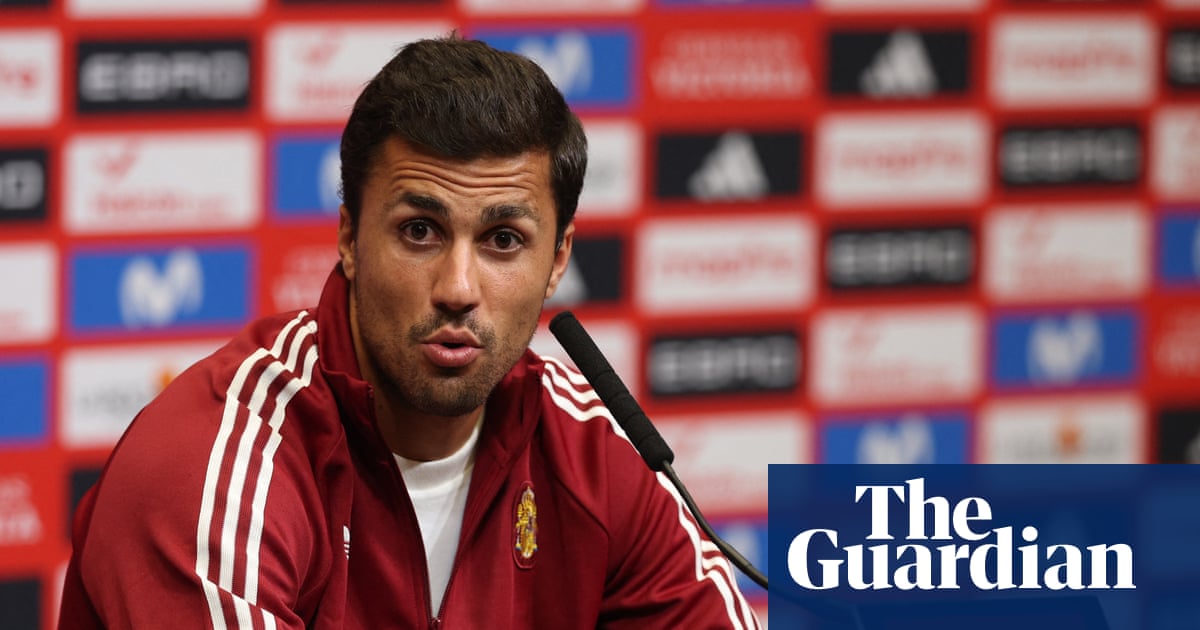
Hours later, inside a media room at Wembley Stadium, former City midfielder Rodri sat down to preview Spain's Nations League opener against England. Now wearing Barcelona colors after departing Manchester this summer, the Spaniard refused to back down. He brushed aside administrative findings, framing pitch glory as something entirely immune to corporate accounting.
"What we did, they cannot take it out of us. It is something that is not paid by money, it is paid with effort, with partnership and with being shoulder to shoulder every day." — Rodri
As The Guardian reported, Rodri maintained that everyone inside the club worked tirelessly to achieve their victories. A club spokesperson quickly noted that significant elements of the judicial process remain incomplete. Yet the emotional gap between player conviction and legal reality has never looked wider.
Rodri looked unruffled throughout the briefing, speaking with the calm authority of a Ballon d'Or contender. He reminded journalists that he looked executives in the eye during his Etihad tenure and believed their guarantees. But while players experience matches through sweat and tactics, supporters evaluate titles through basic fairness.
The timing of the verdict added a surreal backdrop to the international break. At Wembley, where City lifted numerous trophies under Pep Guardiola, Rodri fielded questions about accounting line items rather than midfield pressing triggers. For a squad that defined modern football standards, the narrative had abruptly turned from pitch brilliance to legal liability.
Pitch Genius vs Financial Engineering: The Core Dilemma
It is easy to see why players feel aggrieved by off-pitch scrutiny. Balance sheets do not execute 30-yard half-volleys, nor do audit reports organize pressing structures against Real Madrid. Pep Guardiola built a tactical engine that elevated positioning, body orientation, and passing speed to artwork.
Every trophy involved genuine athletic sacrifice across long grueling seasons. Kevin De Bruyne played through torn hamstrings, while Bernardo Silva covered vast distances on the right flank to maintain tactical shape. Discounting those physical efforts ignores the sheer brilliance required to consistently accumulate domestic titles.
Guardiola's tactical innovations were genuine breakthroughs that changed how modern managers approach the game. Pushing John Stones into a hybrid midfield role or reinventing full-backs as central orchestrators required elite coaching and tactical discipline. No amount of money automatically guarantees that level of synchronized teamwork on match day.
However, ignoring how that engine was constructed is equally foolish. Financial rules exist to maintain competitive balance across top-flight football. When a club disguises equity funding as independent sponsorship or hides manager remuneration, it gains an artificial edge over compliant rivals.
That edge manifests directly on the pitch during a grueling 38-game season. It allows a manager to bench £50m defenders without risking structural breakdown. While Arsenal or Liverpool operated under strict budget limits, City assembled two complete starting lineups capable of sustaining relentless momentum.
To suggest money plays no role in tactical mastery is naive. Money buys elite coaching staff, state-of-the-art recovery facilities, and squad depth that absorbs mid-season injury crises. City earned their points on the pitch, but financial inflation guaranteed they entered every match with stacked cards.
Revisiting the Great Pitch Moments Under a Darker Light
Re-evaluating City’s iconic moments feels jarring in light of Friday's decision. Take Vincent Kompany's thunderous 30-yard strike against Leicester City on May 6, 2019. The captain ignored bench warnings to fire into Kasper Schmeichel's top corner, keeping City on track for 98 points and edging Liverpool by a single point.
The emotional high of that goal remains unforgettable for anyone who watched it live. Yet rival supporters now look at that one-point margin differently. Without illicit financial cushioning, would City have possessed the roster depth to stay within striking distance of Jurgen Klopp's squad on Matchday 37?
The same tension surrounds Ilkay Gundogan's final-day heroics against Aston Villa in May 2022. Trailing 2-0 with 15 minutes remaining, City produced a three-goal surge in six frantic minutes to snatch the crown. It showcased extraordinary psychological resilience under intense pressure.
Yet that comeback relied on subbing on high-priced international talent to replace exhausted starters. When bench options cost more than most opponents' first teams, late-game turnarounds become statistical probabilities rather than miracle recoveries. Tactical magic and financial weight were always intertwined.
Before Guardiola arrived, Sergio Aguero's legendary strike at 93:20 against QPR on May 13, 2012 launched the modern era. Trailing late in stoppage time, City scored twice to take the title from Manchester United on goal difference. It was pure sporting drama, yet it opened the floodgates for a decade of lavish spending.
By the time City completed the continental treble in 2023, their dominance was absolute. In the Champions League semi-final against Real Madrid on May 17, 2023, City completed 124 passes in the opening 15 minutes while holding Madrid to just 13. They dismantled the European champions 4-0 at the Etihad in a masterclass of total control.
Weeks later in Istanbul, Rodri side-footed the winner past Inter Milan on June 10, 2023 to seal the Champions League title. That strike followed historic milestones like Gabriel Jesus chipping Alex McCarthy at 93:53 in May 2018 to hit 100 points, and Erling Haaland smashing 52 goals in 2023. Brilliant individual feats, yet all forged inside a disputed corporate structure.
The 2020 UEFA Precedent vs Premier League Reality
During his Wembley press conference, Rodri repeatedly referenced City's 2020 legal clash with UEFA. Back then, European football's governing body issued a two-year Champions League ban and a €30m fine for financial fair play breaches. City appealed to the Court of Arbitration for Sport and won a complete exoneration in July 2020.
Rodri pointed to that victory as proof that current allegations will dissolve similarly. As detailed in his Wembley appearance, players remained calm because leadership expressed total confidence. In his eyes, administrative accusations are simply part of modern football's standard background noise.
That comparison fails under legal examination. CAS overturned UEFA's ban primarily because key evidence fell outside UEFA's strict five-year statute of limitations. The Premier League operates under completely different rules, with no time-barring restrictions on historic rule violations.
Furthermore, an independent commission ruling guilty on 114 distinct counts carries far more weight than an initial administrative charge. UEFA's case was rushed and constrained by procedural deadlines, whereas the Premier League spent three years building its evidentiary file. City's legal team promises further appeals, but claiming total innocence looks increasingly untenable.
The defense strategy of deflecting to past acquittals ignores the specifics of this verdict. Premier League auditors examined hidden manager contracts, unrecorded player payments, and artificially inflated sponsorship deals over nine separate seasons. Sweeping those findings aside as routine football politics strains credibility.
Stripping Titles, Point Deductions, and the Cost of Reckoning
English football now faces an unprecedented crisis of authority. Potential sanctions range from massive financial penalties and heavy points deductions to expulsion from the Premier League and stripping past titles. Leaving City's trophies intact while acknowledging 114 breaches satisfies nobody.
The independent commission's findings open several potential avenues for punishment, each carrying profound consequences for the league's credibility:
- Massive financial fines paired with strict future spending caps
- Substantial points deductions applied across multiple future Premier League seasons
- Stripping historical titles won during the non-compliant seasons
- Expulsion from the Premier League and relegation down the Football League pyramid
Stripping titles creates logistical chaos, leaving rival clubs like Manchester United and Liverpool with hollow retroactive honors. Applying massive point deductions in upcoming seasons punishes current players who had zero involvement in financial reporting between 2009 and 2018.
A major flaw in City's official posture is their refusal to acknowledge systemic harm. Club leadership maintains that external reporting stems from jealousy rather than legitimate compliance standards. That refusal to engage self-critically alienates neutral observers who simply want a fair playing field.
The Premier League must enforce meaningful consequences. If rule breaches of this magnitude result in mere monetary fines, financial regulations become nothing more than a luxury tax for billionaire owners. Integrity requires penalties that actually hurt.
Rodri is correct about one thing: no legal ruling can erase the memory of Istanbul or Aguero's 93:20 winner. Fans cheered, players wept, and moments were etched into memory. But memories alone cannot protect a legacy when the foundation turns out to be hollow.
Manchester City built the most captivating football machine of the modern era. Pep Guardiola perfected tactical movement, while players gave everything on the pitch. Yet history will remember that this magnificent team operated above the rules that governed everyone else.
Read Next
- Top 10: Top Moments in Football Leaks and Financial Fair Play History
- Is English football ready to let fans drink pints in their seats?
- Liverpool almost sold Cody Gakpo to Man City and it makes zero sense
- Guilty: Inside Manchester City's Financial Verdict and the Fractured Legacy of Pep's Era
- 🇪🇸 Spain World Cup 2026 — La Roja Hub