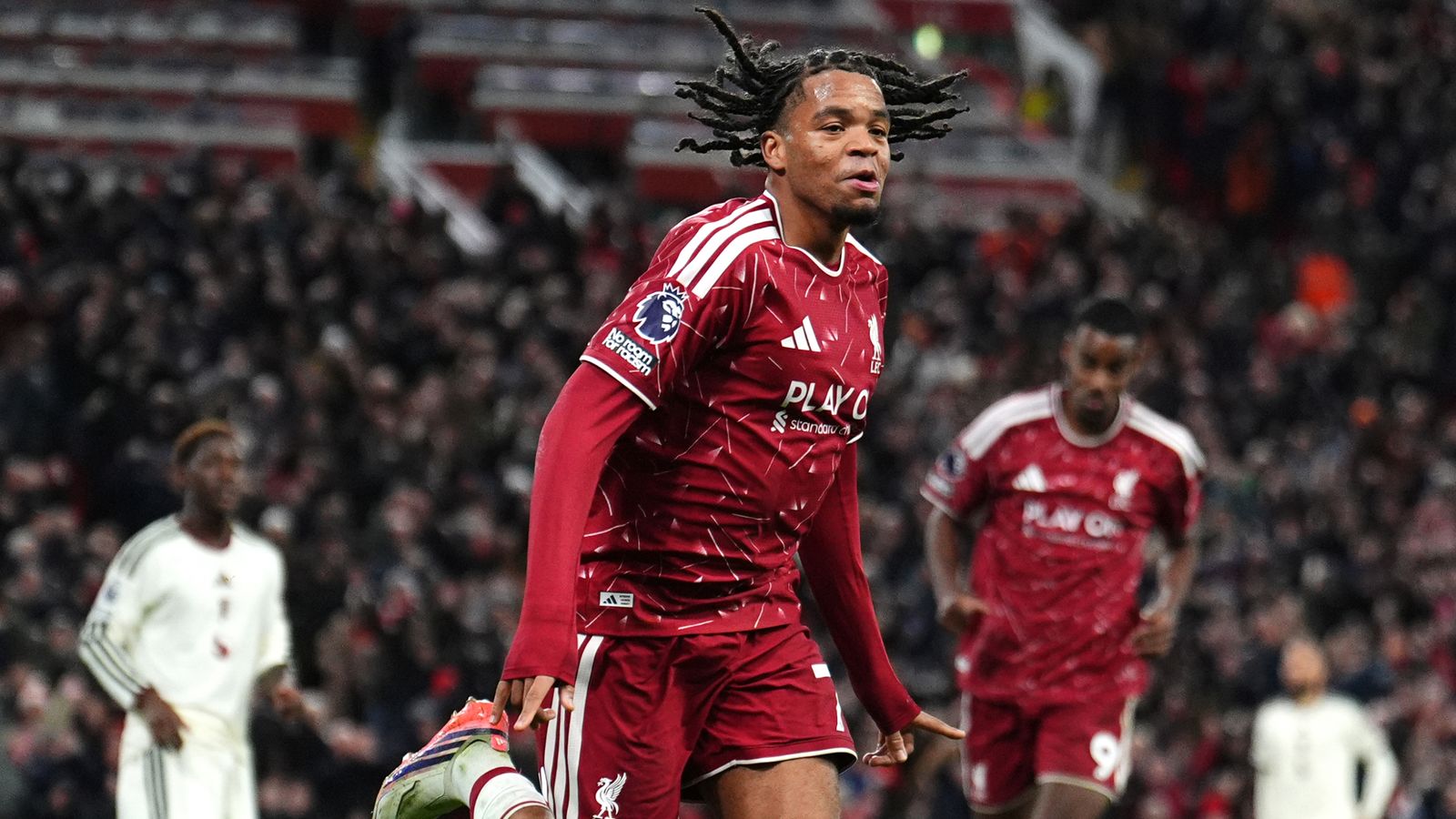
Mauricio Pochettino spent the last forty-eight hours mounting a fierce defense of his football club. The Football Association agreed with his assessment, swiftly rescinding the red card shown to Leny Yoro at Anfield. Yet vindication from an FA panel does nothing to erase a humiliating 4-0 defeat.
Manchester United are traveling to Portugal to face Sporting with their manager furious and their season teetering. The anger coursing through the dressing room is understandable, but righteous indignation earns zero points. If United treat this European fixture as a referendum on refereeing, they will walk into another disaster.
The Anatomy of an Eight-Minute Disaster
To understand United's current predicament, you have to revisit the opening exchanges on Merseyside. Aleksander Isak broke into space behind United's defensive line, chasing a loose ball into the final third. The defense was caught flat-footed.
Yoro was shown a straight red after only eight minutes for bringing down Isak just outside the penalty area. Referee Sam Barrott saw a clear denial of an obvious goalscoring opportunity and produced the red card immediately. The on-field perception, however, was fundamentally flawed.
Isak had taken a heavy touch that sent the ball skidding straight toward Senne Lammens. The goalkeeper was already rushing off his line to secure possession. United argued that Isak could never have reached the ball before Lammens smothered it.
The club backed that position with technical analysis. As detailed in BBC Sport's report, United presented tracking data regarding Isak's top speed and his physical impossibility of beating Lammens to the ball. The FA agreed, wiping out the suspension.
That correction came far too late to help anyone at Anfield. Pochettino expressed his fury over the failure of the video review system to intervene when it mattered most:
"We can accept the referee can make a mistake. But if we have VAR, what were they doing? What were they doing? Are we going to repeat the game? Are we going to have the possibility to play 11 by 11? No."
The manager compared the setup to owning an elite sports car without a competent driver at the wheel. Technology exists to eliminate obvious blunders, yet the system froze when clarity was needed. That frustration resonates with every supporter who watched the farce unfold.
Referees' chief Howard Webb defended the officials on Sky Sports' Mic'd Up programme, arguing that Isak was moving quickly toward the ball. Webb claimed that any doubt justified deferring to Barrott's on-field instinct. That justification evaporated once the FA analyzed the data and overturned the decision.
The speed of the check remains United's biggest source of outrage. VAR official John Brooks confirmed the dismissal in seconds rather than taking the necessary time to calculate angles and ball speed. United were forced to contest eighty-two minutes with ten men because the review room rushed its job.
Wall Infringements and Structural Collapse
The red card was not the only contentious moment that broke against United. From the resulting free-kick, Dominik Szoboszlai struck Liverpool into the lead while Bradley Barcola positioned himself directly next to United's defensive wall. Football rules state that attacking players cannot encroach within a meter of a defensive wall of three or more defenders.
Barcola made physical contact with the wall, interfering with United's defenders and impairing their ability to react. As highlighted by the BBC's match coverage, the officials failed to spot the infraction or review the illegal contact. The goal stood unchallenged.
Pochettino made sure to highlight the missed call during his post-match press briefing. He was adamant that the officials had missed a blatant violation of the rules:
"Barcola was touching our wall. It must be disallowed. We need to defend my players and my club, and that is to denounce it and to say, the decision wasn't good. And now, the three points, where are the three points?"
United intend to escalate these grievances formally with both the Premier League and ProRef. This marks the second time this season that the club has found itself on the receiving end of a major VAR breakdown. The precedent is alarming.
Back on 13 September, Erling Haaland scored a winning goal in the Manchester derby at Old Trafford while Enzo Fernandez stood clearly offside and interfered with play. Webb issued a formal apology to United after that match. An apology, however, cannot restore points lost to the standings.
This time, Webb offered no apology. He doubled down on the Anfield decision, even as the FA panel dismantled it. The inconsistency from the refereeing hierarchy only pours gasoline on United's sense of grievance.
Yet focusing entirely on officiating obscures the team's glaring tactical failures. Elite sides do not surrender four unanswered goals simply because they lost a player early. United collapsed mentally and structurally the second adversity hit.
The midfield stopped tracking runners almost immediately after Szoboszlai's opener. The back four lost all cohesion, leaving massive gaps between the lines for Liverpool to exploit. Playing with ten men is punishing, but playing without discipline is suicidal.
The Lisbon Test and Fonseca's Warning
United now head into a vital European fixture with emotions running dangerously hot. Sporting manager Paulo Fonseca dismissed public suggestions that Manchester United arrive in Lisbon looking fragile. Fonseca's comments were polite, but his team will be ruthless.
Sporting are built to punish disorganized opponents. They attack open spaces quickly, exploiting the exact gaps United surrendered so cheaply at Anfield. If United display the same defensive negligence in Portugal, Fonseca's forwards will run riot.
The most positive news for United is the return of Luke Shaw to first-team training. Shaw provides experience, composure, and defensive stability on the left side of the pitch. His presence offers a significant boost to a beleaguered backline.
Rushing him directly into a demanding European match carries genuine risk. Shaw has missed time through fitness issues, and demanding ninety minutes from him immediately could backfire. Pochettino must weigh that risk against the urgent need for defensive leadership.
Yoro also faces an emotional test. Having his domestic suspension overturned clears his name, but being isolated against top forwards without midfield protection damages young defenders. Pochettino needs to provide his central defenders with real defensive cover.
Senne Lammens requires far better support from the players in front of him. The goalkeeper was left exposed repeatedly on Merseyside, receiving hurried backpasses while Liverpool pressed relentlessly. United cannot afford to leave their keeper stranded under hostile pressure.
Accountability Must Start From Within
United's anger at the refereeing standards is entirely warranted. The evidence presented to the FA showed that John Brooks and Sam Barrott made an egregious error in judgment. According to BBC reporting, United proved that Isak could not reach that ball.
Complaining about referees will not save United's season. The headline published this week put it bluntly: no one is coming to save this team. United must find a way to save themselves on the pitch.
Pochettino has to instill tactical discipline into his midfield unit. When a team loses a man, the remaining ten players must compress space and fight for every loose ball. United did neither at Anfield, drifting through eighty minutes like spectators at their own execution.
A pragmatic game plan is required against Sporting. United must abandon reckless high pressing and sit in a compact defensive shape. Denying space through the middle forces opponents into wide areas where crosses can be dealt with cleanly.
Pochettino cannot allow his squad to adopt a victim complex. Poor decisions happen throughout a grueling football season. What defines a serious football team is how it responds when decisions go against it.
If United travel to Lisbon feeling sorry for themselves, Sporting will tear them apart. If they channel their fury into tactical focus and defensive grit, they can steady the ship. The choice belongs entirely to Pochettino and his players.