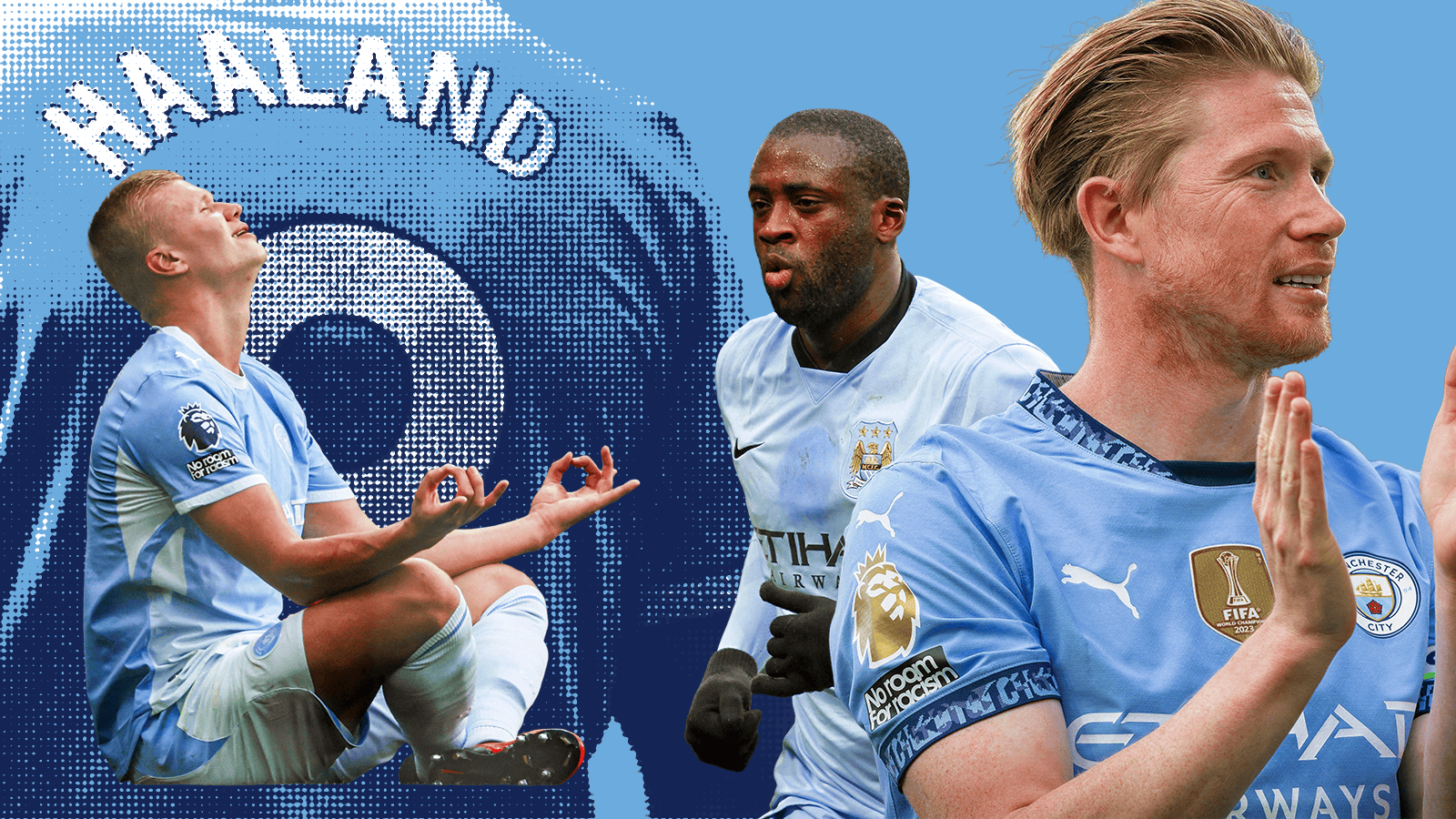
One touch in twenty-two minutes. For most elite modern strikers, that statistic represents a structural crisis, a failure of service that leads to frantic, desperate runs into midfield to touch the ball. For Erling Haaland in Dallas, it was simply the prelude to a ticket to the World Cup Round of 16.
Norway secured a dramatic 2-1 victory over Ivory Coast on June 30, 2026, in Arlington, Texas. Ståle Solbakken's side was out-passed, out-pressed, and out-shot, yet they found a way to win. Like the high-profile squad rebuilds seen in European club football, Solbakken's tournament management is a high-stakes gamble that sets up a last-16 matchup against Brazil in New York.
The numbers behind this match tell a story of extreme efficiency versus wasteful dominance. Ivory Coast accumulated 1.99 expected goals (xG) compared to Norway's 1.92, yet they fell short. The African side missed 1.75 worth of xG over the course of ninety minutes, failing to convert high-value chances while Norway made their rare moments count.
Solbakken's Risk Management Strategy
The France Rotation Payoff
To understand Norway's physical resilience in the final twenty minutes in Texas, one must look back to their final group game. Solbakken rested ten starters against France, a decision that drew heavy criticism from the Oslo press. However, the physical data from the Ivory Coast match vindicated that gamble.
Norway's core players looked fresh in the Texas heat, sustaining their running intensity when Ivory Coast began to tire. While the African side dominated the first half-hour, their pressing intensity dropped significantly after the sixty-minute mark. The physical freshness of Martin Odegaard and Patrick Berg allowed Norway to control the central spaces late in the game. They were able to cover lateral spaces more effectively, preventing Ivory Coast from isolating Norway's center-backs.
Ivory Coast manager Emerse Fae went with a full-strength lineup, and it showed in the closing stages. The West African side completed 84 percent of their passes in the first half but saw that rate drop to 73 percent after the seventy-fifth minute. Norway capitalized on this fatigue, winning 58 percent of the second-ball duels in the final quarter of the match. The physical drop-off from the Ivorian midfielders allowed Norway to play through the lines with much more freedom as the clock ticked down.
Tactical Battles on the Pitch
Konan's Overloads and Diallo's Brilliance
Ivory Coast targeted Norway's full-backs from the opening whistle, exploiting the space behind Julian Ryerson and Marcus Holmgren Pedersen. Ghislain Konan was a constant threat from left-back, overlapping with speed to create numerical superiorities. In the twenty-first minute, Konan bypassed the Norwegian block, crashing a golden opportunity into the side-netting from inside the box. Ryerson struggled to handle the double-up situations created by Konan and Pepe on that side.
Amad Diallo was the standout performer for the Elephants, constantly drifting inside to link play. The winger completed four successful dribbles out of six attempts, torturing the left side of Norway's defense. His equalizer in the seventy-fifth minute was a masterpiece of individual skill, jinking past three defenders before firing past Orjan Nyland. Diallo's low center of gravity and quick changes of direction exposed the lack of lateral mobility in Norway's backline.
Norway's wingers struggled to track these runs, often leaving their full-backs isolated. Oscar Bobb and Antonio Nusa had to do a massive amount of defensive work, limiting their counter-attacking threat. Yet, this defensive work rate prevented Ivory Coast from turning their possession into high-quality central cutbacks. The defensive sacrifices made by Nusa and Bobb in deep areas were instrumental in keeping the scoreline manageable during the periods of heavy pressure.
Deconstructing the xG and Set-Piece Metrics
Nusa's Magic and Haaland's Patience
The expected goals battle finished 1.99 to 1.92 in favor of Ivory Coast, but the distribution was vastly different. Ivory Coast relied on volume, taking eighteen attempts in total. Norway took just eight shots, but four of them were defined as big chances, showing far superior shot quality. Norway's ability to create high-value chances from limited possession proved to be the tactical difference in the match.
Antonio Nusa opened the scoring in the thirty-ninth minute with a piece of individual brilliance that defied the data. The young forward curled a strike into the top corner from an angle with an expected goals rating of just 0.04. This moment of individual quality gave Norway a lead they scarcely deserved at halftime. It also forced Ivory Coast to commit more players forward, opening up space for Norwegian counters in the second period.
Erling Haaland's performance was a lesson in mental discipline. Having touched the ball only once in the first twenty-two minutes, he remained isolated for long periods and missed a close-range chance in the forty-second minute. Yet in the 86th minute, he tapped home the winner from a precise Sander Berge cross. Haaland's ability to remain focused despite lack of service is what makes him a world-class threat in knockout football.
The New York Blueprint: Can They Hurt Brazil?
Nyland's Heroics and Defensive Concerns
While Haaland and Nusa will dominate the headlines, goalkeeper Orjan Nyland was Norway's savior. The veteran keeper made five saves, including a spectacular stop in the ninety-sixth minute to deny Amad Diallo's free-kick. Without Nyland's intervention, Norway's defensive vulnerabilities would have cost them the match. His positioning on cross-box deliveries was flawless throughout the afternoon.
Norway's defensive structure on set-pieces was a mixed bag. In the sixty-seventh minute, Torbjorn Heggem met Martin Odegaard's corner, only for Amad to clear the volley off the line. However, Norway also allowed Ivory Coast five corner kicks, looking disorganized on defensive transitions. The inability to clear the first contact from deep crosses remains a persistent issue for the Norwegian coaching staff to resolve.
The lack of defensive depth remains a major concern for Solbakken. Against Brazil's fluid front three, Norway cannot afford the defensive lapses that let Diallo walk through their box. Solbakken must address these spacing issues and structural gaps before their flight to New York. The defensive line must learn to drop off quicker to prevent speedy attackers from exploiting the space behind them.
Looking Ahead to the Round of 16
According to the Sky Sports live commentary, many analysts remain skeptical about Norway's chances in the next round. Laura Hunter noted that Norway's core quality might be tested in New York:
From what I've seen tonight, I don't see Norway having enough depth of quality to trouble Brazil. But... They do have match-winners.
Brazil's defense will present a much different challenge than Ivory Coast's physical block. Brazil plays with a higher defensive line, which could play right into Haaland's hands if Odegaard can find passing lanes. The key will be whether Norway's midfield can retain possession long enough to let their forwards run. If they are forced to defend deep for ninety minutes, Brazil's quality will eventually break them down. The Norwegian midfielders must be braver on the ball to relieve defensive pressure.
For now, Solbakken's gamble has paid off. Norway is in the last sixteen of the World Cup for the first time in decades, relying on clinical efficiency and goalkeeper heroics. Against Brazil, they will need to be even more precise to keep their adventure alive. The tactical margin for error is gone, and only a perfect defensive performance will suffice in New York.
Read Next
- Why Norway can actually beat Brazil in the Round of 16
- Did Ståle Solbakken just throw away Norway's World Cup momentum?
- Norway and Ivory Coast hit by major injury blows ahead of knockout clash
- Why Norway's World Cup dreams rest on Odegaard's fragile shoulders
- 🏆 World Cup 2026 — Full Coverage Hub
- 🇧🇷 Brazil World Cup 2026 — A Seleção Hub
- 🇳🇴 Norway World Cup 2026 — Can Haaland Lead the Vikings?
- 🇨🇮 Ivory Coast World Cup 2026 — Les Éléphants Hub
- 🇪🇸 WC 2026 Group H — Spain, Uruguay, Ivory Coast