Michael Carrick is Manchester United's most dangerous gamble
The Carrick calculus
The appointment of Michael Carrick as the permanent manager of Manchester United is, statistically, the most logical decision the club has made in a decade. A return of 10 wins in 14 games is not merely a caretaker's purple patch; it is a structural stabilization the club has lacked since the post-Ferguson vacuum began. Carrick has managed to squeeze a Champions League qualification out of a squad that looked fractured in mid-winter. Yet, for all the merit of this run, the confidence inside the boardroom at Old Trafford seems to ignore the brutal reality of the Premier League's top-four attrition.
As recent reports suggest, Carrick's appointment is a matter of 'when rather than if,' with key figures aligning to rubber-stamp the move. The temptation to stick with the devil you know—especially one who has already secured the financial dopamine hit of European football—is understandable. But there is a glaring mismatch between a late-season tactical surge and the long-term demands of a club that requires a complete identity overhaul, not just a steady hand on the rudder.
The squad reality check
The dressing room noise is overwhelmingly positive, with senior figures like Casemiro and Amad publicly backing the transition. However, the reliance on these veterans to solve structural tactical issues is a recurring theme that has doomed previous occupants of the Old Trafford hot seat. Watching the team now, you see more compactness in the defensive phase, but it often looks like a team playing to the minimum threshold of energy required to keep the scoreline tight. You do not build a championship contender by settling for functional efficiency.
Consider the transfer strategy currently being debated by INEOS. While the noise around a potential Harry Kane move holds a 95% chance of materializing according to some reports, the focus on short-term fixes like a £39m investment in Ederson or a £80m triple-midfield haul feels frantic rather than strategic. If the objective is to build a dynasty under Carrick, the current flurry of linked moves suggests the club is still prioritizing 'names' over the specific, high-intensity profiles required for a modern pressing side. It is a scattergun approach disguised as a transfer blitz.
The shadow of bigger projects
Critically, the club remains prone to self-inflicted wounds that distract from the pitch. The administrative friction surrounding the youth setup—specifically the controversy over the FA Youth Cup venue hosting at the Joie Stadium—highlights a lack of institutional focus. While the first team chases headlines, the grassroots infrastructure appears to be languishing. You cannot expect sustained elite performance when the peripheral elements of the club are consistently caught in petty-point-scoring battles with neighbours like Manchester City.
Furthermore, the move away from Marcus Rashford marks a distinct shift that carries significant risk. If the club has truly decided there is no future for him—as recent gossip indicates—they are banking entirely on the recruitment department to replace his output on the fly. We are seeing a pattern where players are discarded with cold efficiency, but the incoming quality feels like an experimental gamble rather than a proven upgrade. A club that discards home-grown talent while pursuing controversial sponsorships and aging stars is one that is essentially burning its credit card for a short-term hit.
The appointment of Michael Carrick is a matter of when rather than if, having guided Manchester United back into the Champions League after 10 wins in 14 games.
Ultimately, Carrick faces a mid-summer reckoning. He has earned the right to try, but he inherits a squad that is perpetually one bad result away from a crisis of confidence. The decision to commit to him full-time is an attempt to cultivate a new tradition of internal growth, but if the results dip by September, the 14-game sample size will look like a historical footnote of collective delusion. Whether this is the start of a genuine revitalization or just another expensive delay in the inevitable decline will be determined the moment the first high-pressure fixture drops in the 2026/27 campaign. For now, the optimism is loud, but it remains dangerously fragile.
EA SPORTS FC 25 Standard Edition
The definitive football gaming experience for PS5.
More Coverage

Jordan James rejected the Premier League, but Portugal will test his resolve
an hour ago
Why Roma's £21.4m gamble on Rodrigo Mora looks like absolute highway robbery
an hour ago
Arsenal defender Marli Salmon pulls out of England U18 squad with injury
8 hours ago
Kylian Mbappe and Andy Robertson almost changed Liverpool history forever
10 hours ago
JJ Gabriel wants out, and Michael Carrick has a Brighton problem to solve
11 hours agoOn This Day in Football: September 23
12 hours agoMore Analysis
Why Roma's £21.4m gamble on Rodrigo Mora looks like absolute highway robbery
an hour ago
JJ Gabriel wants out, and Michael Carrick has a Brighton problem to solve
11 hours ago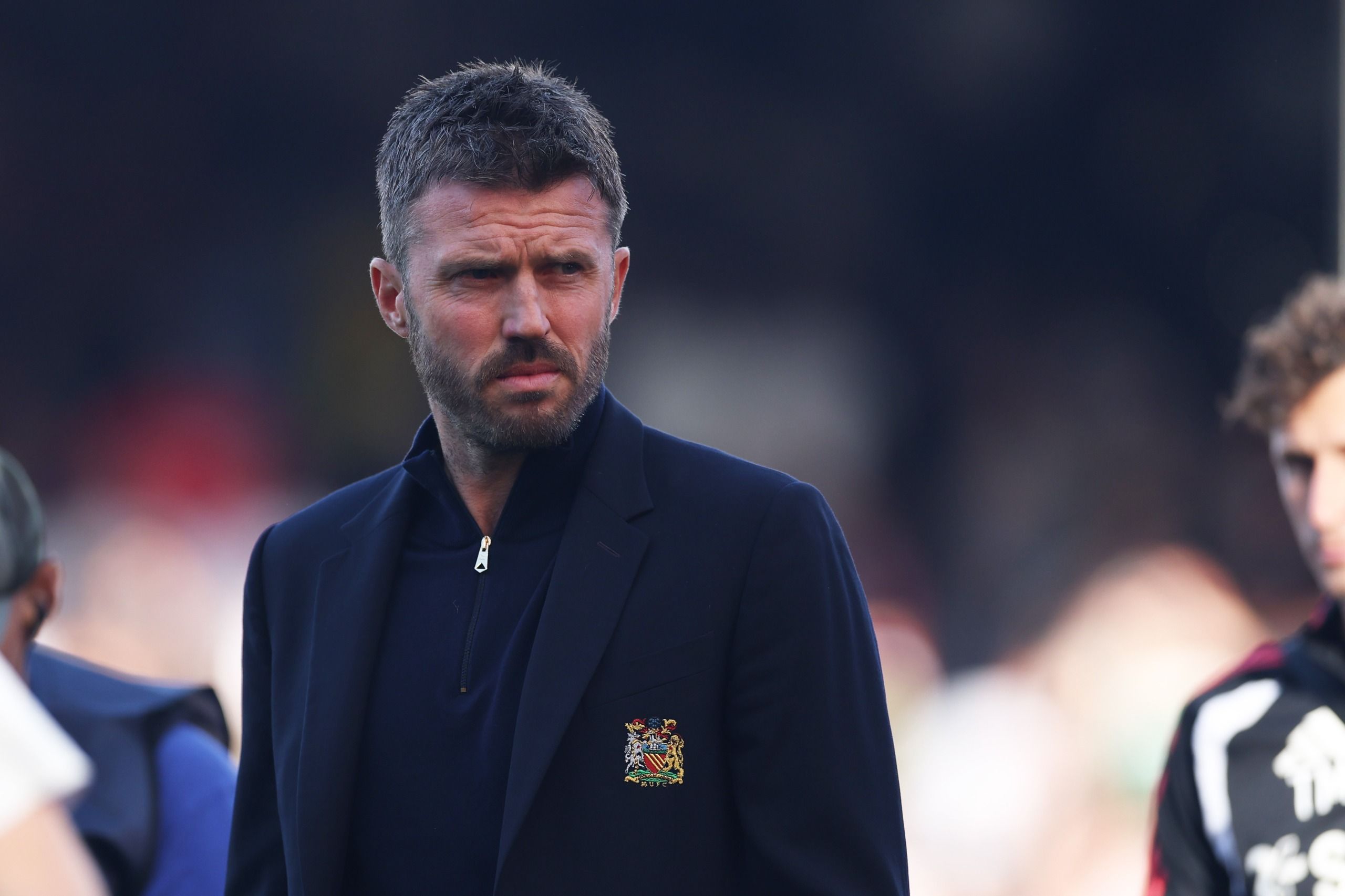
Benjamin Sesko scan headlines growing Manchester United injury crisis
1 day, 2 hours ago
Gary Neville slams Man United work rate after shameful Fulham stats
2 days, 2 hours ago
Carlos Baleba is about to change how Michael Carrick's Man United plays
2 days, 8 hours ago