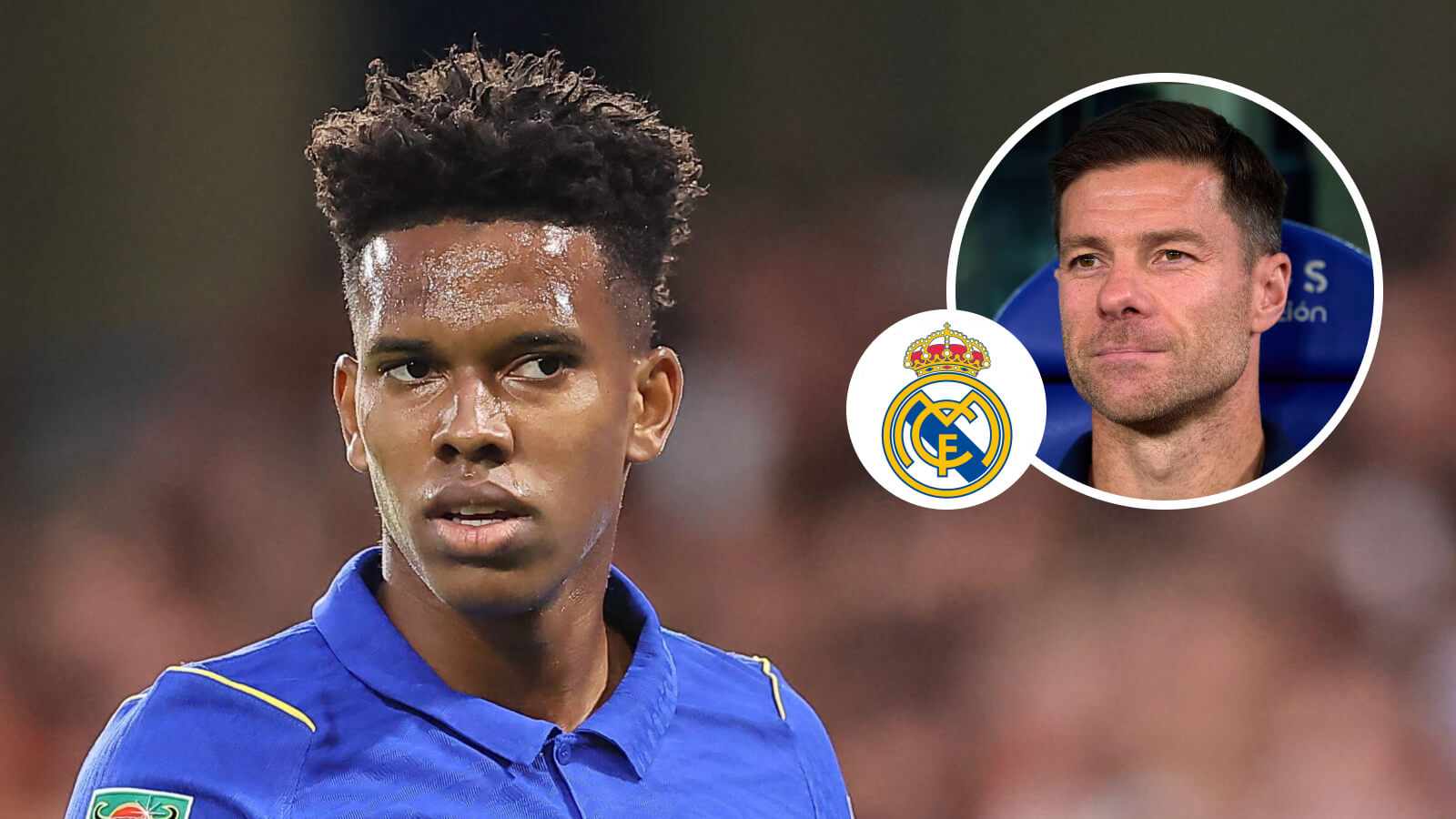
The summer transfer window is barely a month old, yet Manchester United's recruitment department is already operating in its default state of panic. Having watched their primary midfield targets slide through their fingers, the hierarchy at Old Trafford has turned their attention to Chelsea's surplus stock. The target is Andrey Santos, the 22-year-old Brazilian midfielder who spent his developmental years out on loan.
According to a report by The Guardian, United have prioritized Santos after missing out on both Elliot Anderson and Mateus Fernandes. Anderson opted for Manchester City, while Tottenham paid a staggering £85m to secure Fernandes from West Ham. Left with a gaping hole in their double-pivot, United find themselves looking at a player Chelsea value at £50m.
It is a familiar script. Chelsea need to generate funds to finance Xabi Alonso’s squad rebuild, and United are once again volunteering to act as the primary funding mechanism. Newcastle are also sniffing around the young Brazilian, but United's need is far more immediate.
The Tactical Anatomy of Andrey Santos
To understand why United are willing to meet Chelsea's steep valuation, you have to look at Santos’s profile. He is the classic hybrid midfielder, comfortable playing as a deep-lying number six or pushing forward as a box-to-box number eight. During his loan spells in Ligue 1 with Strasbourg, Santos demonstrated a rare knack for late runs into the box.
His return of 11 goals across his spells in France shows an attacking instinct that United's current midfield desperately lacks. He does not just sit and shield; he drives forward with the ball. His physical profile allows him to withstand the heavy pressing that defined United's tactical collapses last season.
In possession, Santos is a proactive progressor. He averages 5.8 progressive passes per ninety minutes, looking for vertical lines rather than safe sideways circulation. This verticality is exactly what United need to transition from defense to attack without relying entirely on individual brilliance.
However, there are defensive concerns. In France, Santos often operated in a midfield three where he had dedicated cover behind him. In a transition-heavy league like the Premier League, his tendency to vacate his zone could expose United's already fragile center-backs.
His defensive duel success rate of 52% in Ligue 1 is respectable, but it declines when he is isolated in wide areas. United's defensive structure frequently leaves their midfielders marooned. If Santos is expected to sweep up counter-attacks alone, his aggressive positioning will become a liability.
Comparing the Failed Targets
The pursuit of Santos only makes sense when contrasted with the players United failed to sign. Elliot Anderson offered a Premier League-proven engine. His work rate under pressure at Newcastle and Nottingham Forest made him a low-risk option. Manchester City recognized this, snapping him up to bolster their squad rotation.
Mateus Fernandes was the high-ceiling option. Despite West Ham’s relegation, Fernandes stood out, registering 3 goals and 4 assists while earning a Young Player of the Season nomination. Tottenham’s record fee showed how highly they valued his ball-carrying capability.
Santos is a different profile. He is less refined than Fernandes and has less Premier League experience than Anderson. Yet United are prepared to pay a similar premium, highlighting a clear lack of tactical consistency in their scouting database.
Chelsea's PSR Hustle and the Alonso Rebuild
Chelsea’s stance in these negotiations is driven by balance sheet pressure. Under Xabi Alonso, the club is attempting to transition toward a structured, possession-heavy style of play. This tactical shift requires specific profiles, and Alonso has made it clear that he needs additions in key areas.
To buy, Chelsea must sell. Offloading an academy graduate or a young player signed for a modest fee represents pure profit on the books. Santos was signed from Vasco da Gama for a fraction of his current valuation, meaning a sale now would represent a massive boost to their compliance under Profit and Sustainability Rules.
Chelsea know that Manchester United are desperate. By slapping a £50m price tag on a player who has yet to establish himself as a regular starter at Stamford Bridge, Chelsea are testing United’s resolve. It is a high-stakes game of poker, but Chelsea hold the better hand.
Newcastle’s involvement complicates the picture. Eddie Howe is looking to add dynamism to his midfield, and Santos fits the high-energy pressing system Newcastle deploy. However, Newcastle are also mindful of their own financial limits, meaning they are unlikely to enter a bidding war.
As The Guardian reported, Chelsea's valuation remains firm because they know the market is short on quality midfielders. They are using United's desperation to fund Alonso's targets elsewhere. It is a cynical but effective way to run a football club.
Manchester United's Chain of Failures
The fact that United are negotiating for Santos is a damning indictment of their summer strategy. Missing out on Elliot Anderson was a blow, but allowing Tottenham to sweep in for Mateus Fernandes was a failure of planning. Fernandes's move to North London showed that Tottenham had a clear plan, while United merely had a list of names.
United's midfield recruitment has been erratic for half a decade. They swing between aging superstars on massive wages and young prospects who are not ready for the pressure of Old Trafford. Santos sits somewhere in the middle: young, talented, but carrying a price tag that demands instant performance.
If United pay the full £50m, they are repeating the mistakes of the past. They are paying a premium for potential while solving a problem that should have been addressed months ago. Santos is a fine player, but he is not a finished product who can single-handedly fix a broken midfield.
There is also the question of manager fit. The current setup at Old Trafford demands a midfielder who can cover vast swathes of grass alone. Santos has the energy, but his tactical discipline is still raw. Asking him to play the single-pivot role would be a recipe for disaster.
In possession, United's build-up is notoriously disjointed. They often struggle to play through the first line of press, resorting to long balls from the goalkeeper. Santos is comfortable receiving the ball under pressure, but he cannot solve the structural spacing issues that plague the team.
Without clear patterns of play, Santos will be forced to improvise. This is where his young career could stall. United's environment has swallowed up more experienced midfielders than him, and £50m is a heavy weight to carry for a 22-year-old.
The Prediction: Who Blinks First?
The deal will ultimately come down to structure. United cannot afford to pay £50m up front without sales of their own. Chelsea, however, want guaranteed cash to hand over to Alonso for his targets.
Newcastle will likely drop out of the running once the bidding surpasses £40m. That leaves United alone at the negotiating table, facing a Chelsea board that knows exactly how to extract value from their rivals.
Ultimately, United will pay. They will agree to a package worth £48m, structured with heavy add-ons, because the alternative is entering the new campaign with the same midfield that collapsed last year. Santos will arrive at Old Trafford with immense pressure on his shoulders, tasked with fixing a mess he did not create.
Read Next
- Arsenal are about to make the £140m midfield gamble that defines their future
- Everton spending £25m on Chelsea's latest academy sacrifice is pure madness
- Ruben Amorim is already reshaping AC Milan through hands-on recruitment
- Aston Villa are triggering absolute chaos in the summer transfer window
- 🇱🇷 Brasileirão Série A 2026 — Flamengo, Palmeiras & Brazil WC2026 Hub