
Liam Rosenior's move to Paris FC is a fascinating tactical gamble
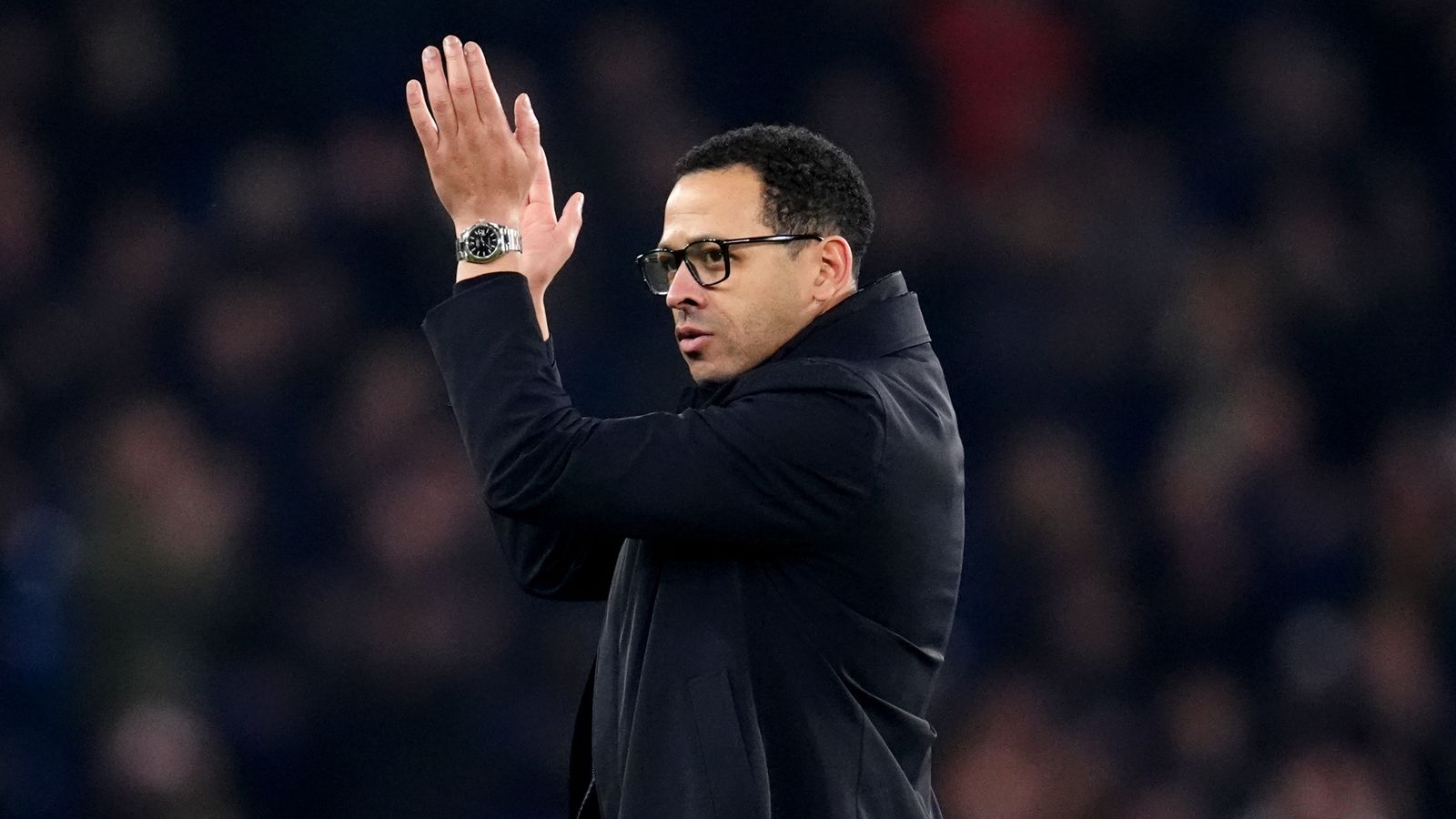
The Stamford Bridge Post-Mortem
Five consecutive league defeats without scoring a single goal is a record that stays with a manager. For Liam Rosenior, that 114-year low-water mark defined his brief, turbulent tenure at Chelsea.
Dismissed on April 22, 2026, after just 106 days in charge, the 41-year-old was widely seen as a victim of the chaotic BlueCo multi-club model. But a cold look at the tactical ledger reveals a different story.
The initial phase of Rosenior's Stamford Bridge tenure was deceptively positive. Chelsea won six of their first seven matches under his guidance, playing a patient, slow-tempo possession game. During this early run, his side averaged 64.2 percent possession, suffocating lower-block opponents by circulating the ball across the backline.
The underlying numbers, however, warned of trouble. Chelsea's expected goals (xG) per shot during this winning streak was a meager 0.08. This indicated a team reliant on low-probability opportunities and defensive errors rather than clean chance creation.
The warning signs were ignored. The collapse was sudden. Opponents quickly realized that Rosenior's possession structure was highly predictable.
In his preferred 3-2-2-3 build-up shape, the double pivot was instructed to stay deep, often dropping inside their own box to invite pressure. When elite pressing sides triggered their traps, Chelsea had no escape route.
The tipping point arrived on March 14 against Arsenal. Chelsea's build-up was dismantled in the 14th minute. A lazy lateral pass from the deep pivot was intercepted, leading to a tap-in and setting the template for the weekly defeats that followed.
By the time Rosenior was dismissed, the team's confidence was shattered. The final five games of his tenure yielded zero goals from an accumulated 2.4 xG. His refusal to introduce a more direct outlet or alter his build-up patterns under pressure was a major management failure.
Now, less than three months after his London sacking, Rosenior has signed a two-year contract in the French capital. His appointment at Paris FC, as Sky Sports reported, represents one of the most intriguing tactical experiments in European football this summer. It is a high-wire act.
The Mechanics of Tactical Rigidity
To understand why Rosenior failed at Chelsea, one must examine his build-up mechanics. He demands absolute adherence to positional play, requiring his players to maintain specific zones to create passing angles.
At Hull City, this approach worked because Championship opponents often dropped into mid-blocks, allowing his defenders time on the ball. In the Premier League, the speed of defensive transitions exposed this slow circulation.
The results were damning. In his deep build-up phases, Rosenior employs a box midfield. The two center-backs split wide, the goalkeeper acts as a third defender, and the two defensive midfielders form the base of the box.
The distance between these players is kept under twelve yards to facilitate short, rapid passes. The goal is to draw the opponent's midfield press forward. This is designed to create space behind them for the advanced midfielders.
Against teams that press with a front three, however, this box structure becomes a trap. During the 2-0 defeat to Aston Villa on April 4, Unai Emery's side used a narrow front three to block the passing lanes to Chelsea's pivot.
This forced Chelsea's center-backs to circulate the ball laterally, showing no vertical ambition. The pass completion rate between the two center-backs reached a staggering 42 percent of the team's total completed passes.
Chelsea spent 90 minutes passing the ball to each other in their own defensive third. They registered just one shot on target.
Rosenior's insistence on playing through the center, even when the opponent had numerically choked the space, was his undoing. He refused to bend.
This tactical stubbornness extended to his defensive transition. When possession was lost, Rosenior demanded his team counter-press immediately, pushing his full-backs high up the pitch. This was a gamble.
Without a dominant defensive midfielder to sweep up second balls, Chelsea were repeatedly exposed on the counter-attack. Opponents exploited the space behind the advanced full-backs, turning defensive transitions into direct running channels.
They repeatedly targeted the center-backs. The Chelsea hierarchy was left disappointed by the lack of defensive structure, especially during talks over Malo Gusto's transfer, as TEAMtalk reported.
The Paris FC Style Clash
At Paris FC, Rosenior replaces Antoine Kombouaré. Their tactical philosophies could not be more different. Kombouaré is a pragmatist who values defensive solidity, verticality, and physical duels.
Under his leadership last season, Paris FC played a direct 4-4-2, averaging just 43.1 percent possession. They relied on a low defensive block and rapid counter-attacks led by direct wingers.
Now, this squad must undergo a complete style change. The squad Rosenior inherits is built for defensive resistance, not patient build-up. The center-backs are comfortable defending inside their own box but lack the passing range required to execute a deep build-up under pressure.
Forcing these defenders to split wide and play short passes inside their own penalty area is a recipe for disaster. The transition from Kombouaré's low-risk clearance model to Rosenior's high-risk possession system will require significant training ground adaptation. The margin for error is razor-thin.
Ligue 1 is a league characterized by athletic, high-pressing mid-tables. Teams like Brest and Lens excel at disrupting build-up play. They use aggressive man-marking schemes in the middle third.
If Rosenior attempts to implement his rigid box midfield without adjusting to the physical profile of French midfields, Paris FC will find themselves in a relegation battle. He must show a level of tactical flexibility that was entirely absent during his time at Chelsea.
There is also the question of squad morale. Rebuilding a team's confidence after a stylistic pivot is a difficult task. The players must believe in the manager's ideals, even when early mistakes lead to conceded goals.
In Paris, the media spotlight is intense. The margin for error is slim. Rosenior will not have the luxury of a long transition period.
The board expects immediate progress, even as domestic rivals bolster their squads, as Metro reported on other European developments. The stakes are immense.
The Ilan Kebbal Conundrum
The success of Rosenior's project in Paris will largely depend on how he utilizes Ilan Kebbal. The 27-year-old playmaker was the standout performer under Kombouaré, operating as a free-roaming number ten.
Kebbal is a creative spark, excelling at carrying the ball forward and finding space between the lines. His game is based on intuition, movement, and freedom.
Rosenior's positional play, however, demands strict discipline. In Rosenior's system, the advanced midfielders must occupy specific half-spaces, acting as reference points for the build-up.
They are not allowed to wander across the pitch to find the ball. This restriction could neutralize Kebbal's greatest strengths. If the Algerian international is forced to stay in a fixed zone, waiting for the ball to arrive through slow build-up phases, his impact on the game will be severely diminished.
During the 2025/2026 campaign, Kebbal averaged 4.2 shot-creating actions per 90 minutes. Most of these originated from his lateral drifts to the right flank. Under Rosenior's rigid positioning, these drifts will be restricted to protect the team's defensive structure.
Rosenior must find a compromise. He must allow Kebbal the freedom to roam in the attacking third while maintaining the structural discipline required behind him. Otherwise, the attack will stall.
If Kebbal is forced to conform to a rigid positional template, the friction will be immediate. We saw a similar dynamic at Chelsea with Cole Palmer. Palmer's creative output declined when Rosenior restricted his movement to the right half-space.
Palmer's pass completion rate dropped, and his dribble success rate fell to 38 percent as he was repeatedly forced into crowded central areas. Rosenior must learn from this mistake.
He must allow his best creative asset the space to create. Forcing creative talents into a tactical straitjacket is a recipe for stagnation. The Parisian fans will not tolerate boring possession football that yields no goals.
The High-Wire Act in Ligue 1
Paris FC represents a fascinating project. Under their ambitious ownership, the club wants to challenge Paris Saint-Germain's monopoly in the capital. They have invested in their academy and want to build a sustainable, modern club.
Rosenior's appointment is a clear statement of intent. The board wants to play an attractive, possession-based style that attracts fans and sponsors. But style without substance is useless.
Success in Ligue 1 requires defensive stability. Last season, the teams that finished in the top four conceded an average of just 32 goals across the campaign. Rosenior's teams have historically struggled to keep clean sheets.
They often concede cheap goals due to build-up errors. If Paris FC are to challenge for European spots, Rosenior must prioritize defensive organization, particularly during defensive transitions. The open spaces of Ligue 1 can be unforgiving.
The opening month of the season will be vital. Paris FC face a difficult start, with fixtures against Marseille and Monaco in their first four games. These matches will provide an immediate test of Rosenior's build-up patterns.
If his defenders commit costly errors under pressure, the pressure on the manager will mount quickly. The Parisian crowd is not known for its patience. The memory of the Chelsea disaster will hover over every mistake.
Liam Rosenior is a talented young coach with clear ideas. His dedication to possession football is admirable, but his rigidity has been his downfall.
In France, away from the chaotic pressure of Stamford Bridge, he has a chance to rebuild his reputation. To succeed, he must show that he has learned from his failures in London. He must adapt his system to the players at his disposal.
He must prove that he is a manager, not a dogmatist. The notebook is open. The clock is ticking.
Icon Sports Real Madrid CF Reversible Woven Scarf
A classic matchday essential for showing your club pride.
Frequently Asked Questions
Why did Liam Rosenior get fired from Chelsea?
When was Liam Rosenior dismissed by Chelsea?
What build-up formation does Liam Rosenior prefer?
How did opponents exploit Chelsea's tactics under Rosenior?
What French club did Liam Rosenior join after leaving Chelsea?
More Coverage
Why Marie-Louise Eta's 4-3-3 shift is working at Union Berlin
20 hours ago
Why Martin Odegaard and Premier League Stars Are Obsessed With VR
20 hours ago
Arsenal's crisis deepens while London City redefine WSL pressing
1 day, 20 hours ago
London City's Spurs blowout and Chelsea's win set a fiery WSL pace
2 days, 16 hours ago
Frenkie de Jong's return gives Xavi the ultimate Dutch tactical engine
3 days, 5 hours ago
Zidane's France debut exposed structural issues talent cannot fix
4 days, 10 hours agoMore Analysis
Why Marie-Louise Eta's 4-3-3 shift is working at Union Berlin
20 hours ago
Why Martin Odegaard and Premier League Stars Are Obsessed With VR
20 hours ago
Arsenal's crisis deepens while London City redefine WSL pressing
1 day, 20 hours ago
London City's Spurs blowout and Chelsea's win set a fiery WSL pace
2 days, 16 hours ago
Frenkie de Jong's return gives Xavi the ultimate Dutch tactical engine
3 days, 5 hours ago