Mbappé undergoes medical evaluation after bruising session
France captain Kylian Mbappé is currently undergoing a rigorous assessment of his lateral ankle ligaments following a training ground collision in Dallas. The French camp confirms the forward was forced to exit practice early on July 13th, leaving his status for the upcoming World Cup semi-final against Spain in immediate jeopardy.
Team medical staff confirmed the injury occurred during a transition drill centered on high-intensity acceleration. While sources inside the dressing room suggest the initial scan revealed no structural tearing, the inflammation levels remain high 48 hours out from kickoff. France has officially categorized his participation as a 50 percent probability.
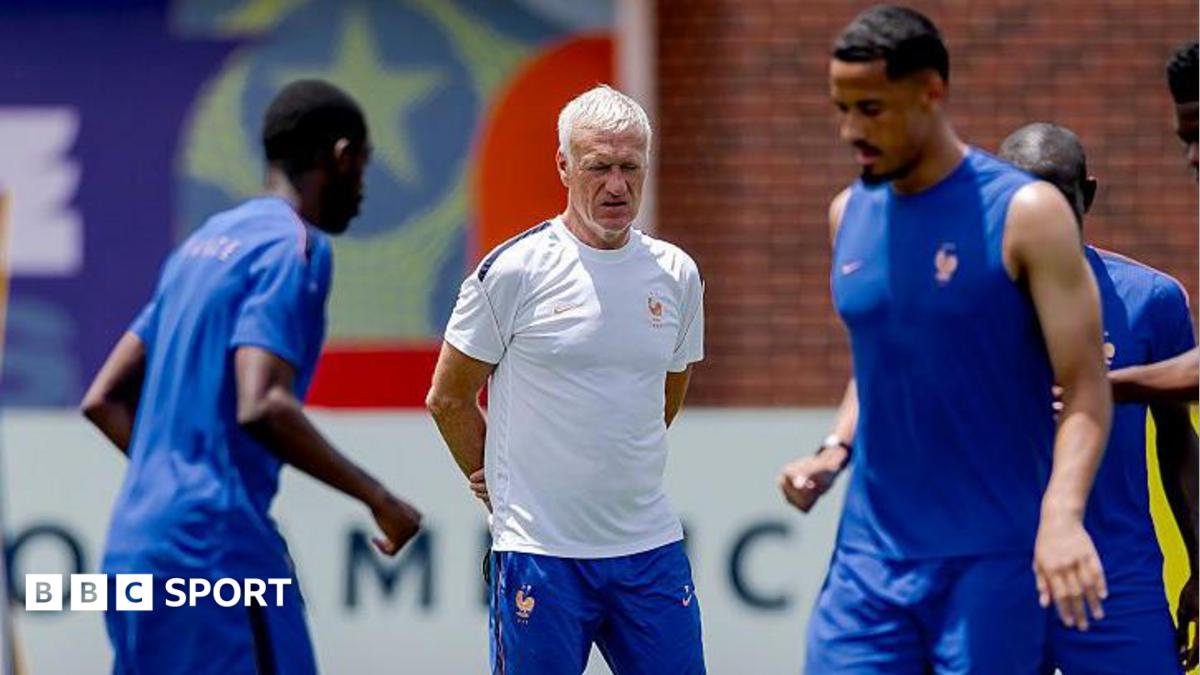
Didier Deschamps remains calm in public, framing the coming match as a spectacle regardless of individual personnel. As the BBC reported, the manager expects a massive battle in Texas. Privately, however, the coaching staff is exploring tactical alternatives that do not rely on Mbappé’s vertical speed.
The tactical ripple effect of a forced absence
Losing the captain for a semi-final against a technically proficient Spanish side forces a complete re-adjustment of the French attacking plan. Without Mbappé, Deschamps loses the primary outlet for counter-attacking football, a weapon that has been essential throughout this tournament. The shift would require Ousmane Dembélé to rotate into a more central role, likely forcing Randal Kolo Muani into a starting spot he hasn't occupied in high-stakes knockout games.
Recent history suggests caution is the primary driver for medical staff. Mbappé previously managed a similar ankle impingement during the 2024 season, which resulted in a 14-day layoff to avoid long-term ligament damage. If the French staff elects to push him through the pain barrier via corticosteroid injections, they risk a repeat of the 2024 setback that severely hampered his agility for three months post-tournament.
Spain will undoubtedly look to test the mobility of the French defensive line if they sense Mbappé is restricted. Luis de la Fuente’s squad excels in ball possession and controlled tempo, which will force a weakened French unit to defend deeper for longer periods. This is a strategic danger zone for a team that relies on fresh legs to break through mid-block defenses after the 70th minute.
Historical precedent and the risk of recurring injuries
Modern sports science has moved away from the 'tough it out' mentality seen in decades past. Professional clubs now prioritize long-term recovery cycles over single-match availability. The pressure of a World Cup semi-final complicates this calculus significantly, as the gravity of a tournament final often clouds the judgment of even the best medical directors.
Previous data from World Cup semi-final absences shows a stark drop-off in attacking efficiency for teams deprived of their marquee playmaker. In 2022, the absence of key creative pieces led to negative goal differentials in three out of four semi-final matches. If Mbappé is relegated to the bench, the burden of creation lands squarely on Antoine Griezmann, who has already logged significant minutes in this climate.
The coaching staff must decide if a 75 percent fit Mbappé is more dangerous than a 100 percent fit sub who understands the rhythm of the game. History suggests that high-velocity players struggling with ankle stability often result in poor finishing, as the subconscious fear of reinjury restricts the plant foot during the shooting motion. Watching for a lack of explosiveness in the opening exchanges will be the primary indicator of his true health.
Ultimately, France remains a deep squad, but depth is rarely a substitute for elite-level production in a tournament semifinal. The decision likely won't be made until the final tactical walkthrough on match day. Until then, fans are left to speculate on whether they will see their primary star on the pitch or clutching an ice pack on the sidelines.
Read Next
- France vs Spain is the World Cup semi-final rivalry we deserve
- France and Spain collide with old ghosts in the World Cup semi-final
- France versus Spain is a tactical chess match destined for extra time
- Top 10: Most Defining Moments of the 2026 World Cup
- 🇫🇷 France World Cup 2026 — Les Bleus Hub
- 🇪🇸 Spain World Cup 2026 — La Roja Hub
- ⚽ La Liga 2025-26 — Title Race Hub