In March 1982, Ken Bates purchased Chelsea Football Club for a single nominal pound coin. When Roman Abramovich bought the club twenty-one years later in June 2003, the enterprise value was calculated at £140 million. That represents a raw asset appreciation of fourteen million percent, a return on investment that has become the founding myth of modern Chelsea.
Yet that astronomical valuation was a mask. Underneath lay a club that was less than a month away from administration, choked by a debt-to-revenue ratio of 181%.
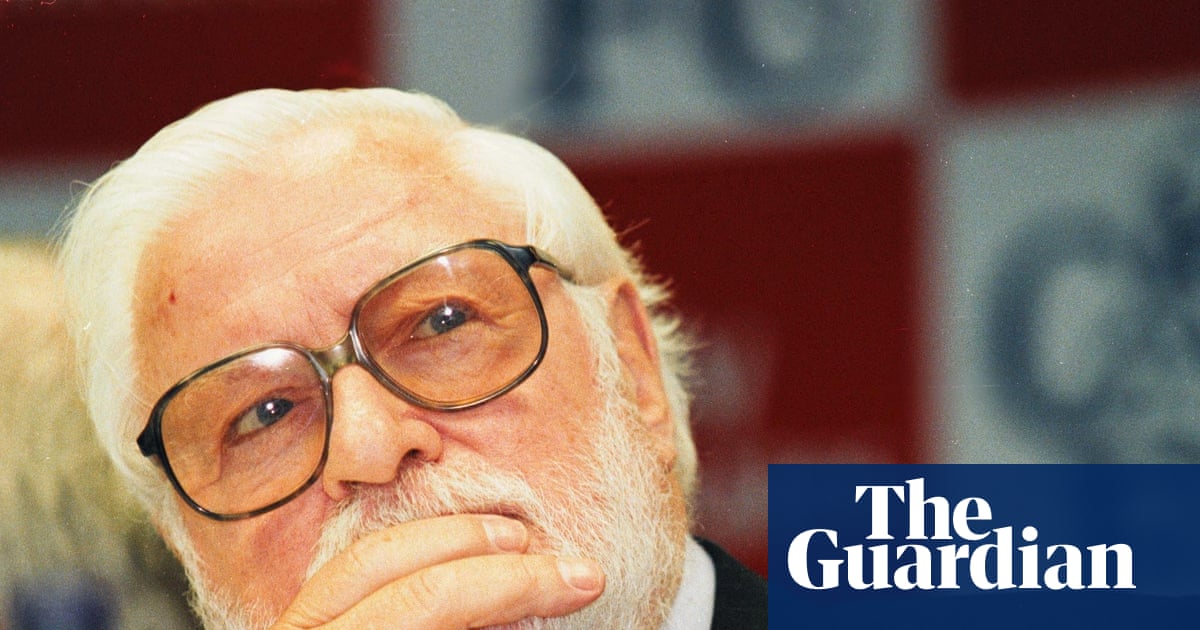
As The Guardian reported today following his death at age 94, Bates was a polarizing titan of the English game. He did not build Chelsea through traditional sporting growth.
Instead, he pioneered a high-risk, property-first model. This model saved Chelsea in London but later decimated Leeds United in Yorkshire. The trajectory of both clubs shows the limits of using real estate development to finance football ambition.
The £1 purchase that launched a property empire
When Bates arrived at Stamford Bridge in 1982, the club was losing £12,000 every week. The stadium itself was a crumbling relic, and the freehold was owned by property developers Marler Estates. The average attendance in the 1982-83 Division Two campaign had fallen to just 12,961.
A low point occurred against Leyton Orient, where only 6,009 fans watched the match. Bates recognized that the club's survival depended entirely on securing its real estate. He spent ten years in a bitter court war to reclaim the freehold from David Bulstrode's property company.
In 1992, he succeeded when Marler Estates went bankrupt during the UK property market crash. This victory allowed him to consolidate Chelsea's physical assets under a new holding company, Chelsea Village PLC.
The football club was no longer just a sporting team. It was now a real estate developer with a pitch in the middle. The commercial assets became the primary driver of club valuation.
The financial engineering of Chelsea Village
To fund the transformation of Stamford Bridge, Bates avoided standard bank loans. In 1997, Chelsea Village issued a 9% Eurobond to raise £75 million. This was a long-term loan structured to be repaid in 2007.
The money built two hotels, restaurants, apartments, and the modern stands we see today. But the interest payments alone cost the club £6.75 million every year. By 2003, Chelsea's annual revenue was only £44.3 million.
The interest on the bond devoured fifteen percent of their total income. Player wages had soared to £55 million, outstripping the club's entire turnover by 124%.
Chelsea had a glamorous stadium and a squad featuring Gianfranco Zola, but they were running out of cash. Without Abramovich's arrival in July 2003 to clear the debt, Chelsea would have collapsed under the weight of the Eurobond. The property empire had become a debt trap.
Sporting growth under financial strain
The sporting results under Bates were highly volatile but showed clear upward momentum. Chelsea ended a twenty-six year trophy drought by winning the FA Cup in 1997. They followed this with a League Cup and a European Cup Winners' Cup in 1998, plus another FA Cup in 2000.
Their league finishes reflected this progress. The club moved from 11th in 1995-96, to 6th in 1996-97, 4th in 1997-98, and 3rd in 1998-99. They dipped to 5th in 1999-00, and recorded consecutive 6th place finishes in 2001 and 2002.
The pivotal moment came on May 11, 2003, against Liverpool. Chelsea won 2-1 on the final day of the season with goals from Marcel Desailly and Jesper Grønkjær.
This secured 4th place and Champions League qualification, worth an estimated £20 million in revenue. This single match made the club attractive enough for Abramovich's buyout.
The Leeds United debacle and the limits of the model
In January 2005, Bates acquired a fifty percent stake in Leeds United for around £10 million. Leeds were in financial ruin after their Champions League semi-final chase collapsed. Bates attempted to replicate his Chelsea strategy in West Yorkshire.
He wanted to buy back Elland Road and the Thorp Arch training ground. Both had been sold by the previous board to stay afloat. But the economic reality of the Championship was different from the Premier League.
Leeds could not generate the luxury real estate revenues of west London. Without those revenues, the debt became unmanageable. The club struggled to balance the books.
By 2007, the financial strain reached a breaking point. The lack of top-flight television money exposed the weakness of the model when applied to a club outside the elite division.
Entering administration and the 15-point penalty
In May 2007, Leeds United entered administration with debts of £35 million. This resulted in automatic relegation to League One, the third tier of English football. To exit administration, Bates proposed a Creditors Voluntary Agreement offering just one penny in the pound.
Her Majesty's Revenue and Customs, owed £7.7 million, rejected this offer. In response, the Football League imposed a historic 15-point penalty for the 2007-08 season. Leeds fans were furious, and protests at Elland Road became a regular fixture.
The club was trapped in the third division, stripped of its assets, and burdened by Bates' legal battles. The property-first model had turned into an asset-stripping nightmare. Under Bates, the club's priority was no longer the pitch.
The post-Premier League reality check
The stark difference between Bates' Chelsea and Leeds eras is shown in the transfer market numbers. Between 1996 and 2003, Chelsea spent a net £47 million on players. At Leeds, Bates recorded a net transfer profit of £18 million between 2005 and 2012.
He sold stars like Fabian Delph to Aston Villa for £6 million in 2009. Max Gradel was sold to Saint-Etienne in 2011 for £3 million.
Jonny Howson was sold to Norwich City in 2012 for £2 million. Kasper Schmeichel was sold to Leicester City in 2011 for £1.25 million. Robert Snodgrass was also sold to Norwich in 2012 for £3 million.
Despite the talent drain, the fans remained loyal. In the 2007-08 League One season, Leeds averaged 26,546 fans at Elland Road, the highest in the division.
The club finally won promotion back to the Championship in the 2009-10 season, finishing second with 88 points under Simon Grayson. Yet the rent for Elland Road and Thorp Arch remained a massive burden. Leeds paid £1.2 million per year for the stadium and £300,000 for the training ground.
The rent increased by 3% annually under the lease agreements. This drain prevented Leeds from building a squad capable of returning to the Premier League. When Bates sold the club to GFH Capital in December 2012 for £22 million, Leeds was sporting-wise stagnant and financially depleted.
A legacy written in concrete and debt
Bates leaves behind a complex statistical legacy. Chelsea survived the property developers to become a global force. Leeds spent fifteen years recovering from his ownership.
His approach proved that real estate can save a club, but only if the television revenue is high enough to cover the interest payments. Chelsea had the Premier League boom to rescue them. Leeds had only the harsh economics of the lower leagues.
Bates' career showed the dangerous line between visionary property development and financial ruin. His passing marks the end of an era where a single chairman could dominate a club's identity through bricks, mortar, and litigation.
Read Next
- Chelsea are already dumping Garnacho and the internet is losing it
- Chelsea's Garnacho gamble has imploded in record time
- Manchester United shift gears after the Ederson transfer collapse
- Leeds are burning the candle at both ends with this transfer strategy
- 🏟 EFL Championship 2025-26 — Promotion Race & Play-Off Final Hub