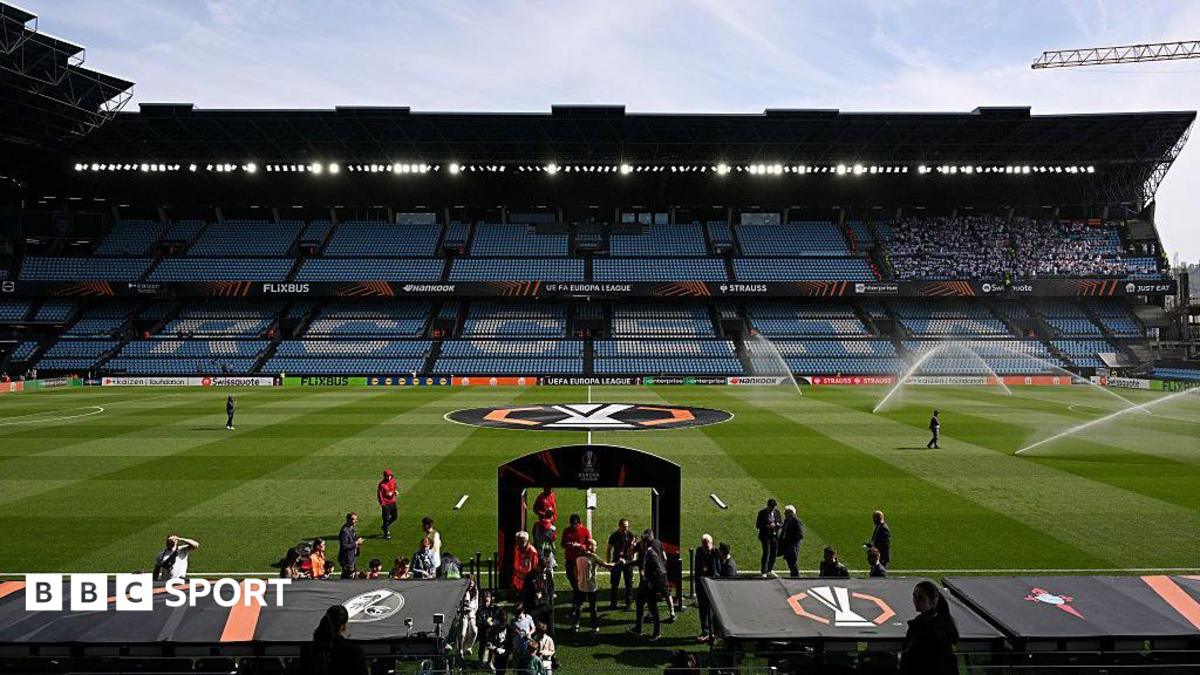
Galician Heat and Lawn Spores Destroy Week One
Opening weekend in Spanish football usually brings optimism, fresh kit designs, and high-stakes drama. Celta Vigo fans were ready to pack Abanca Balaidos on Sunday night for their 2026-27 La Liga opener against Osasuna. Instead, they face an empty stadium and a ruined pitch.
The fixture scheduled for Sunday at 20:30 BST is officially off. La Liga inspectors stepped onto the surface at Estadio de Balaidos on Wednesday and discovered a severe fungal outbreak. The grass was declared entirely unfit for professional play.
The match has now been rescheduled for Thursday, 27 August at 19:30 BST. Celta had previously requested the postponement as groundsmen struggled to contain the rot. It marks a bizarre start to a season already battling calendar strain.
Nature dealt a bad hand to Vigo over the summer. A scorching heatwave pushed local temperatures to a peak of 36C at the end of July. That brutal spike was followed by two straight weeks of mid to high 20s.
High heat combined with trapped moisture created ideal breeding grounds for turf disease. Root systems weak from summer humidity succumbed quickly to fungal spores. Within days, green grass turned into a patchy, unplayable mess.
A Clean Inspection That Fell Apart in Six Days
What makes this breakdown infuriating for supporters is how quickly official assurances vaporized. Just last week, La Liga inspectors visited Balaidos to check the turf. They inspected previous treatments and certified that the surface met every safety parameter for competition.
Six days later, the turf had effectively collapsed. As detailed in reporting from BBC Sport, Celta released an official statement confirming the league's emergency intervention:
"La Liga agreed this morning, in coordination with the clubs and the RFEF, to postpone the match that was scheduled to face Celta and CA Osasuna this coming Sunday at Abanca Balaidos due to a disease that has affected the stadium's turf, which is currently unfit for football."
The club tried to explain how a certified surface decayed so fast. They pointed directly to the sudden weather shift over the previous few days:
"Last week, La Liga conducted a technical inspection in which the work done to eradicate the disease affecting the turf was validated, and it was certified that the field met the required quality and safety parameters for sports play. The weather conditions of the past few days have had an adverse effect on the good progress of the field and led to the decision to postpone the match."
Passing an inspection on Monday only to surrender to mold by Wednesday exposes serious flaws in pitch protocol. Technical checks mean very little if a turf management system cannot survive a standard Galician summer fortnight. Modern hybrid pitches require delicate care, but losing total control of the root zone in August is unacceptable.
When disease takes hold of root soil, surface treatments act as temporary fixes. Once warm weather locks in moisture, fungal threads spread beneath the surface unnoticed until grass blades die off in patches. Celta's grounds crew was essentially fighting an invisible fire that ignited when temperatures rose.
Ten Years of Construction and Still No Usable Pitch
The irony hanging over Balaidos is impossible to ignore. Estadio de Balaidos has been undergoing massive renovation work for more than ten years. Local authorities and club executives have spent a decade rebuilding stands, upgrading VIP areas, and modernizing concourses.
The main goal of this extended redevelopment is expanding stadium capacity to between 40,000 and 44,000 seats. Spain is set to co-host the 2030 World Cup alongside Portugal and Morocco. Balaidos is designated as one of Spain's 11 host venues for the tournament.
Yet here stands a club preparing to host global football in four years while failing to maintain grass for an August league fixture. You can build corporate boxes, install modern turnstiles, and craft slick promotional videos for FIFA. None of that matters if 22 players cannot run across the center circle without slipping on mold.
This situation highlights a fundamental flaw in modern club priorities. Executive boards get hyper-focused on concrete, real estate, and long-term hosting bids. Meanwhile, basic sports turf maintenance gets treated as an afterthought until game day arrives and the field rots.
Galicia is famous for its maritime climate, frequent rain, and summer humidity. A top-flight club operating in Vigo should possess state-of-the-art drainage and climate control sub-layers. Failing to protect against predictable local weather patterns points to operational negligence.
The Borja Iglesias Irony and La Liga Scheduling Chaos
Adding another layer of absurdity to this story is Celta's squad situation. Celta originally held a valid administrative loophole to postpone this fixture weeks ago. Striker Borja Iglesias represented Spain at the World Cup, which gave the club official grounds to request a schedule delay under league rules.
Celta explicitly turned down that option. Management insisted they were ready to play Osasuna on opening weekend. Passing up a legitimate international exemption only to get knocked out by grass fungus is pure sports comedy.
Furthermore, this match postponement turns La Liga's opening weekend into a fragmented mess. As official schedule updates show, three other fixtures were already yanked from the opening slate: Valencia vs Real Betis, Real Madrid vs Real Sociedad, and Barcelona vs Athletic Club.
Those matches were delayed because several key players featured in the World Cup final. Broadcast partners expecting a blockbuster opening round are left with a gutted schedule. Real Madrid, Barcelona, and Athletic Club are sitting out, while Sunday night's feature in Vigo was claimed by a mold spore outbreak.
For fans tuning in across the globe, this is an embarrassing broadcast product. La Liga spends millions marketing its brand as elite European entertainment. Launching a new campaign with four postponed fixtures and a ruined pitch sends a terrible signal to international viewers.
Travelling Fans Pay the Price for Turf Negligence
While neutrals laugh at the absurdity of grass mold cancelling games, match-going supporters face real financial loss. Football fans do not live inside league spreadsheets. They plan weekends around fixture lists, book train tickets, and reserve hotel rooms in advance.
Osasuna supporters were preparing for a long cross-country trip from Pamplona to Galicia. Receiving a postponement notice three days before kickoff leaves travelling fans stranded with non-refundable hotel bookings and useless transport tickets.
According to Celta Vigo's press release, the club offered apologies to everyone affected:
"Celta regrets any inconvenience this decision may cause to all fans who had already planned their day to support the team for this start of the season, and appreciates their understanding of this exceptional circumstance."
A polite apology from a media department does not cover hotel cancellation fees. Nor does it compensate fans who booked annual leave to travel across Northern Spain. When a club fails to maintain its playing surface, match-going supporters shoulder the cost.
Football governance routinely treats match-going supporters as captive consumers. Decisions get announced at the last minute with little regard for travel logistics. League authorities and clubs should establish compensation funds for ticket holders when games are postponed due to preventable turf failures.
Fourteen Days to Fix a Broken Playing Surface
The clock is now ticking for Celta's turf team. They have exactly two weeks to treat, recover, or completely re-lay the playing surface before Osasuna arrives for the rescheduled fixture on August 27. Eradicating a deep-rooted fungal infection in 14 days is an agronomic nightmare.
If fungal spores survive in the soil beneath the surface, fresh sod will catch the same disease the moment root lines touch the earth. Groundsmen must treat the underlying soil with targeted fungicides, balance moisture levels, and hope weather conditions stabilize.
If Balaidos fails another inspection prior to August 27, La Liga will face a nightmare scenario. In a World Cup season with an overburdened fixture list, postponing games twice is not viable. Celta would likely be forced to forfeit home advantage and play at a neutral venue.
Playing opening fixtures on neutral ground would be a humiliating blow for a club spending ten years on stadium upgrades. It serves as a stark reminder to every board of directors in football. Grand architecture looks impressive, but the game is still played on grass.
Read Next
- Trent Alexander-Arnold's fitness fight could define Real Madrid's season
- Chelsea prepare surprise swoop for Rayo Vallecano defender Pep Chavarria
- City's £120m Enzo chase puts Chelsea on a brutal 24-hour deadline
- Stop Laughing at Chelsea Because They Are Real Title Contenders Now
- ⚽ La Liga 2025-26 — Title Race Hub