The 18-Day Squeeze Facing Ruben Amorim
Seven matches in 18 days. That is the statistical wall waiting for Ruben Amorim when AC Milan return from the September international break on October 11 away at Sassuolo.
Fresh off a 3-0 victory over Lecce at San Siro that halted a worrying three-game winless streak, Milan sit unbeaten in Serie A with 11 points from 15. Yet the underlying numbers reveal a fragile operation running on thin margins.
Four of Milan's next five fixtures take place away from San Siro, with no more than three days between any two matches across Serie A and the Europa League. Having already dropped their opening home match in Europe to Benfica, Amorim cannot afford rotation that compromises tactical stability.
The Eight-Day Rest Calculation
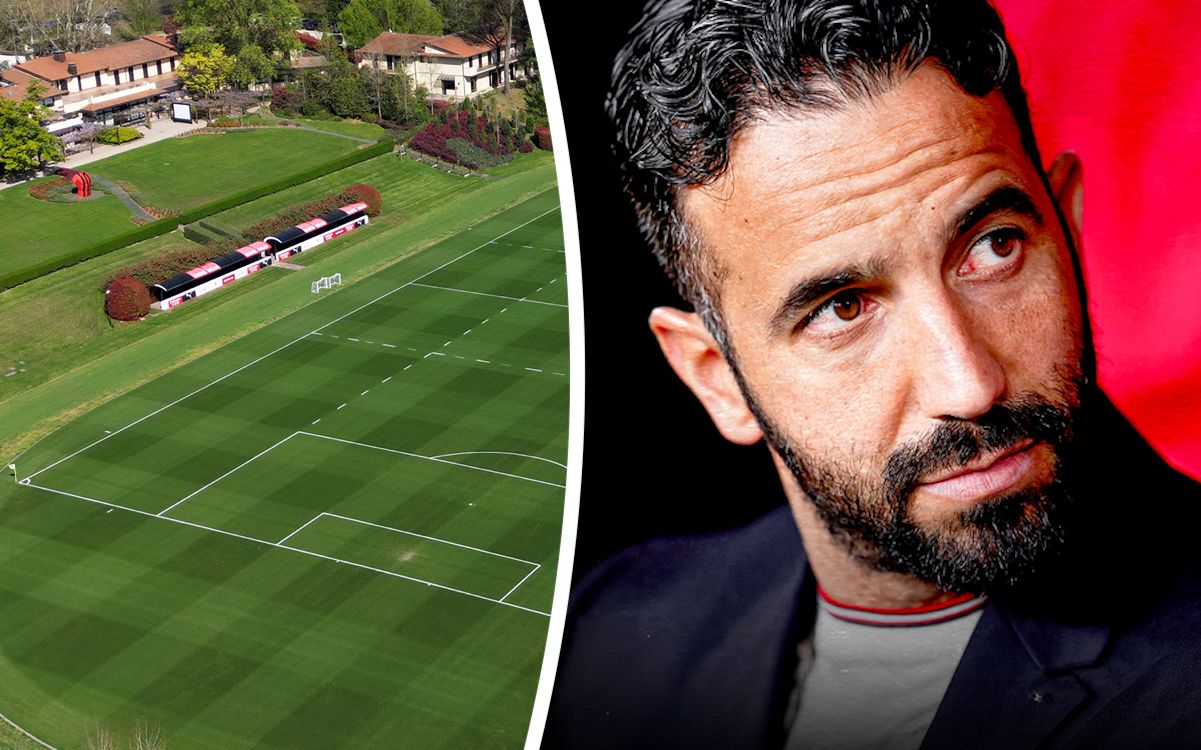
To combat impending fatigue, Amorim made a drastic calculation during the September international window. As reports in Italy confirmed, the manager granted non-international players an eight-day rest before resuming training at Milanello on Tuesday, September 29.
On paper, giving players eight days off during a tactical rebuild looks like administrative surrender. In practice, Amorim had little choice given the physical demands of modern international calendar alignment.
Fifteen Milan players were called up for senior or U21 national team duties across Europe. That left Amorim with a skeletal training group in Italy featuring Christian Pulisic, Matteo Gabbia, Mario Gila, Omari Hutchinson, and Ruben Loftus-Cheek, supplemented by Milan Futuro prospects like Christian Comotto.
The pause allows Pulisic valuable recovery time after missing Milan's first two fixtures while returning from injury. However, working on squad-wide tactical patterns becomes nearly impossible when fifteen starters are scattered across national team camps.
Workload Disparity and Pavlovic's Iron Man Burden
The core problem with Amorim’s setup is uneven minute distribution across his defensive unit. While Pulisic catches up on physical fitness, the defensive backbone has been run into the ground.
Strahinja Pavlovic and Koni De Winter stand as the only outfield players in the entire squad to not miss a single minute of action this season. Since arriving from Salzburg in the summer of 2024 for a net salary of €1.7 million, Pavlovic has adapted to four different managers, navigating systems under Paulo Fonseca, Sergio Conceiçao, Massimiliano Allegri, and now Amorim.
Negotiations are already underway to double Pavlovic’s salary to between €3 million and €3.5 million net per season on a deal running through 2031. Talks between club directors and agent Zvonimir Vukic reflect a shared commitment to keep the Serbian defender in Milano.
Pavlovic, who recently became a father to his son Tadija in April, turned down Premier League inquiries over the summer to remain at San Siro. Yet expecting any centre-back to sustain maximum physical intensity across seven condensed matches in 18 days without performance drop-off is a high-risk gamble.
The Youth Pathway Protection Strategy
Milan's board, led by Gerry Cardinale and RedBird, has adjusted its long-term financial strategy to secure youth talent before top European clubs intervene. Following the high-profile departure of Mattia Liberali, the club accelerated contract renewals across its developmental tier.
Defensive prospect Emanuele Borsani, born in 2008, recently signed his first professional contract to lock into the Milan Futuro structure. It is a proactive hedge designed to prevent talent drain.
Yet Milan Futuro teenagers cannot plug immediate tactical gaps when Serie A intensity ramps up in mid-October. Amorim will have to manage first-team energy reserves without a deep bench of proven senior replacements.
Arsenal's £280,000-a-Week Midfield Floor
While Milan manage squad preservation through rest periods, Arsenal are solving structural stability through massive capital investment. After spending over £200 million on summer additions, North London attention has shifted toward locking down core squad assets.
Declan Rice is set to sign a lucrative five-year contract extension, lifting his weekly salary to approximately £280,000 per week. Reports indicate details will be finalized during the September international window to extend his commitment well beyond his existing 2028 baseline.
The contract rewards Rice’s central role in ending Arsenal’s 22-year title drought last season following his £105 million transfer from West Ham in 2023. Rice established an elite physical presence in Mikel Arteta's engine room, anchoring the team through grueling title run-ins.
Inside the Arsenal Culture Standard
Former Arsenal midfielder Ray Parlour highlighted how Rice transformed the internal atmosphere at London Colney upon his arrival. According to Parlour, staff members consistently praise the midfielder's attitude both on and off the training ground.
I talk to a lot of the staff at Arsenal, who are still there from when I was a player, and the one person they always talk to me about is Declan Rice. They say he was a breath of fresh air when he came into the club; his standards are right up there in training, and off the field he’s great with everyone.
Parlour noted that Rice needed summer rest after looking fatigued during England's World Cup campaign. With a full pre-season behind him, Arsenal expect Rice to drive another championship push from deep midfield.
The Souness Critique: Midfielder or Emergency Centre-Back?
Despite Rice's status as England's top defensive midfielder, critical analysis of his positional heatmap reveals a polarizing tactical pattern. Pundit Graeme Souness delivered a sharp assessment on Football Uncensored, questioning whether Rice truly operates as a midfield playmaker.
How many times do you see him as the last man with the ball. In the build-up, he’s last man. He’s sitting between two centre-halves or between the centre-half and the full-back. He’s last man. A lot of the time, he doesn’t play in midfield. It’s old man’s football. It’s cheating.
Souness argued that while Rice excels at sniffing out danger, his habit of dropping deep between centre-backs slows down central progression. Instead of driving through lines, Rice often collects the ball under minimal opposition pressure and distributes sideways to full-backs.
This positional tendency creates a structural paradox for Arteta. Rice provides unmatched transition defense, but his preference for deep build-up can leave Arsenal's forward line isolated against compact low blocks.
Two Paths to Surviving European Fixture Density
The statistical reality facing elite European clubs in late September 2026 comes down to roster management and tactical preservation. Modern schedules leave virtually zero room for squad fatigue or structural missteps.
Amorim is taking a calculated risk by granting eight days of physical recovery before Milan face seven matches in 18 days. If Pavlovic or De Winter suffer physical burnout, Milan's 11-point Serie A foundation could erode quickly before November.
Arsenal, meanwhile, are paying £280,000 per week to ensure their defensive engine room remains intact for five years. Even as pundits debate Rice's deep build-up habits, Arteta knows that structural durability is the single most valuable metric in modern football.
Read Next
- Christian Pulisic is finally finding peace and purpose at AC Milan
- Ruben Amorim is benching half his squad to save AC Milan's season
- Declan Rice's mega deal shows Arsenal are all in on Arteta
- Mourinho brings printouts to presser after Real Madrid fall to Atletico
- ⭐ UCL 2026 — Champions League Quarter-Finals Hub