An Autopsy of the Queiroz Experiment
The short-term marriage between the Ghana Football Association and Carlos Queiroz was never built to last. When the Portuguese veteran took the reins in April 2026, his only mission was to patch over the defensive cracks left by Otto Addo. Yet, the moment Jhon Arias found the net in the fourteenth minute for Colombia, the structural limits of this team were laid bare.
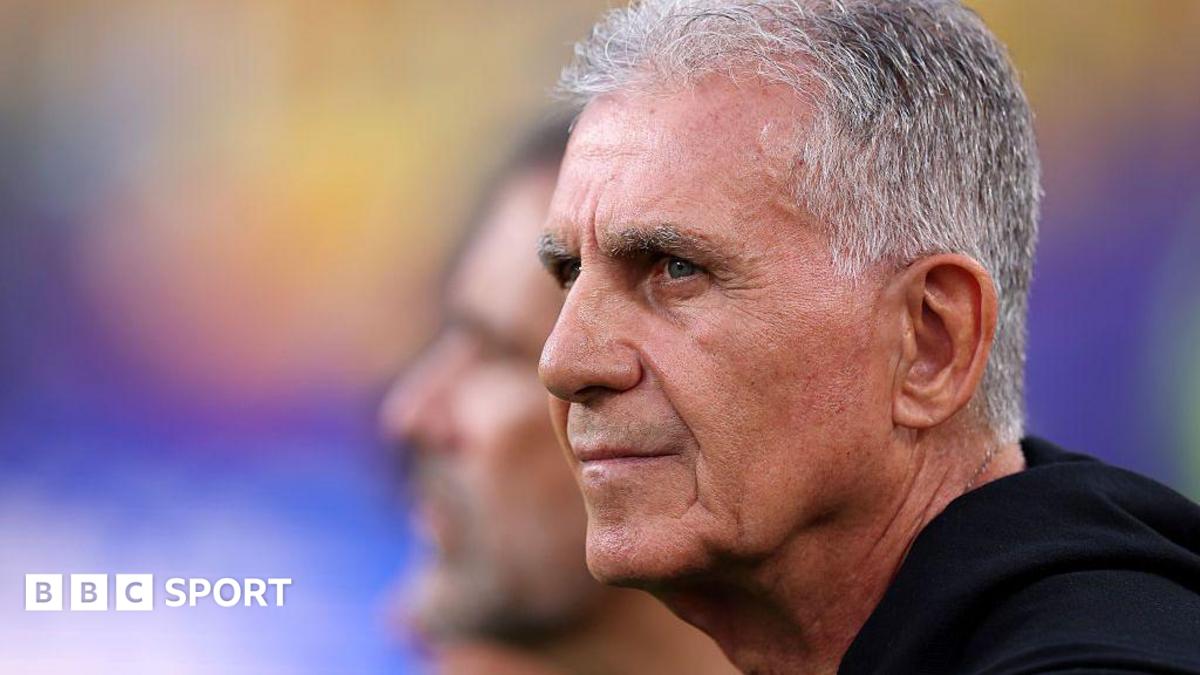
As BBC Sport reported, Carlos Queiroz stepped down as Ghana head coach after just three months in charge. It was an exit that felt less like a tragedy and more like a mutual sigh of relief. The rigid tactics that held England to a scoreless draw became a straitjacket that strangled Ghana's attacking flair.
We saw this paralysis throughout the group stage. The defensive block sat deep, offering little to no vertical transition. When a team relies entirely on keeping clean sheets to survive, one defensive lapse ruins the entire gameplan.
Tactical Paralysis at Arrowhead Stadium
The Round of 32 clash in Kansas City was a masterclass in how to passive-aggressively lose a football match. Colombia, lining up in a flexible 4-3-3, didn't have to work hard to break the Ghanaian structure. The decisive blow came when Marvin Senaya was caught in no-man's land, forcing an early substitution for Alidu Seidu in the thirteenth minute.
Before the backline could adjust, Luis Suarez picked out Jhon Arias to slot home. Once down, Ghana's tactical reaction was non-existent. The numbers do not lie.
Queiroz’s setup required Thomas Partey to hold the midfield alone, while Jordan Ayew struggled to link with an isolated attack. The team finished the match with a miserable 0.38 xG, a damning indictment of their offensive patterns. They simply had no mechanism to progress the ball through the lines when Colombia pressed their central midfielders.
The most frustrating aspect was the management of substitutions. Ernest Nuamah, the most dynamic winger in the squad, sat on the bench until the seventy-ninth minute. Leaving your most creative outlet on the bench while chasing a game for over an hour is tactical malpractice.
By the time Nuamah and Prince Adu entered the pitch, Colombia had already dropped into a low block, easily defending their 1-0 lead. Ghana exited the tournament with a whimper. They registered only two shots on target.
This tournament run was defined by these narrow margins. The group stage opener saw a rigid 4-5-1 shape frustrate England in a stale 0-0 draw, where the Black Stars recorded just 32% possession. That defensive solidity vanished against Croatia in a 2-1 defeat on June 27, as midfield rotations exposed Jerome Opoku and Derrick Luckassen.
Even the solitary 1-0 victory over Panama felt labor-intensive. It required a moment of individual brilliance rather than cohesive attacking design. Ghana completed only 74% of their passes in the final third across the tournament.
The Renard Opportunity
Now, the Ghana Football Association faces a familiar crossroads. They need a manager who can bridge the gap between defensive stability and modern, high-tempo attacking play. The perfect candidate has just walked onto the market.
Hervé Renard is currently a free agent after resigning from his post with Tunisia. Renard’s stint with Tunisia was an absolute disaster, lasting only 18 days before he walked away following group-stage elimination. That brief tenure showed his worst traits: impatience, volatility, and a refusal to compromise with meddling executives.
But his record on the African continent remains unmatched. He is the only manager to win the Africa Cup of Nations with two different countries, Zambia and Ivory Coast. According to the official announcement, Queiroz urged structural reform upon his departure.
Hiring Renard would be the ultimate statement of intent. The Frenchman does not tolerate administrative interference, which is exactly the shake-up the Ghanaian setup needs to professionalize its operations. The GFA has a history of choosing safe, conservative appointments who are easily controlled by committee.
Queiroz was the epitome of this trend—a seasoned hand brought in to steady a ship without rocking the boat. Renard would do the opposite. He would demand complete control over sporting decisions.
The Blueprint to Unlock the Black Stars
That friction is exactly what is required to break the cycle of mediocrity. Tactically, Renard is the polar opposite of Queiroz. He favors a high-pressing 4-2-3-1 that seeks to win the ball high up the pitch and transition at breakneck speed.
This system is tailored for the squad Ghana is building. Players like Mohammed Kudus and Ernest Nuamah would thrive in a system that encourages them to press aggressively and attack space quickly. Instead of shielding the backline with a deep defensive block, Renard's teams defend by keeping the opponent under pressure.
This approach would relieve the burden on aging midfielders and allow Ghana's athletic center-backs to play on the front foot. The physical profile of this squad is suited for high-intensity, vertical football. Under the right guidance, they could easily become the most entertaining side on the continent.
My prediction is clear: the GFA will appoint Hervé Renard before the next international break. It is a risky move, given Renard's volatile history and the GFA’s tendency to micro-manage. However, the sheer alignment of player profiles and tactical needs makes this appointment inevitable.
If Ghana wants to stop wasting their finest generation of attacking players, they must make the call today. Renard's vertical style would immediately solve the isolation of Ghana's forwards. Under Queiroz, the distance between the midfield double-pivot and the front line often exceeded thirty yards, forcing long balls into channels that were easily cut out.
Renard's compact lines would allow quick, short combinations in the half-spaces, bringing Kudus into central playmaking areas. The transition from a passive low-block to an aggressive front-foot press is demanding. It is the only path forward for the Black Stars.
Read Next
- Football Australia backs Tony Popovic despite World Cup shootout disaster
- England face the ultimate tactical and altitude test against Mexico
- Mexico must ignore the influencer circus to stun Thomas Tuchel's England
- England are walking into a tactical trap at the Azteca
- 🏆 World Cup 2026 — Full Coverage Hub
- 🇬🇭 Ghana World Cup 2026 — Black Stars Hub
- 🏴 WC 2026 Group L — England, Croatia, Ghana, Panama