If you spent any part of the last six years watching the German national team, you deserve financial compensation from the DFB. Between the group-stage funeral against South Korea in Kazan and back-to-back tournament humiliations, the four-time world champions had degenerated into Europe's most expensive clown car. They played football like tenured civil servants filing tax audits in slow motion.
Nobody feared them anymore. Minnows and mid-tier European sides walked into their backyard and snatched points without breaking a sweat. It felt like watching an iconic rock band butcher their greatest hits on an overpriced reunion tour while charging eighty euros for parking.
Remember that behind-the-scenes documentary from Qatar? While other managers were dissecting passing lanes, Hansi Flick was showing his squad video clips of gray geese flying in formation. The players sat there staring into the void, looking like hostages trapped in an avant-garde art installation.
That prolonged nightmare is finally over. Germany woke up from its post-2014 stupor, incinerated the old playbook, and handed the steering wheel to twenty-something prodigies who actually enjoy playing football. The swagger is back in the building.
Burying the 2014 Nostalgia Tour
Germany's biggest issue was never a genuine lack of talent. Their fatal flaw was a pathological addiction to nostalgia that bordered on clinical delusion.
For nearly a decade, the German football federation operated like an aging wrestling promoter who refuses to push young talent. Every major tournament arrived with the same tired promise that the ghosts of Rio would magically reassemble and save the day. It never worked.
After the Kazan disaster, Joachim Löw tried to discard his veterans via awkward press releases, only to panic and drag them back two years later. It was the football equivalent of deleting your ex's phone number on Friday night and calling them five times on Sunday morning. The indecision paralyzed the entire national setup.
Toni Kroos had to come out of international retirement just to show everyone what a functioning midfield looked like. His swan song gave the country an electric summer, but Spain ended the fairytale in the 119th minute in Stuttgart. When the dust settled, the reality was impossible to ignore.
The band had to break up. Kroos walked away into the sunset, Thomas Müller took his chaotic energy home, Manuel Neuer surrendered the gloves, and İlkay Gündoğan relinquished the armband. The locker room finally belonged to the next generation.
The Wusiala Cheat Code
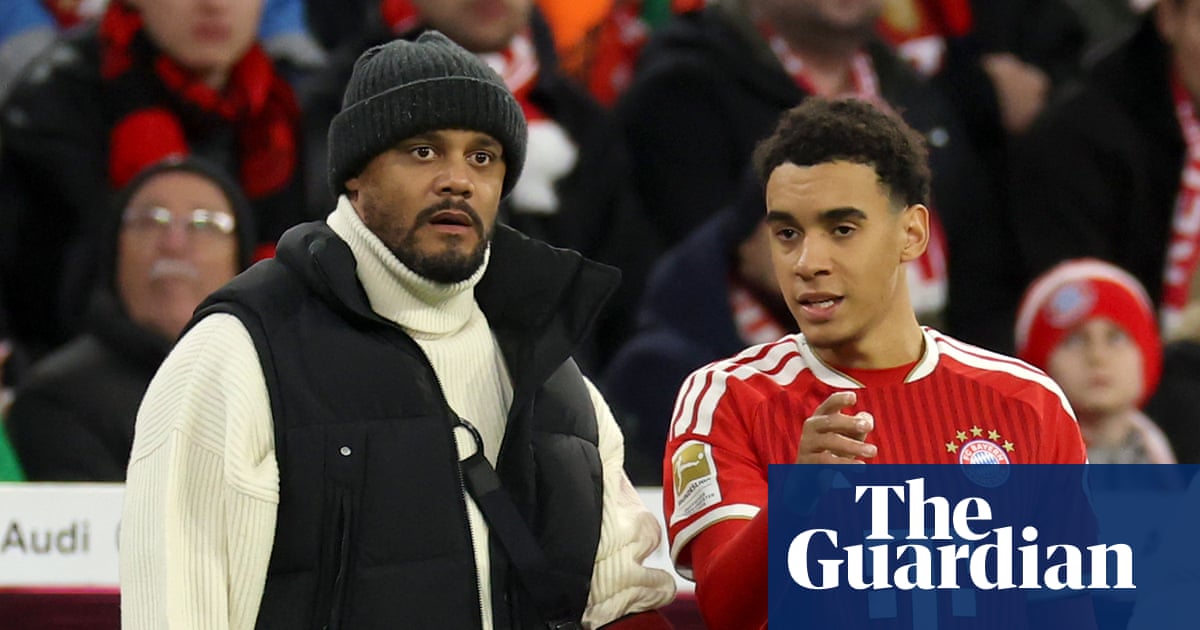
If you want to understand why German supporters are smiling again, watch five minutes of Jamal Musiala and Florian Wirtz sharing a pitch. It is pure basketball on grass.
Musiala operates in tight spaces like an escaped convict dodging security guards. He does not just beat defenders off the dribble; he evaporates between them with body swerves that leave world-class defenders questioning their life choices. He plays with the chaotic street-ball freedom Germany spent fifteen years coaching out of its youth academies.
Musiala spent his formative development at Chelsea, bringing an explosive edge that feels plucked straight from a South London cage match. Wirtz tore his ACL, rebuilt his knee into titanium, and carried Bayer Leverkusen to an undefeated domestic double. Together, they represent two wildly different paths converging into pure fireworks.
Wirtz possesses the spatial awareness of a chess grandmaster on an espresso bender. He does not run fast; he thinks fast. Before an opposing defensive midfielder can even turn his hips, Wirtz has slipped a disguised ball straight into the path of an overlapping runner.
Together, they are an absolute nightmare to game plan against. When Germany dismantled Hungary 5-0, the two of them traded backheels and one-touch combinations like teenagers at a Sunday kickabout. You cannot double-team both of them at once. Pick your poison and pray.
Nagelsmann Stripped Away the Nonsense
Julian Nagelsmann deserves massive credit for ditching the tactical overthinking that ruined his predecessors. When he first took the job, skeptics wondered if his hyper-complex pressing schemes would overwhelm players during short international breaks.
He proved the doubters wrong by doing the exact opposite. He simplified the entire operation. He stopped treating the pitch like a theoretical physics lecture and started building roles around his best players' natural instincts.
Putting Joshua Kimmich back at right-back was an act of pure managerial clarity. Kimmich spent years trying to play the quarterback role in central midfield with mixed results. Out on the flank, his delivery shines, his defensive bite sets the tone, and he stops clogging the middle of the pitch.
Behind him, Antonio Rüdiger provides the raw chaos factor every great tournament team needs. Rüdiger does not just defend; he psychologically rattles opposing strikers until they completely lose their heads. Pairing his fiery aggression with the calm positioning of Jonathan Tah has given Germany a backbone they lacked for years.
The engine room finally has balance as well. With Robert Andrich doing the dirty defensive chores and Aleksandar Pavlović distributing with maturity beyond his years, the team transitions from defense to attack in a heartbeat. The ponderous eighty-percent possession snoozefests are officially dead and buried.
The Cracks in the Armor
Let us pump the brakes for a second, though. Anyone claiming this German squad is flawless has been drinking too much Bavarian wheat beer.
The glaring issue remains the center-forward position. Kai Havertz is a gifted link player, but he is simply not a ruthless killer inside the eighteen-yard box. He floats and connects play brilliantly, yet he will still miss three golden chances in a knockout match that leave fans screaming at the television.
What happens when a disciplined opponent parks ten men inside their penalty box and dares Germany to break them down? Niclas Füllkrug is a fantastic sledgehammer off the bench, but relying on a veteran target man as your primary rescue plan is a gamble. Elite international knockout games are decided by ruthlessness, and Germany still lacks an authentic goal poacher.
The defensive high line is another heart attack waiting to happen. Nagelsmann demands intense pressing, which leaves vast oceans of green grass exposed behind the central defenders. If a team like France or Brazil bypasses that initial wave with a direct ball over the top, Rüdiger and Tah are left stranded on an island.
Beyond Kimmich, the fullback depth chart is thinner than cheap diner napkins. One twisted ankle on the flank and Nagelsmann is forced to scramble with makeshift solutions or shift center-backs out of position. You cannot survive a gruelling tournament sprint in scorching summer heat without reliable legs on both touchlines.
Back Where They Belong
Even with those tactical vulnerabilities, this is the most electrifying German side in a decade. The gloomy cynicism that choked the national team after Russia and Qatar has vanished into thin air.
For years, watching Germany felt like an unpaid chore, endured by loyal supporters hoping for a ghost of the team that dropped 7-1 on Brazil. Today, they play with genuine swagger and unpredictable spark. You tune in because you know Musiala might break three ankles on a single run.
The rebuild took far longer than anyone in Frankfurt would ever care to admit. Stubborn pride and tactical arrogance delayed the necessary overhaul by at least four years.
The summit is steep, and the international giants waiting at the top will not step aside easily. But Germany is no longer stumbling up the mountain with old walking sticks and heavy baggage. They are sprinting uphill, the kids are driving the bus, and international football is far better when the Mannschaft is terrifying again.
Read Next
- Spain's teenage wrecking crew is about to break international football
- Why the 2026 World Cup Golden Boot Race Will Be Absolute Chaos
- Bayern are betting everything on Jamal Musiala and it might get messy
- Stop lying to yourselves about who can actually win the 2026 World Cup
- 🏆 World Cup 2026 — Full Coverage Hub
- 🇩🇪 Germany World Cup 2026 — Die Mannschaft Hub